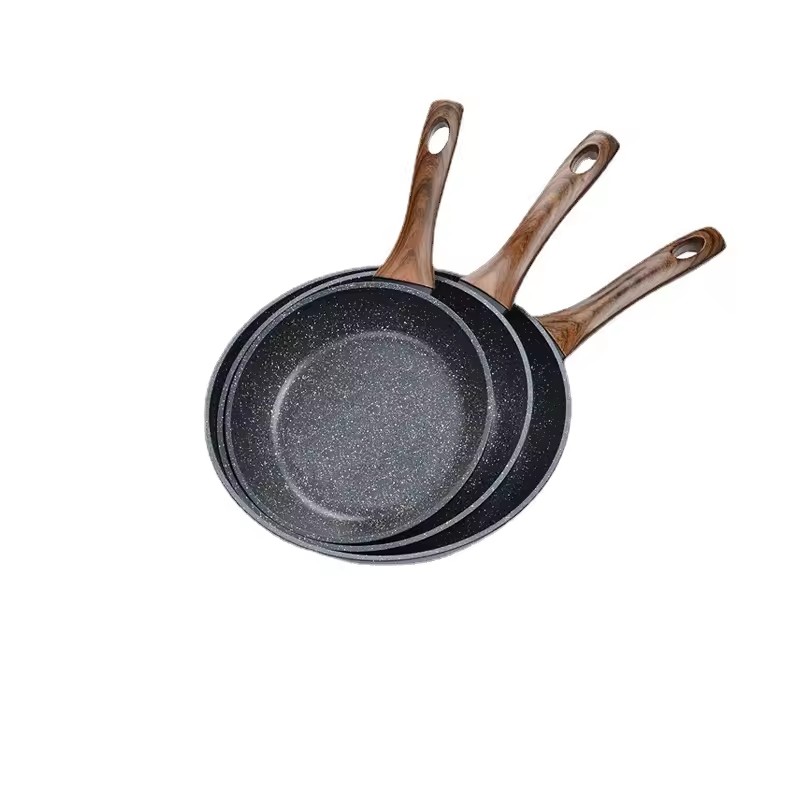
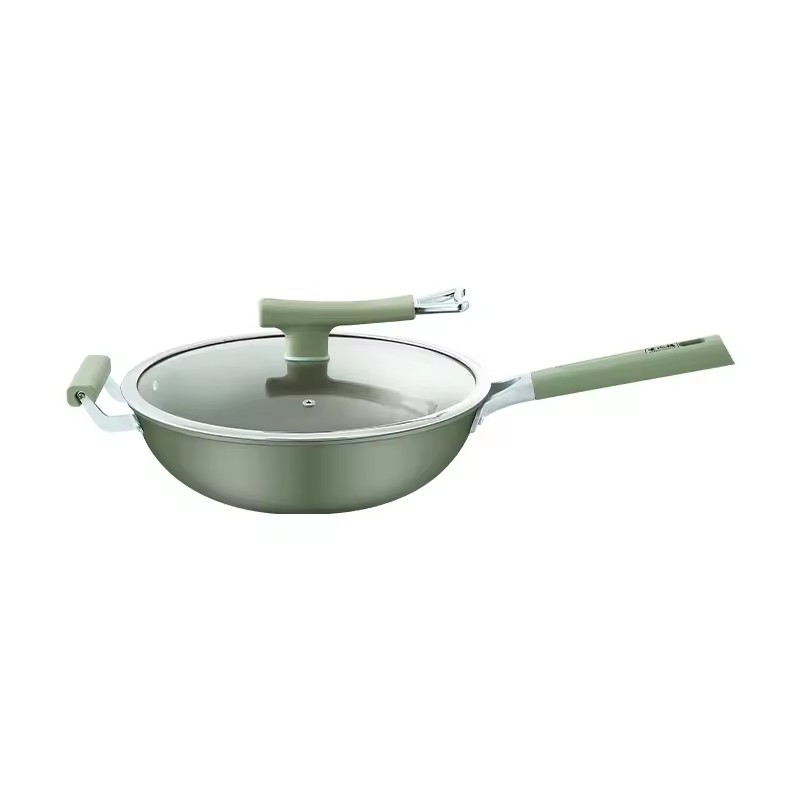
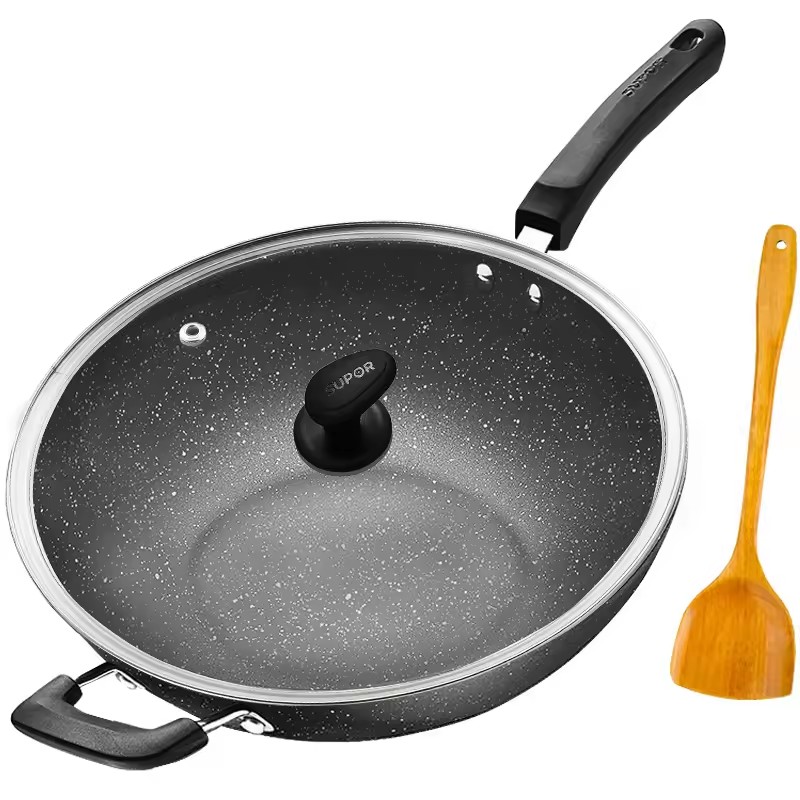
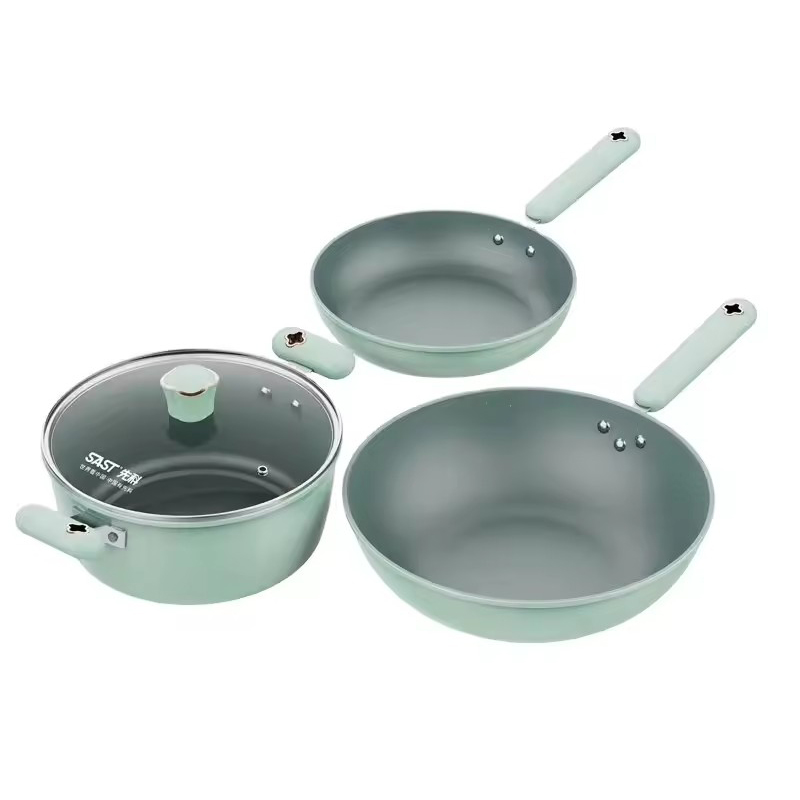
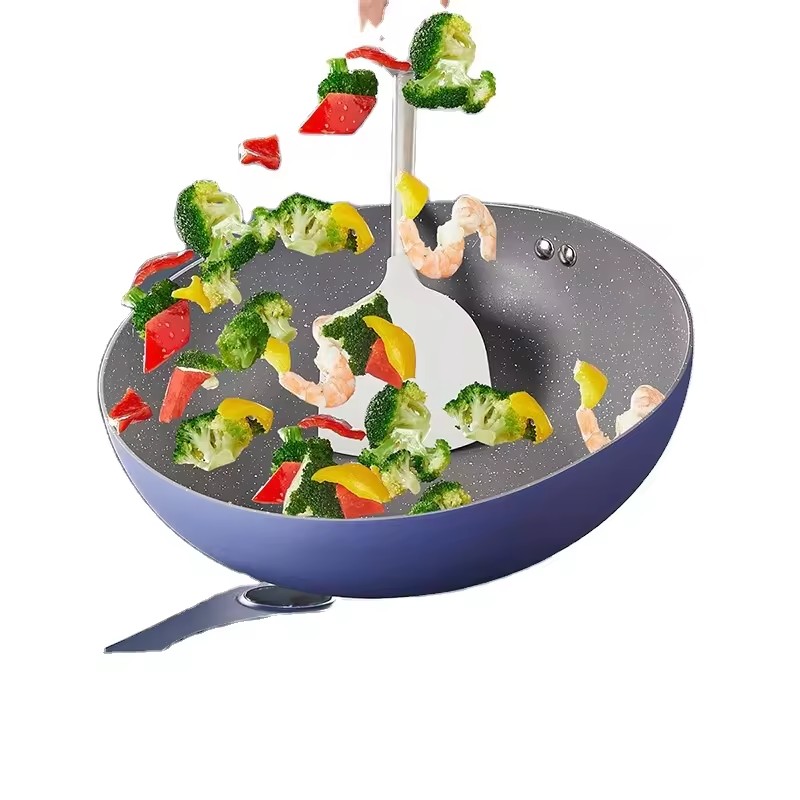
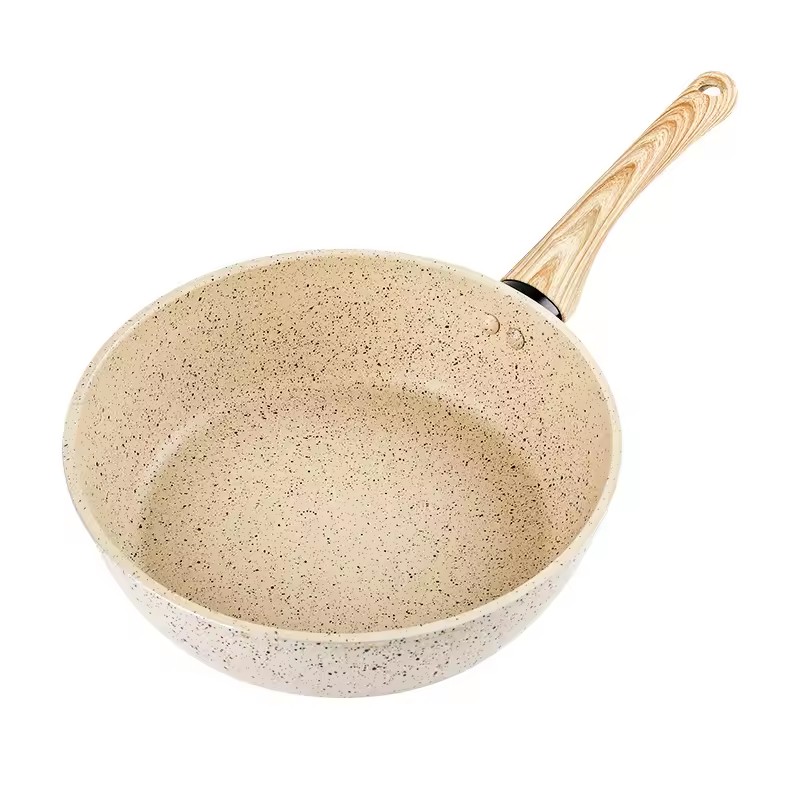
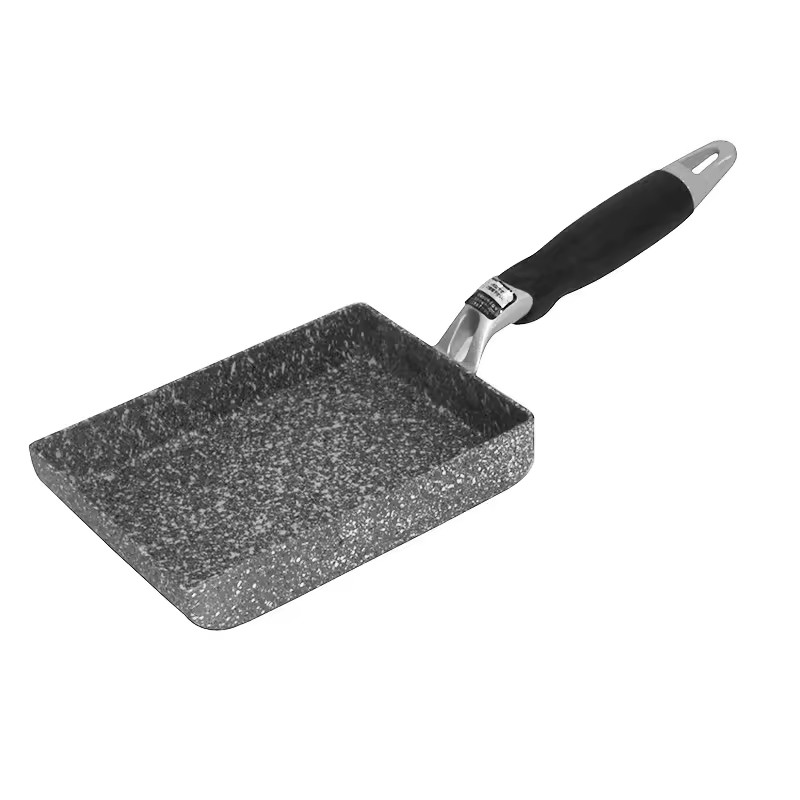
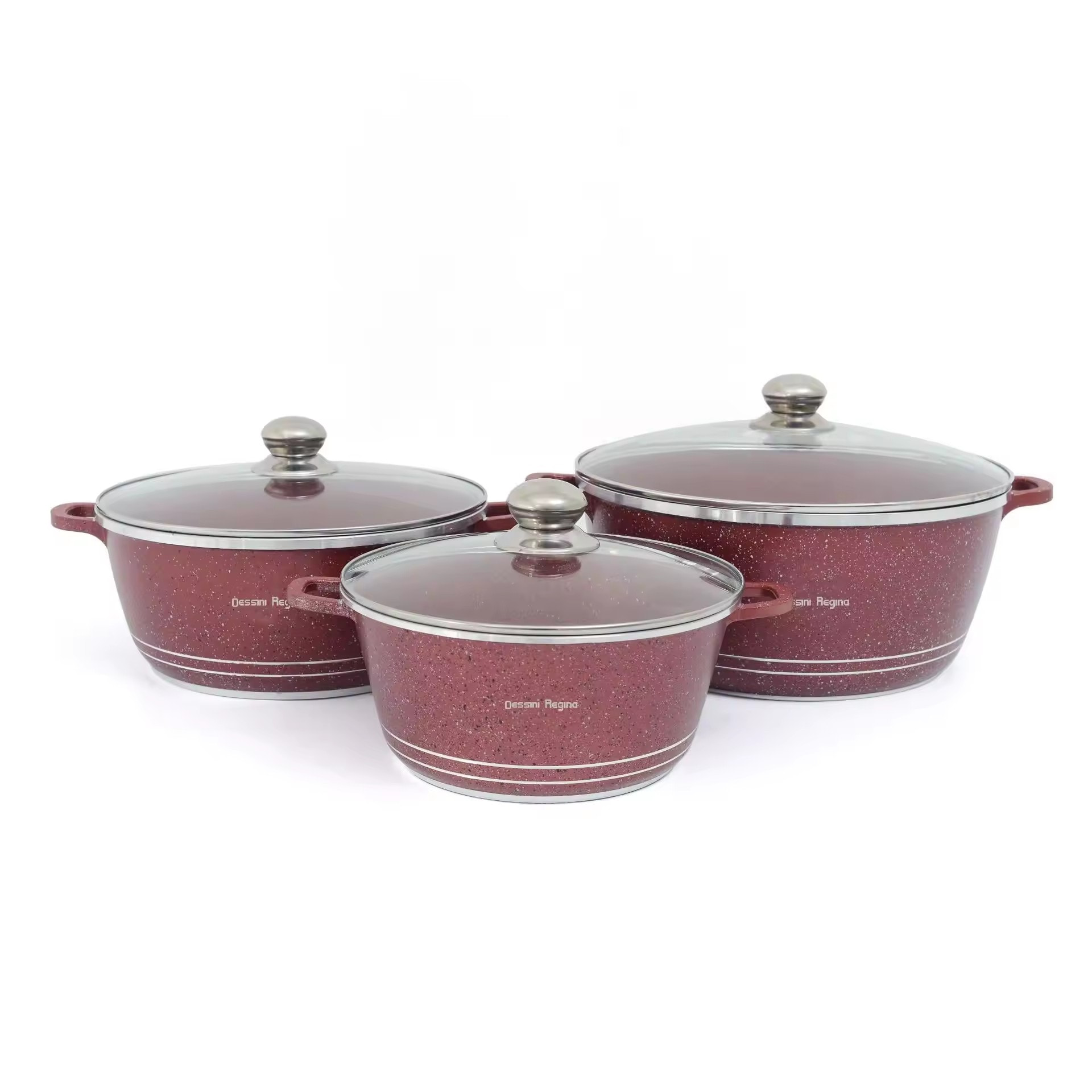
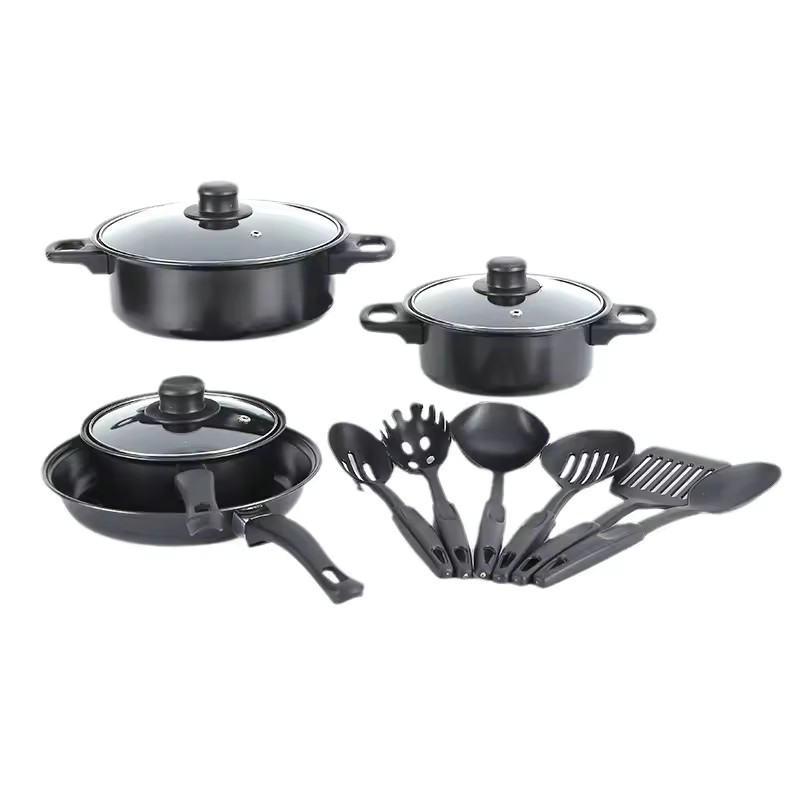
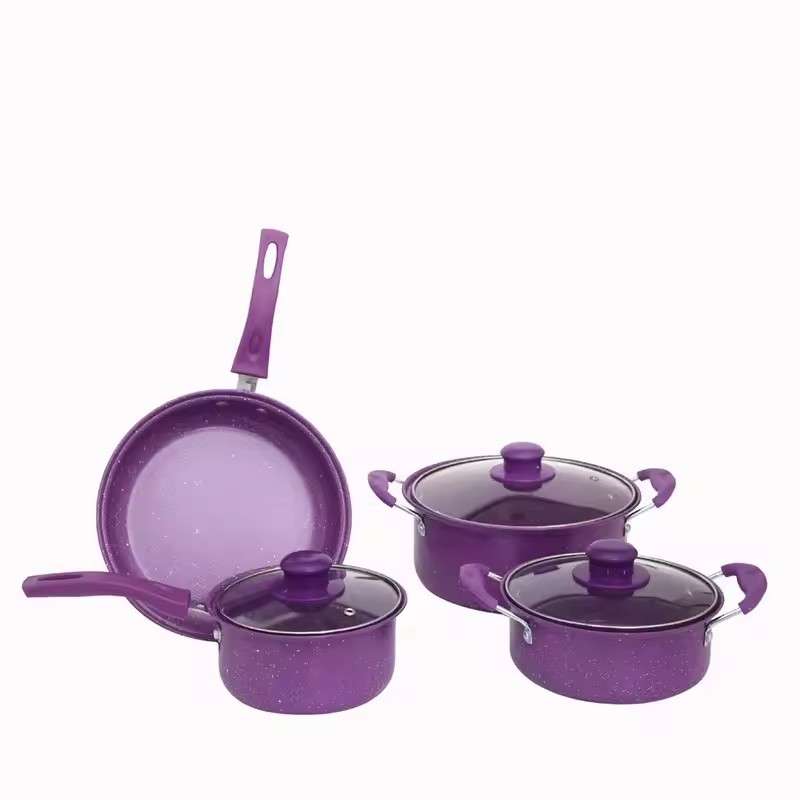
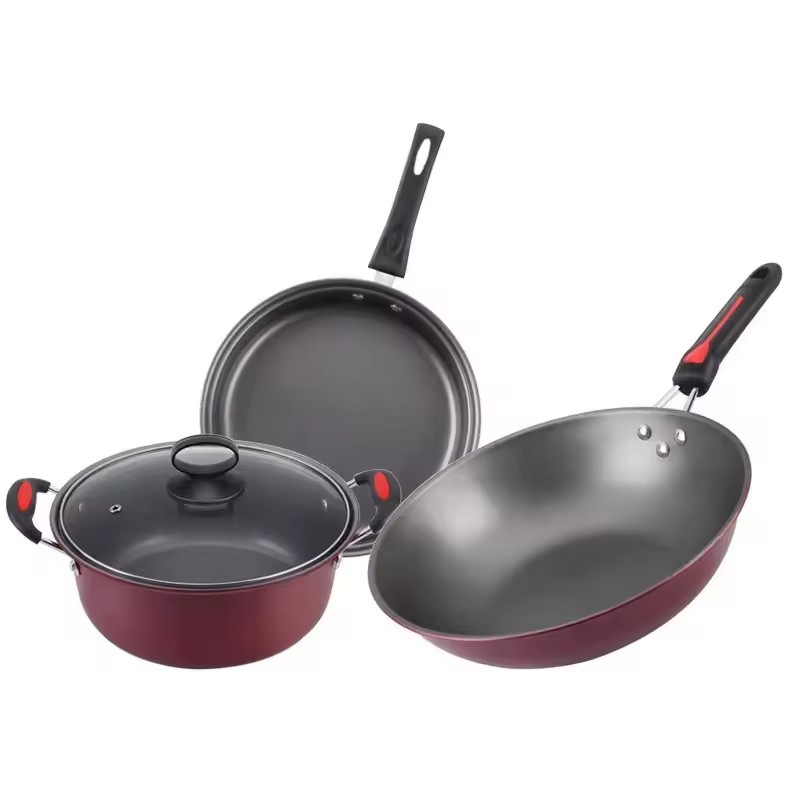
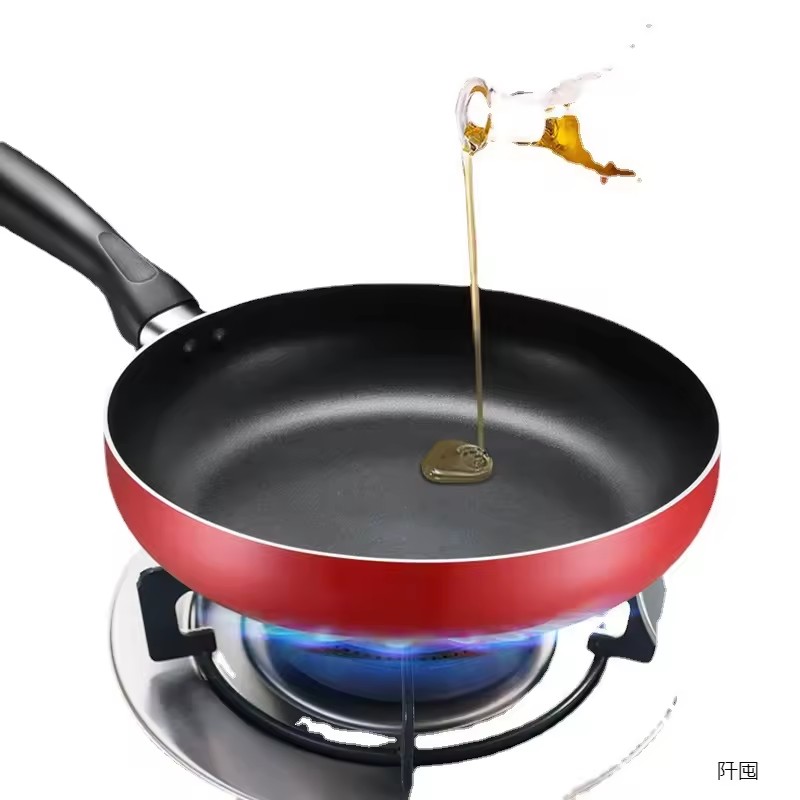
A fry pan is a versatile kitchen cooking tool, usually made of metal, with a flat bottom and side walls of a certain height, suitable for frying, stir-frying, boiling or deep-frying food on the stove. Its design allows for even heat distribution, making it easy to stir-fry and control the cooking process of food. It is an indispensable cooking utensil in both home and professional kitchens.

Ningbo Leer Kitchenware Co., Ltd. are professional OEM Non-stick Frying Pan Manufacturer and ODM aluminum frying pan Company, was founded in 2022, which is almost the last year of the COVID-19 pandemic. We adhere to the original aspiration of "to make the non-stick pan".
Leer produces all kinds of pans for our customers via both OEM and ODM worldwide. We also offer our customers an opportunity from scratch to work with our engineers on the design of cookware, which is truly customized. All of our kitchenwares and cookwares are engineered and manufactured in our 150,000-square-foot plant, which is located in Cixi City, Zhejiang Province, China.
The Best Nonstick Cookware for the Money: Our Top Picks If you want a straight answer: the Tramontina 10-Piece Professional Nonstick Cookware Set consistently offers the best value for most home cook...
View MoreThe Best Non-Stick Cookware Brands Right Now If you want a straight answer: All-Clad, Zwilling, and GreenPan consistently rank as the top non-stick cookware brands across professional reviews, home c...
View MoreThe Definitive Answer on the Healthiest Choice The healthiest non-stick cookware to use is 100% Ceramic (sol-gel) coated pans or seasoned natural materials like Carbon Steel and Cast Iron. Unlike tra...
View MoreIn the evolution of modern homes and professional kitchens, the choice of cookware has long transcended the realm of mere containers, becoming a key variable in measuring cooking efficiency and food quality. As a professional force deeply rooted in the cookware manufacturing field, Ningbo Leer Cookware Co., Ltd. is committed to exploring the deep integration of materials science and ergonomics. Through precise control of material properties, we combine traditional manufacturing processes with modern cooking needs, aiming to provide global users with more scientific cooking solutions.
I. Thermodynamic Advantages of Aluminum Frying Pans
Aluminum occupies an irreplaceable position in cookware manufacturing, its core competitiveness stemming from its superior physical properties.
Rapid Heat Conduction Efficiency: Among all commonly used cookware materials, aluminum exhibits exceptional thermal conductivity. This means heat can be rapidly transferred from the heat source to the entire pan, effectively reducing preheating time.
Uniform Heat Distribution: Aluminum cookware effectively eliminates "hot spots." Regardless of where the pan bottom contacts the heat source, heat spreads rapidly laterally, ensuring that every part of the food is heated evenly, which is crucial for searing steaks or making delicate omelets.
Lightweight Design Philosophy: Compared to cast iron or stainless steel, aluminum cookware significantly reduces weight while maintaining strength, alleviating wrist strain during prolonged cooking and improving flexibility when stir-frying.
II. Application Depth of Non-stick Frying Pan Technology
The advent of non-stick frying pans represents a reshaping of cooking methods by materials science. Ningbo Leer Kitchenware Co., Ltd. strives for excellence in coating processes, ensuring that every product achieves ideal peel-off results.
Surface Tension and Low Coefficient of Friction: A high-quality non-stick surface reduces the energy state of the solid surface, making it difficult for proteins and starches to chemically bond with it. This characteristic not only reduces reliance on oils but also preserves the original texture of the ingredients.
Coating Adhesion and Durability: Modern non-stick processes involve multi-layer spraying and high-temperature curing. By surface sandblasting or hard anodizing the aluminum substrate, the mechanical interlocking force between the coating and the pan body is enhanced, thereby extending its service life.
Scientific Control of Temperature Boundaries: Understanding the thermal stability of non-stick coatings is fundamental to professional cooking. Mastering the correct heating threshold not only protects the coating structure but also ensures a healthy and safe cooking environment.
III. Kitchen Collaboration System: The Configuration Logic of Pots and Pans
A scientific pot and pan combination is not simply a matter of stacking individual items, but rather a complementary system based on cooking techniques.
Functional Division and Efficiency Optimization: Deep saucepans are responsible for liquid convection and slow simmering, while frying pans focus on rapid evaporation of moisture and surface Maillard reactions. Together, they form a complete cooking loop.
Diverse Material Collaboration: In a highly efficient kitchen, aluminum frying pans provide responsive heat control, while stainless steel cookware may handle high-salt stewing. This material complementarity is the core starting point for the product line design of Ningbo Leer Kitchenware Co., Ltd.
Key Specifications and Performance Dimensions Reference
To more intuitively understand the functional differences between different cookware, the following table summarizes them from a professional perspective:
| Feature Dimension | Aluminum Frying Pan | Non-stick Frying Pan | Pots and Pans (Sets) |
| Core Functionality | Rapid heat conduction, high-heat searing, and precision thermal control. | Low-oil cooking and handling of delicate/protein-rich ingredients. | Comprehensive culinary support and multi-scenario applications. |
| Thermal Response | Ultra-fast; high sensitivity to heat source adjustments. | Efficient; calibrated by the specific thickness of the coating layers. | Variable based on the specific material composition of each piece. |
| Maintenance & Cleaning | Standard; requires attention to thermal shock (gradual cooling). | Superior; primarily requires simple rinsing due to low surface energy. | Versatile; covers a full spectrum of cleaning requirements. |
| Core Manufacturing Process | Hard anodizing, stretching, or high-pressure die-casting. | Multi-layer reinforced spraying, Ceramic or PTFE technology. | Modular design with unified aesthetic and ergonomic engineering. |
| Professional Application | Searing, sautéing, and techniques requiring frequent temperature shifts. | Frying eggs, delicate fish, and fat-reduced healthy meal prep. | Simmering, stewing, boiling, and full-course meal preparation. |
FAQ: Professional Kitchenware Application FAQs
Q1: Why are aluminum frying pans often used as the base material for non-stick pans?
Aluminum's thermal conductivity is the perfect partner for a non-stick coating. Since non-stick cooking emphasizes temperature control, aluminum responds quickly to temperature adjustments, preventing localized overheating and coating damage, thus achieving a balance between performance and lifespan.
Q2: How to define the functional boundary between "pots" and "pans"?
This mainly depends on the length-to-diameter ratio and sidewall height. Pots typically have higher vertical sidewalls and double handles, designed to handle large amounts of liquid through heat convection; while pans have lower sidewalls and often have a slope, designed to facilitate flipping food and promote moisture evaporation.
Q3: What are the core considerations for maintaining a non-stick frying pan?
The core is to avoid drastic temperature shocks (such as directly rinsing hot food with cold water) and mechanical damage. Ningbo Leer Kitchenware Co., Ltd. recommends using silicone or wooden spatulas. This is not because the coating is fragile, but to maintain its microscopic flatness and preserve its non-stick properties for a long time.
Q4: Will aluminum cookware affect the color or taste of food?
Aluminum cookware that has undergone hard anodizing or has a non-stick coating does not have its metal substrate in direct contact with food. This process isolates the metal from acidic ingredients, ensuring the pure color and flavor of the dishes.
Customized For Your Business
By blending fine craftsmanship with technology, we create cookware that is competitive in the market.
contact us
No. 358, Wei'er West Road, Chongshou Town, Cixi City, Zhejiang Province, China
+86-13957895228



 English
 中文简体
中文简体
 日本語
日本語
 Español