English
 中文简体
中文简体
 日本語
日本語
 Español
Content
The Definitive Answer on the Healthiest Choice
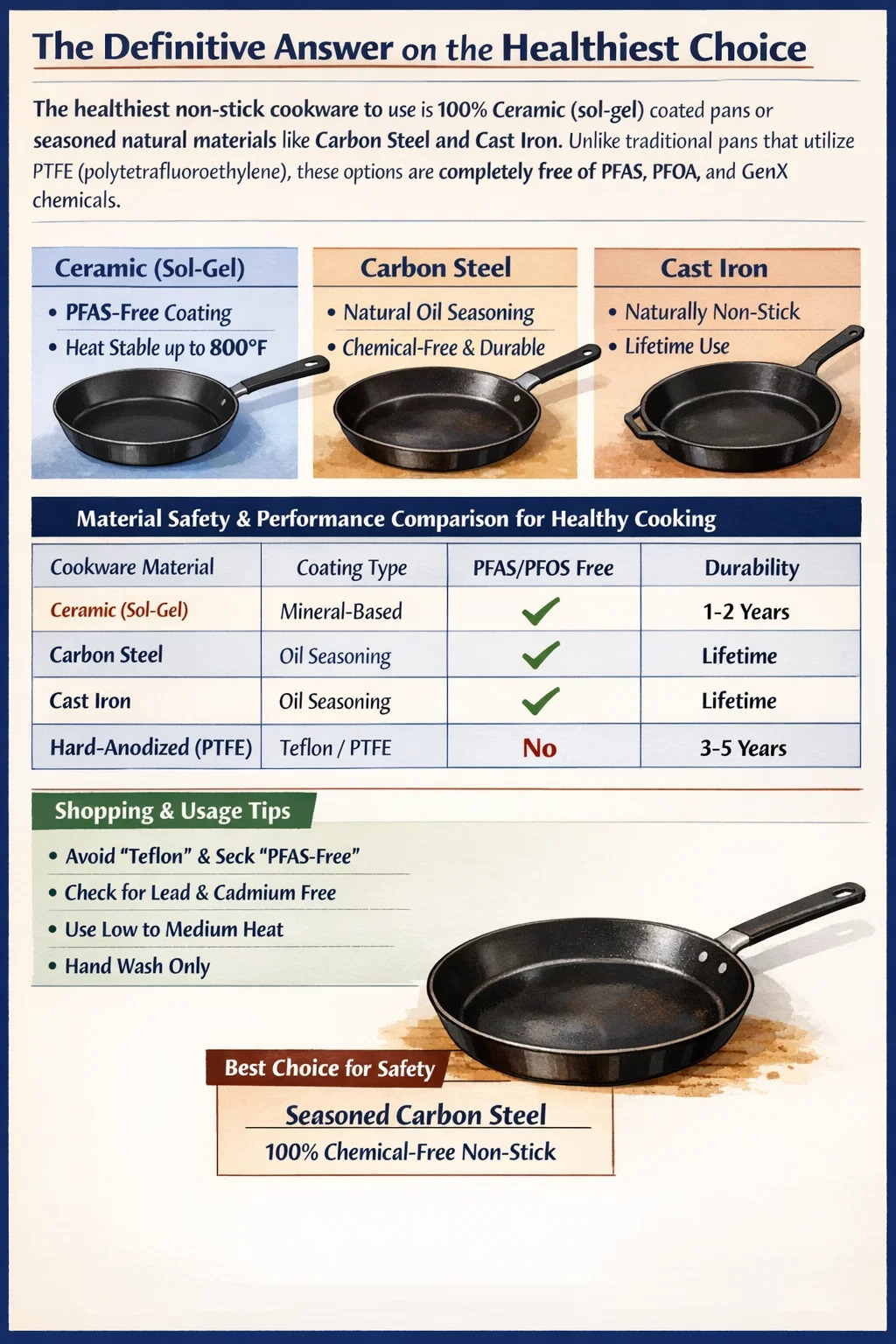
The healthiest non-stick cookware to use is 100% Ceramic (sol-gel) coated pans or seasoned natural materials like Carbon Steel and Cast Iron. Unlike traditional pans that utilize PTFE (polytetrafluoroethylene), these options are completely free of PFAS, PFOA, and GenX chemicals. For those seeking the absolute safest profile with zero chemical risk even at searing temperatures, seasoned Carbon Steel stands out as the premier choice because it creates a physical non-stick barrier using only heat and polymerized vegetable oil.
Understanding Ceramic Non-Stick Technology
Ceramic coatings have revolutionized the non-stick cookware industry. These pans do not actually use ceramic in the traditional sense; instead, they use a "sol-gel" process that converts a silica-based liquid into a glass-like mineral layer. This material is inorganic, meaning it does not break down into toxic fumes when heated.
Heat Stability Benefits
While traditional PTFE pans begin to degrade at temperatures above 500°F (260°C), ceramic non-stick surfaces remain stable up to 800°F (425°C). This significantly reduces the risk of "Teflon flu," a condition caused by inhaling polymer fumes. For home cooks who occasionally leave a pan on the burner for too long, ceramic provides a vital safety margin.
Natural Alternatives: Cast Iron and Carbon Steel
If your goal is to eliminate synthetic coatings entirely, you must look toward seasoned cookware. These are often categorized as "natural" non-stick cookware because their slippery properties are earned through use rather than applied in a factory.
The Power of Polymerization
When you heat oil on a carbon steel or cast iron surface, it undergoes polymerization, turning the liquid fat into a hard, plastic-like solid that is bonded to the metal. This surface is naturally hydrophobic. Unlike chemical coatings, if a seasoned surface is scratched, you can simply re-season it at home. It is a self-healing non-stick surface that contains zero man-made chemicals.
Comparison of Healthy Non-Stick Cookware Options
Choosing the healthiest pan involves balancing chemical safety with ease of use. The table below outlines the specific health-related attributes of the top contenders.
| Cookware Material | Coating Type | PFAS/PFOS Free | Durability |
|---|---|---|---|
| Ceramic (Sol-Gel) | Mineral-based | Yes | 1 - 2 Years |
| Carbon Steel | Oil Seasoning | Yes | Lifetime |
| Cast Iron | Oil Seasoning | Yes | Lifetime |
| Hard-Anodized PTFE | Synthetic Fluoropolymer | No (usually) | 3 - 5 Years |
Practical Shopping Checklist for Safety
When browsing for your next non-stick cookware, labels can be confusing. Manufacturers often use "buzzwords" to hide the presence of fluoropolymers. Follow these practical steps to verify the healthiness of a pan:
- Avoid any pan that mentions "Teflon" by name, as this is a brand of PTFE.
- Look for "PFAS-Free" rather than just "PFOA-Free." PFOA is only one chemical in a family of thousands; "PFAS-Free" covers the entire toxic spectrum.
- Check for heavy metal certifications. The healthiest pans are tested to be Lead and Cadmium free.
- Opt for stainless steel or silicone handles. Plastic handles can off-gas chemicals when they get hot on a gas stove.
How Usage Affects Cookware Healthiness
Even the healthiest non-stick cookware can become unhealthy if handled improperly. Maintenance is a safety factor that most people overlook.
- Stop using metal spatulas: Even with ceramic pans, metal can create micro-scratches where bacteria and old oils can hide and putrefy.
- Lower your heat: High heat "carbonizes" fats, creating a sticky residue on your healthy pan that eventually ruins the non-stick property, forcing you to use more oil.
- Hand wash only: Dishwasher detergents are abrasive. They strip away the healthy seasoning of iron pans and dull the glass finish of ceramic ones.