English
 中文简体
中文简体
 日本語
日本語
 Español
Content
Direct Answer: Yes, Healthy Non-Stick Cookware Exists
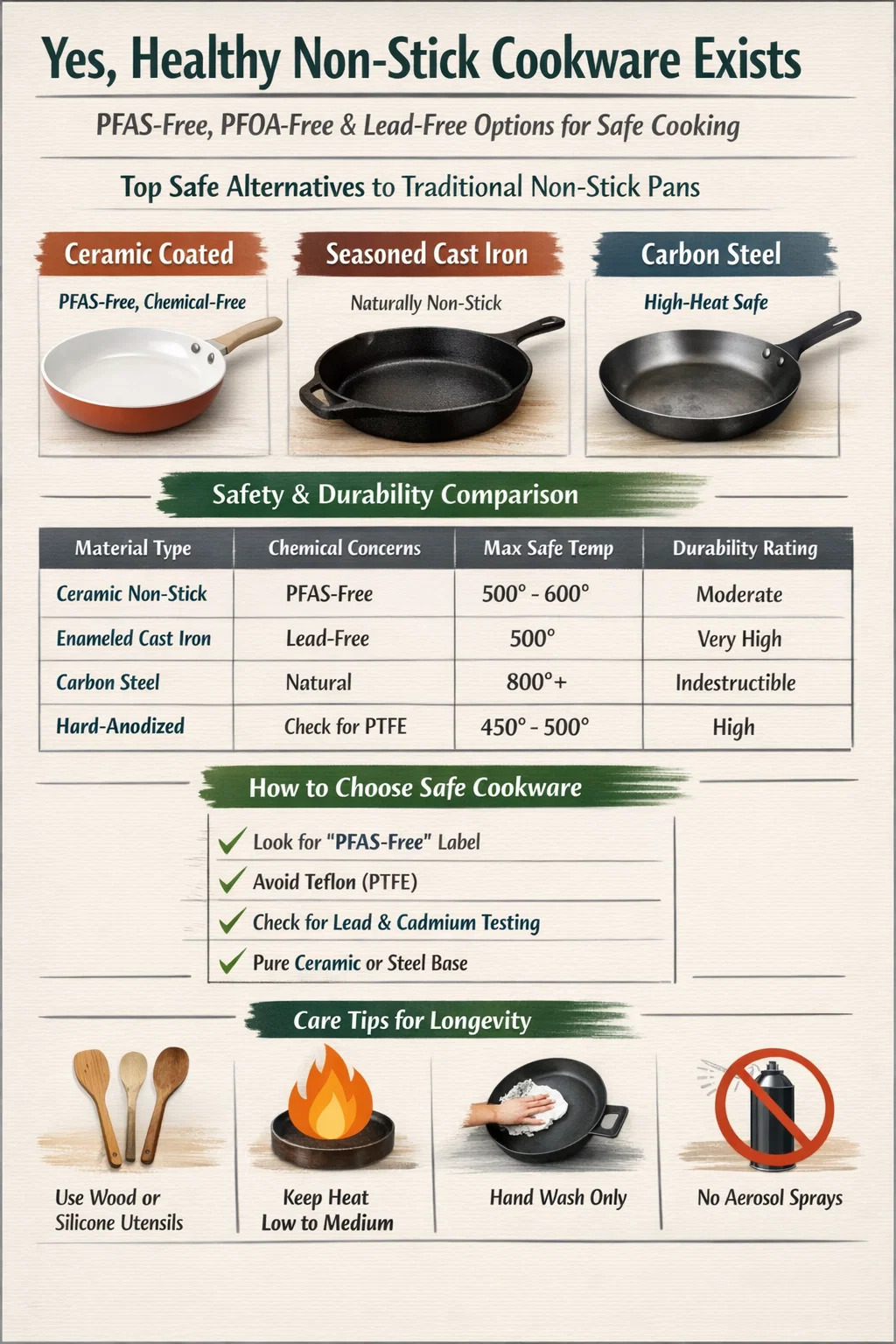
There is absolutely healthy non-stick cookware available on the market today. While traditional non-stick pans relied on chemicals like PFOA and PTFE (Teflon), modern healthy alternatives utilize mineral-based ceramic coatings or natural seasoning processes found in cast iron and carbon steel. To ensure your cookware is healthy, you must look for labels explicitly stating the product is PFAS-free, PFOA-free, and Lead/Cadmium-free. These options provide the convenience of food release without the risk of toxic fume emission at high temperatures.
Top Safe Alternatives to Traditional Non-Stick Pans
When moving away from synthetic coatings, several materials stand out for their safety and performance. These materials do not leach "forever chemicals" into your food even if the surface is accidentally overheated.
Ceramic Coated Cookware
Ceramic is often cited as the healthiest non-stick cookware because it is made from a sand-derived silicon solution. It does not require chemical binders. Brands like Caraway and GreenPan have popularized this because it can withstand temperatures up to 550°F without breaking down. Data suggests that ceramic pans release significantly fewer CO2 emissions during manufacturing compared to traditional PTFE pans.
Seasoned Cast Iron
Cast iron is the original healthy non-stick cookware. Its surface becomes naturally non-stick through "seasoning"—a process where vegetable oil is baked into the iron. It is practically indestructible and can even boost your dietary iron intake. A well-seasoned Lodge skillet, for example, can cook eggs just as cleanly as a chemical-coated pan.
Carbon Steel
Carbon steel is the lighter, more responsive cousin of cast iron. It is a favorite in professional kitchens for woks and skillets. It uses the same natural oil-based non-stick mechanism and is safe for extremely high-heat cooking, often rated for temperatures above 800°F.
Comparing Health and Safety Specs
To help you decide which healthy non-stick cookware fits your kitchen, refer to the performance and safety data below.
| Material Type | Chemical Concerns | Max Safe Temp | Durability Rating |
|---|---|---|---|
| Ceramic Non-Stick | None (PFAS-Free) | 500°F - 600°F | Moderate |
| Enameled Cast Iron | None (Lead-Free) | 500°F | Very High |
| Carbon Steel | None (Natural) | 800°F+ | Indestructible |
| Hard-Anodized | Check for PTFE | 450°F - 500°F | High |
How to Identify Truly Healthy Non-Stick Cookware
Marketing terms can be deceptive. To find truly healthy non-stick cookware, you must navigate beyond the "eco-friendly" buzzwords. A product that is "PFOA-free" might still contain other PFAS chemicals. Use this checklist to verify the health of your pans:
- Search for "PFAS-Free": This covers the entire family of nearly 10,000 "forever chemicals."
- Avoid "Teflon" branding: While modern Teflon is PFOA-free, it still uses PTFE, which can outgas at temperatures above 500°F.
- Check for Third-Party Testing: Reputable brands will share test results for heavy metals like lead and cadmium.
- Inspect the Base Material: Pure ceramic or stainless steel cores are safer than untreated aluminum, which can leach if the coating is scratched.
Practical Tips for Maintaining Healthy Surfaces
Healthy non-stick cookware is only as good as the way you treat it. Even the safest ceramic pan can become a hazard if the surface begins to flake or chip.
- Use Silicone or Wood Tools: Metal utensils are the primary cause of scratches in ceramic coatings. Once the surface is compromised, food sticks, and the underlying metal is exposed.
- Avoid High Heat: Most non-stick pans are designed for low to medium heat. Using high heat for long periods can cause the coating to lose its slippery properties, often referred to as "carbonization."
- Skip the Dishwasher: Harsh detergents and the abrasive environment of a dishwasher will wear down a ceramic non-stick surface up to 10 times faster than gentle hand washing.
- Don't use Aerosol Sprays: Cooking sprays contain additives that build up a sticky film on healthy non-stick surfaces, eventually ruining the pan's performance.