English
 中文简体
中文简体
 日本語
日本語
 Español
Content
- 1 The Best Non-Stick Cookware Brands Right Now
- 2 What Makes a Non-Stick Cookware Brand Actually Good
- 3 Top Non-Stick Cookware Brands Compared
- 4 All-Clad: The Benchmark for Non-Stick Durability
- 5 GreenPan: The Leader in Ceramic Non-Stick Cookware
- 6 Tramontina: The Best Non-Stick Cookware for the Budget-Conscious Cook
- 7 Caraway and Our Place: Non-Stick Cookware That Prioritizes Design
- 8 PFAS, PTFE, and Safety: What You Actually Need to Know
- 9 How to Choose the Right Non-Stick Cookware Brand for Your Kitchen
- 10 How to Make Any Non-Stick Pan Last Longer
- 11 Non-Stick Cookware Brands Worth Skipping
- 12 Final Verdict: Which Non-Stick Cookware Brand Should You Buy
The Best Non-Stick Cookware Brands Right Now
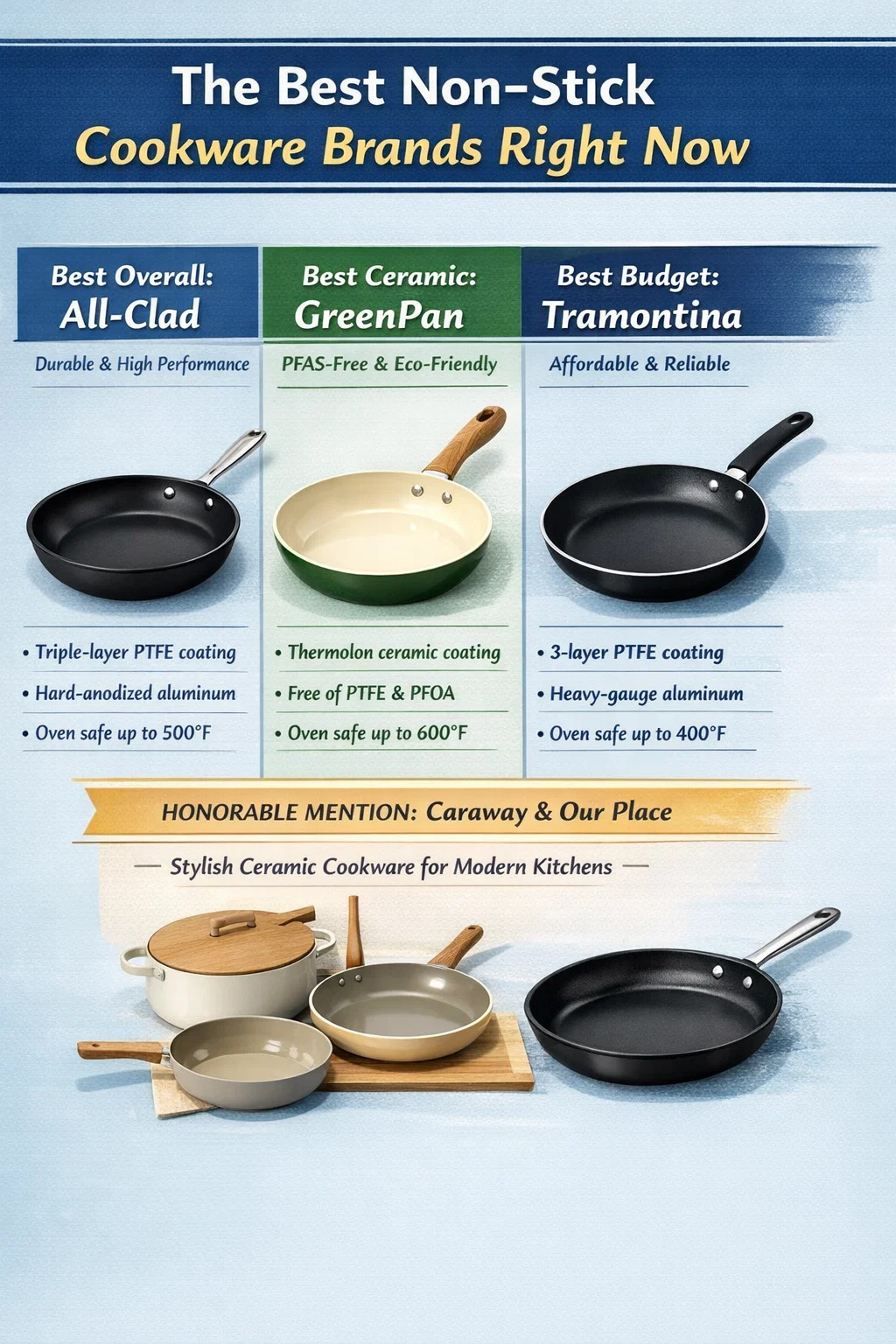
If you want a straight answer: All-Clad, Zwilling, and GreenPan consistently rank as the top non-stick cookware brands across professional reviews, home cook communities, and independent lab tests. All-Clad leads for durability and performance, Zwilling (with its Demeyere line) excels for serious cooks, and GreenPan tops the ceramic non-stick segment for those avoiding PTFE-based coatings.
That said, the "best" brand depends heavily on what you cook, how often you cook, your budget, and whether you prioritize longevity, safety, or ease of cleaning. This guide breaks down the top non-stick cookware brands by category, material, and real-world use so you can make a confident decision — not just chase a brand name.
What Makes a Non-Stick Cookware Brand Actually Good
Before diving into brand comparisons, it helps to understand what separates a high-quality non-stick pan from one that will start flaking within six months. There are three core factors that separate great brands from mediocre ones:
Coating Technology and Layers
Most traditional non-stick pans use PTFE (polytetrafluoroethylene), commonly known by the DuPont brand name Teflon. The number of coating layers matters enormously. Entry-level pans often apply just one or two layers, which wear through quickly. Premium brands like All-Clad apply three or more reinforced layers, with some using titanium- or diamond-infused coatings that can extend lifespan by two to three times compared to basic PTFE.
Ceramic non-stick coatings — used by brands like GreenPan, Caraway, and Our Place — are free of PTFE and PFOA. They use sol-gel technology to create a slick surface, but they typically don't last as long under high-heat or daily heavy use. Ceramic coatings generally last 1–3 years with regular use, while reinforced PTFE coatings in premium pans can last 5 years or more when properly maintained.
Base Material and Heat Distribution
The pan body itself matters as much as the coating. Hard-anodized aluminum is the gold standard for non-stick cookware — it's lightweight, heats evenly, and doesn't react with acidic foods. Stainless steel bases add durability and induction compatibility. Brands like Zwilling's Demeyere use a 7-ply stainless construction even under non-stick coatings, which delivers professional-level heat retention at the cost of extra weight.
Oven Safety and Compatibility
Most non-stick pans are oven-safe only up to 350°F–400°F. Higher-end pans from All-Clad and Zwilling push that to 500°F, which opens up more cooking techniques. Induction compatibility — requiring a magnetic base — is another differentiator that budget brands often skip.
Top Non-Stick Cookware Brands Compared
Here is a direct comparison of the most recommended non-stick cookware brands, covering their coating type, price range, and ideal user profile:
| Brand | Coating Type | Price (10–12" Pan) | Oven Safe | Induction | Best For |
|---|---|---|---|---|---|
| All-Clad | PTFE (3-layer) | $100–$200 | Up to 500°F | Yes | Durability, professional use |
| Zwilling / Demeyere | PTFE (multilayer) | $120–$250 | Up to 500°F | Yes | Serious cooks, high heat |
| GreenPan | Ceramic (Thermolon) | $40–$120 | Up to 600°F | Select models | PFAS-free, eco-conscious cooks |
| Caraway | Ceramic | $95–$145 | Up to 550°F | Yes | Aesthetics, sets, gifting |
| Tramontina | PTFE (3-layer) | $25–$60 | Up to 400°F | Select models | Budget-conscious, everyday cooking |
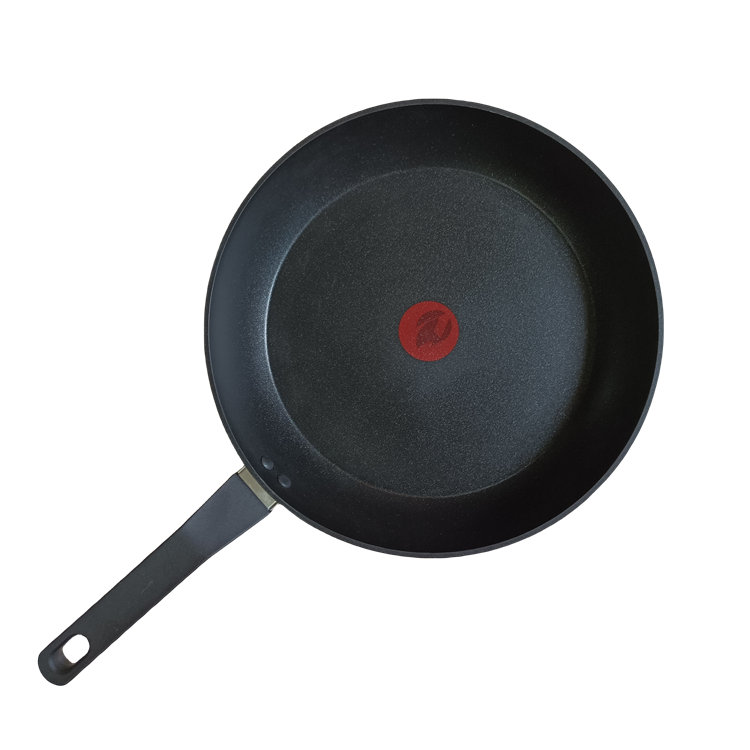
| T-fal | PTFE with Thermo-Spot | $20–$50 | Up to 350°F | Select models | Beginners, casual cooking |
| Our Place | Ceramic | $145–$195 | Up to 450°F | Yes | Minimalists, multi-use cooking |
All-Clad: The Benchmark for Non-Stick Durability
All-Clad's HA1 Hard Anodized Non-Stick line is what most professional test kitchens point to when asked for a benchmark. The pans use a hard-anodized aluminum body — which is 30% harder than stainless steel — combined with a three-layer PTFE coating reinforced with stainless steel particles. The result is a surface that holds up to daily use far longer than most competitors in its price range.
In tests conducted by America's Test Kitchen, All-Clad non-stick pans showed minimal coating degradation even after 300+ uses, outperforming every budget brand tested. The pans heat evenly from center to edge without hot spots, which matters especially for eggs, crepes, and delicate fish.
The main drawback is price. A 10-inch All-Clad non-stick fry pan runs around $130–$160 retail, though it frequently goes on sale for 20–40% off during major sales events. For home cooks who use a non-stick pan daily, the math often works out — a $150 pan that lasts 7 years costs less per year than a $30 pan replaced every 18 months.
All-Clad also backs their non-stick line with a limited lifetime warranty, though it excludes normal wear and coating degradation — which is standard for the industry.
GreenPan: The Leader in Ceramic Non-Stick Cookware
GreenPan invented ceramic non-stick cookware as a category when they launched in 2007 with their Thermolon coating — a silicon-based ceramic coating free from PTFE, PFOA, lead, and cadmium. Since then, they've refined the technology significantly, and their Venice Pro and GP5 lines represent the most advanced ceramic non-stick available today.
The appeal of ceramic non-stick cookware is straightforward: many consumers want to avoid PFAS chemicals entirely, and ceramic coatings deliver genuine non-stick performance at medium heat without those concerns. GreenPan's Thermolon Minerals Pro coating, used in their higher-end lines, holds up better to heat than standard ceramic — rated safe up to 600°F versus the 400°F limit common in budget ceramic pans.
Where ceramic non-stick pans including GreenPan's fall short is longevity under frequent high-heat cooking and metal utensil contact. Even GreenPan's premium lines will start showing reduced non-stick performance within 1–2 years with daily use at high heat. For people who cook at medium heat and hand wash consistently, the coating lasts considerably longer.
GreenPan's product range is wide, from budget-friendly lines like Chatham (around $30–$50 per pan) to their professional Venice Pro series at $100–$130. This makes them accessible at multiple price points, which is a genuine advantage over more expensive competitors.
Tramontina: The Best Non-Stick Cookware for the Budget-Conscious Cook
Tramontina is a Brazilian manufacturer that has built a strong reputation in the United States as the go-to brand for non-stick cookware that punches well above its price class. Their Professional Restaurant non-stick line is sold at Costco and Sam's Club for around $25–$45 per pan and routinely appears at or near the top of budget non-stick cookware reviews by Consumer Reports, Wirecutter, and Serious Eats.
Wirecutter named Tramontina's 10-inch fry pan one of their top picks for non-stick cookware, praising its even heat distribution and durable three-layer PTFE coating despite costing a fraction of All-Clad's price. The pans use heavy-gauge aluminum for solid heat retention, riveted handles that don't loosen over time, and PFOA-free coatings that meet current safety standards.
The trade-off versus premium brands is predictable: Tramontina's coating will degrade faster with heavy daily use, and the pans are only oven-safe to 350°F (some models to 400°F). But for a cook who replaces non-stick pans every two to three years anyway and wants solid everyday performance without a large upfront investment, Tramontina is hard to beat.
Caraway and Our Place: Non-Stick Cookware That Prioritizes Design
Caraway and Our Place represent a newer wave of direct-to-consumer cookware brands that compete on aesthetics and branding as much as performance. Both use ceramic non-stick coatings, are free from PFAS chemicals, and come in a range of colors designed to look good in open kitchens and on social media.
Caraway
Caraway's cookware set (which includes a 10.5-inch fry pan, two saucepans, a saute pan, and a Dutch oven) retails for around $395–$545 depending on promotions. For that price, you get genuinely attractive pans with a ceramic coating that performs well at low to medium heat, induction compatibility across the whole range, and oven safety up to 550°F. Reviews consistently praise the initial non-stick performance and ease of cleanup. Longevity with heavy daily use is more mixed — many users report the coating starts to lose its slickness after 12–18 months of regular cooking.
Our Place Always Pan
The Our Place Always Pan became a cultural phenomenon partly through social media marketing and partly because the design is genuinely clever — it's meant to replace eight pieces of cookware with one multi-functional pan. At $145–$195, it's competitive with Caraway's individual pan prices. Performance-wise, it handles eggs, sautéing, and light searing well at medium heat. It's not a replacement for a dedicated skillet if you cook steaks or anything requiring sustained high heat, but as a versatile everyday pan, it earns its reputation.
Both brands are worth considering if kitchen aesthetics matter to you and you're comfortable with the understanding that ceramic non-stick coatings require gentler use to maximize their lifespan.
PFAS, PTFE, and Safety: What You Actually Need to Know
This is the question that drives more people to ceramic non-stick cookware than any other: is PTFE-based non-stick cookware safe? The short, science-based answer is yes, with one important caveat.
PTFE itself is chemically inert and stable under normal cooking temperatures. The concern historically was PFOA — a processing chemical used to manufacture PTFE — which was classified as a likely carcinogen. PFOA was phased out of non-stick cookware manufacturing in the United States by 2013, and all reputable brands sold today are PFOA-free. The FDA has confirmed that PTFE coatings used in cookware do not react with food under normal cooking conditions.
The one genuine safety concern with PTFE non-stick cookware is overheating. When heated above 570°F, PTFE can begin to break down and release fumes that, while not seriously harmful to humans in typical exposure, can be fatal to pet birds due to their highly sensitive respiratory systems. At normal cooking temperatures (medium heat on most stovetops runs 300°F–400°F), this is not a risk. The risk occurs when pans are left on high heat unattended or preheated dry on high.
The PFAS concern is broader — it applies to the family of perfluoroalkyl substances that includes PTFE and many other synthetic compounds. Some consumers prefer to avoid the category entirely, which is a reasonable personal choice. If that describes you, ceramic non-stick is the correct path. If you're comfortable with current evidence on PTFE safety and want better long-term cooking performance, PTFE-based pans from reputable brands remain the stronger choice for most uses.
How to Choose the Right Non-Stick Cookware Brand for Your Kitchen
Rather than picking a single winner, matching a brand to your specific situation gives better results. Here's a practical framework:
- You cook eggs and fish daily and want pans that last: All-Clad HA1 or Zwilling Madura Plus. Accept the higher price as a multi-year investment.
- You want PFAS-free non-stick cookware with solid performance: GreenPan Venice Pro or GP5. Focus on medium heat cooking and hand wash consistently.
- Your budget is under $50 per pan: Tramontina Professional. It outperforms everything else at this price point by a meaningful margin.
- You want a complete set that looks great and handles everyday cooking: Caraway Home set or Our Place Always Pan, understanding that the ceramic coating requires gentler care.
- You're a beginner who wants a reliable starter pan without overthinking it: T-fal E93808 or a Tramontina 10-inch from Costco. Both work well and won't break the bank if you decide to upgrade later.
- You cook on an induction cooktop: Confirm induction compatibility before buying — it's not universal, even within brands. All-Clad, Zwilling, Caraway, and Our Place all offer fully induction-compatible non-stick lines.
One practical tip that experienced home cooks often mention: consider buying just one or two non-stick pans rather than a full set. A 10-inch and a 12-inch non-stick skillet handle the vast majority of tasks where non-stick is genuinely useful. For braising, searing, and oven work, stainless steel or cast iron performs better anyway. Many cooks who buy a non-stick set find they use only one or two pans from it regularly.
How to Make Any Non-Stick Pan Last Longer
Brand quality sets the ceiling for how long a non-stick pan can last, but your habits determine whether you reach that ceiling. These practices extend the life of non-stick coatings across all brands:
- Avoid high heat. Non-stick coatings perform optimally at low to medium heat. Cranking the burner to high to speed up preheating damages the coating faster and provides no cooking benefit — non-stick pans don't need to be ripping hot to work well.
- Use silicone, wood, or nylon utensils. Metal spatulas and spoons scratch PTFE and ceramic coatings physically. Even so-called "scratch-resistant" coatings degrade faster with metal contact. The difference in lifespan between metal-utensil users and non-metal-utensil users is significant — often 12–18 months of additional coating life.
- Hand wash when possible. Dishwasher detergents are abrasive and the high heat of dishwasher drying cycles breaks down non-stick coatings faster. Most manufacturers say their pans are dishwasher-safe as a convenience feature, but hand washing extends coating life noticeably.
- Let the pan cool before washing. Thermal shock from running cold water over a hot pan can warp the base, which ruins even heat distribution and can crack ceramic coatings.
- Store pans with padding between them. Stacking non-stick pans directly on top of each other without pan protectors causes scratching on the cooking surface. Pan protectors cost $10–$15 for a set of five and pay for themselves many times over.
- Use a small amount of fat. Even the best non-stick coatings benefit from a light coating of butter, oil, or cooking spray. It reduces wear on the coating and improves release performance, especially as pans age.
When to replace a non-stick pan is worth mentioning: if the coating is visibly peeling, flaking, or has deep scratches that expose the metal underneath, replace the pan. Ingesting small flakes of PTFE is generally considered harmless — the material passes through the digestive system — but a compromised coating means degraded cooking performance and it's simply time for a new pan.
Non-Stick Cookware Brands Worth Skipping
Not all non-stick cookware brands deliver on their marketing claims. A few categories consistently disappoint:
Ultra-cheap ceramic pans from unknown brands
Platforms like Amazon are flooded with ceramic non-stick pans priced at $15–$25 from brands with no track record. These pans typically use a single thin layer of ceramic coating over cheap thin aluminum. The coating loses its non-stick properties within weeks to months of regular use, the pans warp on high heat, and they often contain dyes or materials that haven't been independently tested. The savings aren't worth it.
Infomercial brands with inflated "diamond" or "titanium" claims
Several brands market non-stick cookware with claims about diamond-infused or titanium-reinforced coatings that will "never need oil" and "last forever." These claims are largely marketing language. Diamond particles can reinforce PTFE coatings, but the diamond content in budget "diamond" pans is typically negligible and provides minimal real-world benefit. Brands like Gotham Steel and Red Copper consistently receive poor long-term reviews once the initial novelty wears off — the coating frequently starts degrading within three to six months of daily use, which tracks with independent testing.
Department store house brands
Generic store-brand non-stick cookware from department stores often uses thin aluminum and single-layer coatings. They're priced attractively but perform inconsistently and wear through quickly. If your budget is tight, Tramontina at Walmart or Costco offers substantially better quality for comparable or only slightly higher prices.
Final Verdict: Which Non-Stick Cookware Brand Should You Buy
After weighing performance, longevity, safety, and value across the category, here's the clearest summary:
- Best overall non-stick cookware brand: All-Clad — best balance of durability, heat performance, and long-term value for serious home cooks.
- Best ceramic non-stick cookware brand: GreenPan — the category pioneer with the most refined coating technology and the widest range of price points.
- Best budget non-stick cookware brand: Tramontina — consistently outperforms every other brand in its price range across independent tests.
- Best non-stick cookware for design-focused kitchens: Caraway — attractive, PFAS-free, and a genuinely good performer at moderate heat.
- Best non-stick cookware for professional-level performance: Zwilling Demeyere — the choice when you want non-stick convenience with the construction quality of serious cookware.
The non-stick cookware market is large and noisy with marketing claims that often outpace real-world performance. Sticking to established brands with independent test results behind them — rather than chasing the latest "revolutionary" coating — remains the most reliable path to a pan that actually performs well and lasts.