English
 中文简体
中文简体
 日本語
日本語
 Español
To use a steamer pot, fill the bottom pot with 2–3 inches of water, place the steamer basket or insert above the waterline, bring the water to a boil, add your food, cover with the lid, and steam for the recommended time. That's the core method — but there's a lot more to know if you want consistently good results.
Steamer pots are among the most practical pots and pans you can own. Unlike boiling or frying, steaming preserves nutrients, keeps food moist, and requires almost no added fat. Whether you're cooking vegetables, fish, dumplings, or even eggs, a steamer pot handles it cleanly and efficiently. This guide covers everything from setup and timing to which foods work best and how to pair your steamer with other pots and pans in your kitchen.
What Is a Steamer Pot and How Does It Work
A steamer pot is a cooking vessel designed to cook food using steam rather than direct contact with water or oil. It typically consists of two parts: a lower pot that holds water, and an upper perforated insert or basket that holds the food. When the water boils, steam rises through the holes and cooks the food from all sides.
The principle is straightforward — water boils at 212°F (100°C), and the steam it produces cooks food gently and evenly. Because the food doesn't sit in water, water-soluble vitamins like B and C are retained instead of leaching out. Studies have shown that steaming broccoli retains up to 90% of its vitamin C, compared to roughly 40–50% when boiled.
Steamer pots are part of the broader family of pots and pans but serve a distinct purpose. They sit alongside stockpots, saucepans, and skillets in a well-equipped kitchen. Some designs are stackable, allowing you to cook multiple foods simultaneously on a single burner — a genuinely practical feature.
Types of Steamer Pots You'll Encounter
Not all steamer setups are the same. Before learning how do you use a steamer pot, it helps to know which type you're working with — because setup and timing can vary.
Stainless Steel Steamer Pots
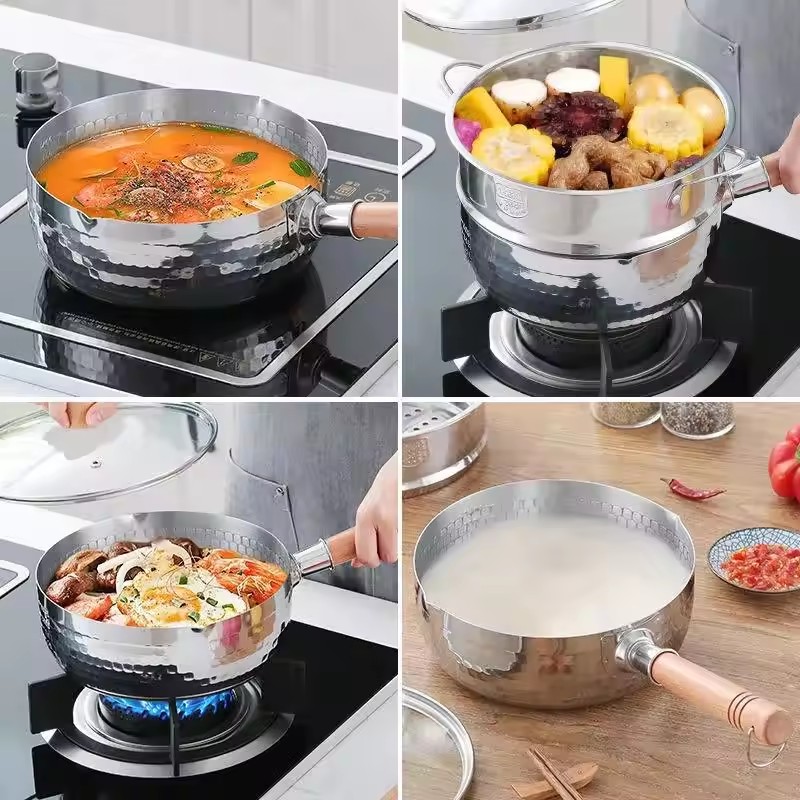
The most common type. Durable, dishwasher-safe, and compatible with gas, electric, and induction burners. A standard 3-quart stainless steel steamer set handles most household needs. Stainless steel pots and pans in general are preferred for steaming because they don't react with food or impart flavors.
Bamboo Steamers
Traditional in East Asian cooking. Bamboo steamers sit directly over a wok filled with boiling water. They absorb excess moisture, which prevents condensation from dripping back onto food — a real advantage for dumplings and buns. They require seasoning before first use and must be air-dried after washing to prevent mold.
Collapsible Steamer Baskets
These metal or silicone inserts fit inside existing pots and pans. They're the budget-friendly option — a good stainless steel collapsible basket costs $8–$15 and fits most standard saucepans. They don't have lids of their own, so you use the pot's lid.
Electric Steamers
Countertop appliances with built-in heating elements and timers. Brands like Cuisinart and Hamilton Beach offer models with multiple tiers. They're convenient but take up counter space. They typically heat up in 5–7 minutes and automatically switch off when the water runs dry.
Multi-Pot Steamer Sets
These come as part of larger cookware sets — a base pot paired with a steamer insert and sometimes a pasta strainer insert. High-end pots and pans brands like All-Clad, Calphalon, and Cuisinart include these multi-function inserts in their collections, making steaming an integrated part of everyday cooking rather than a specialty task.
Stovetop Wok Steamers
A wok with a domed lid can double as a steamer when a rack is placed inside. This is the traditional Chinese setup. The curved walls of a wok allow steam to circulate efficiently, making it ideal for whole fish and large portions of vegetables.