English
 中文简体
中文简体
 日本語
日本語
 Español
Content
- 1 The Direct Answer: How to Store Pans Without Damaging Them
- 2 Why Pan Storage Method Matters More Than You Think
- 3 Six Pan Storage Methods Compared
- 4 How to Store Nonstick Frying Pans So the Coating Lasts
- 5 How to Store Stock Pots, Casseroles, and Soup Pots
- 6 How to Store a Cookware Set as a Cohesive Unit
- 7 Six Pan Storage Mistakes to Avoid
- 8 How Pan Construction Affects Storage Requirements
- 9 Frequently Asked Questions About Pan Storage
- 10 The Bottom Line for Losing Less Cookware to Bad Storage
The Direct Answer: How to Store Pans Without Damaging Them
The best way to store pans is to combine three practices: hang heavy cookware on wall rails or ceiling racks, place felt or foam protectors between every nonstick surface that must be stacked, and keep lids in a separate vertical organizer. This is not a stylistic preference. It is the standard that professional organizers apply to client kitchens and that commercial kitchens follow because it keeps cookware in service longer.
Nonstick coatings are engineered to handle heat and cooking oils, but they are not engineered to survive friction from another pan's metal base. A 24 cm fry pan weighing roughly 1 kg pressed against the coated face of a smaller pan creates enough pressure to produce micro-scratches every time the pans shift. Those micro-scratches grow into visible bare spots, and once the coating is breached, food sticks and the pan loses its core purpose.
If you adopt only three rules today, these are the ones that make the biggest difference:
- Hang heavy cookware. Wall-mounted pot rails and ceiling racks keep the load away from every other pan surface.
- Protect every coated surface. Felt pan separators, paper plates, or folded kitchen towels absorb friction at the contact point.
- Give lids their own home. A vertical lid rack or a file-style divider keeps glass lids from chipping against pot rims.
Within a week of implementing these three changes, you will notice the difference: pans come out clean without new scratches, the correct lid is in reach instantly, and the cabinet stops turning into a collapsing tower every time you pull out a pan.
Why Pan Storage Method Matters More Than You Think
Storage is rarely the first thing a cook considers when buying a new pan, yet it determines how many years that pan stays useful. A quality nonstick coating is built to survive thousands of cooking and cleaning cycles. In laboratory abrasion testing, coating suppliers typically validate surface durability against 100,000 to 500,000 scrub cycles. Those tests use a controlled, flat abrasive path. Real-world storage is different: a heavy pot base sliding across a coating face, with trapped food grit between them, creates concentrated point loads that lab abrasion does not reproduce.
Based on feedback we collect from commercial kitchen operators and from our own factory testing at our 150,000-square-foot facility, improperly stacked pans lose their release performance noticeably faster. We typically see coating failure within 12 to 18 months in kitchens where pans are stacked bare and rotated often. In kitchens that use pan protectors or vertical racks, the same grade of coating lasts 3 to 5 years or longer.
Beyond coating life, the storage method changes three other things:
- Space efficiency: a vertical pan rack holds 10 to 12 pans in the same footprint where a neat horizontal stack fits only 4 to 5.
- Temperature exposure: pans stored directly above the stove face repeated heat cycling, which accelerates coating breakdown and hardens rubber or silicone handles.
- Weight distribution: heavy casseroles and stock pots stored in overhead cabinets strain both the cabinet box and the hinges. Commercial kitchens deliberately store heavy cookware near floor level for this reason.
The pattern is consistent: the same pan set that performs for five years in a well-organized kitchen might need replacement after two years in a chaotic storage setup. Storage is not a housekeeping detail; it is a lifespan variable.
Six Pan Storage Methods Compared
Every storage method has a purpose. The right one for you depends on kitchen layout, the volume of cookware you own, and how much you are willing to spend. The table below compares the six most common approaches.
| Method | Best For | Space Efficiency | Coating Protection | Setup Cost |
|---|---|---|---|---|
| Wall-mounted pot rail | Frequently used fry pans | Good | High | Moderate |
| Ceiling-mounted rack | Heavy pots and casseroles | Excellent | High | Moderate to high |
| Cabinet pull-out with dividers | Full cookware sets | Good | High | High |
| Vertical pan organizer | Lids and thin pans | Excellent | Very high | Low |
| Pegboard with hooks | Small pans and utensils | Good | Medium | Low |
| Stacking with pan protectors | Nestable pot sets | Excellent | Medium | Very low |
Wall-mounted pot rails are the simplest option for pans you use daily. Each hook holds the pan by its handle, so the cooking surface never touches anything. Install the rail into wall studs; drywall anchors alone are not sufficient for a row of heavy pans.
Ceiling racks suit kitchens with high ceilings. They store large volumes and keep cookware visible, but reaching overhead for a heavy pot is awkward, and pans hung above a stove collect airborne grease.
Cabinet pull-outs with custom dividers are the solution most professional organizers recommend for base cabinets. They offer full visibility, prevent stacking, and let you see every pan before you pull the drawer open. The hardware cost is the highest of the six options.
Vertical organizers store pans like files in a filing cabinet, one pan per slot. This layout suits families with several frying pans of similar size. Pegboards are the DIY route; hooks can be repositioned whenever your cookware lineup changes. Stacking with protectors remains the default because it needs no additional furniture, but it demands consistent discipline every time you put a pan away.
How to Store Nonstick Frying Pans So the Coating Lasts
Nonstick frying pans are the hardest working pans in most kitchens, and they are the first to show the consequences of careless storage. Their spray-applied coating bonds well to the aluminum base and handles food release beautifully, but it has a weak point: it does not tolerate abrasion from another pan's metal edge, rim, or base.
Follow these specific rules for nonstick fry pans:
- Hang pans by their handles whenever possible. This keeps the coated face completely clear. Verify your hooks are rated for the pan weight; a common 24 cm nonstick fry pan weighs 800 g to 1.2 kg.
- Use felt pan separators if stacking is unavoidable. The pan itself is not the problem; the twisting and sliding motion during retrieval is. A padded separator between pans converts scratching friction into soft sliding.
- Store the largest pan at the bottom of any pile. A 28 cm pan resting on a 20 cm pan presses a narrow ring, not a full surface, into the smaller pan's coating. Large-on-bottom spreads the load over more area.
- Keep utensils off the cooking surface during storage. Spatulas, spoons, and lids carry food grit that leaves fine scratches when left sitting on a coated face.
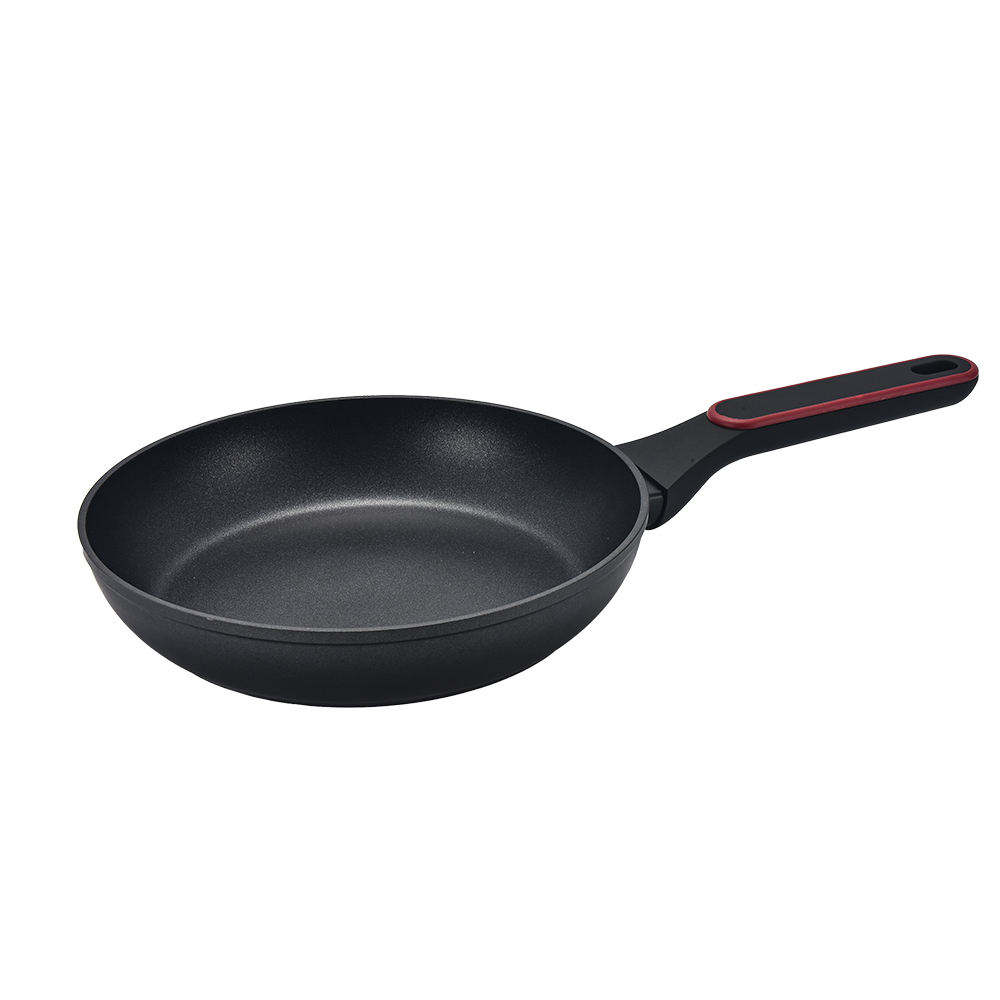
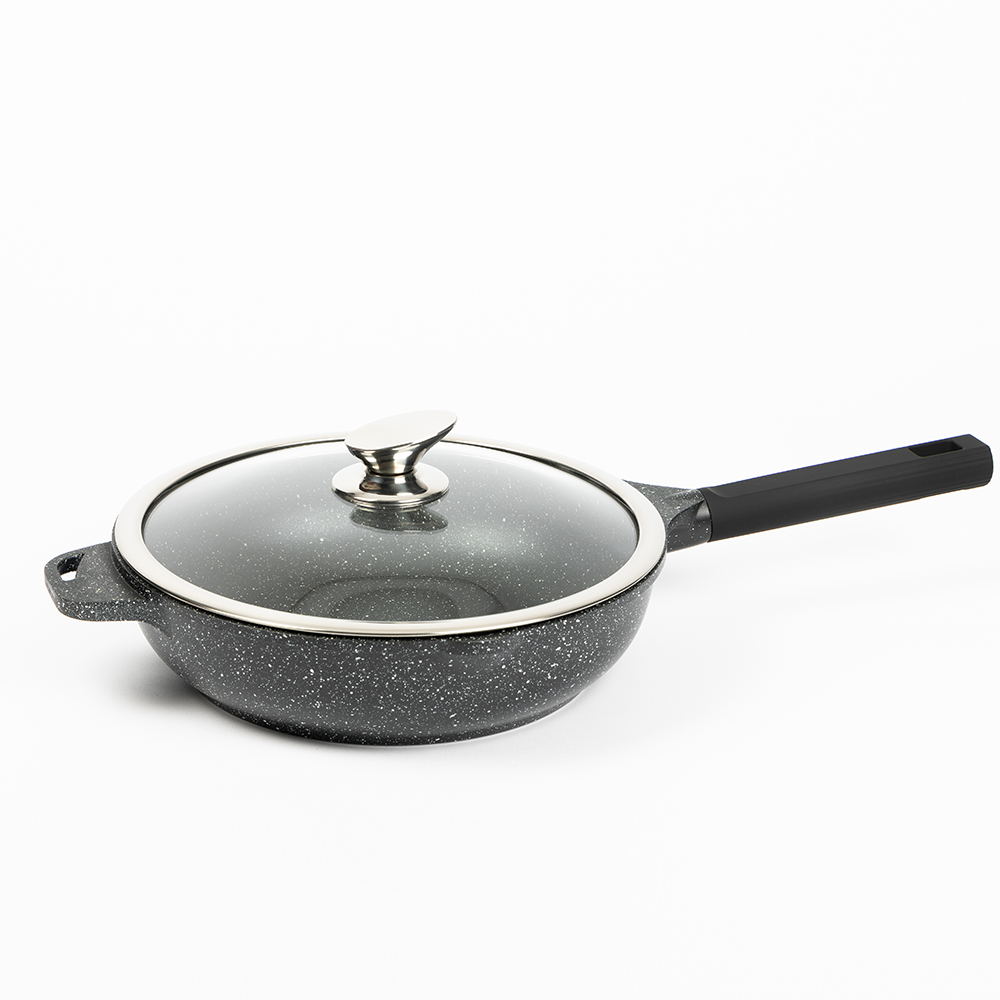
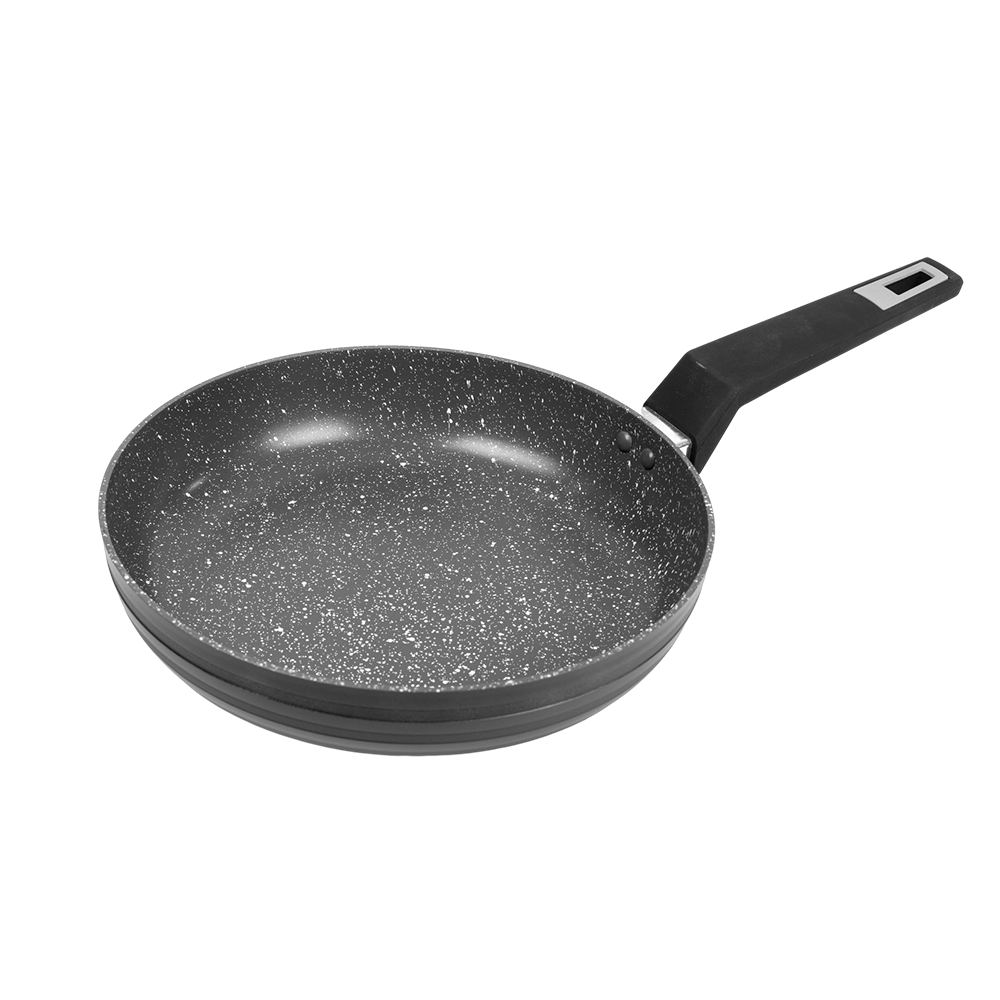
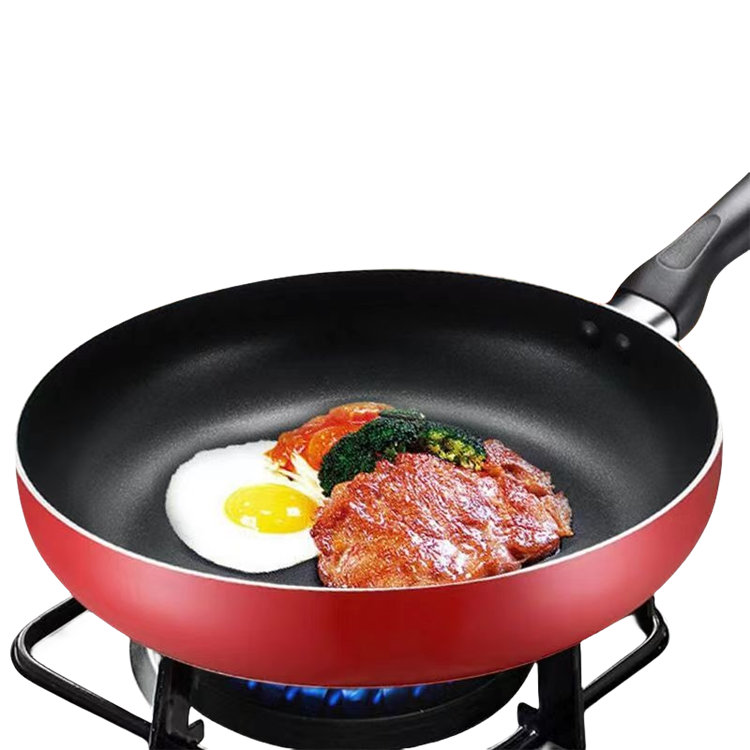
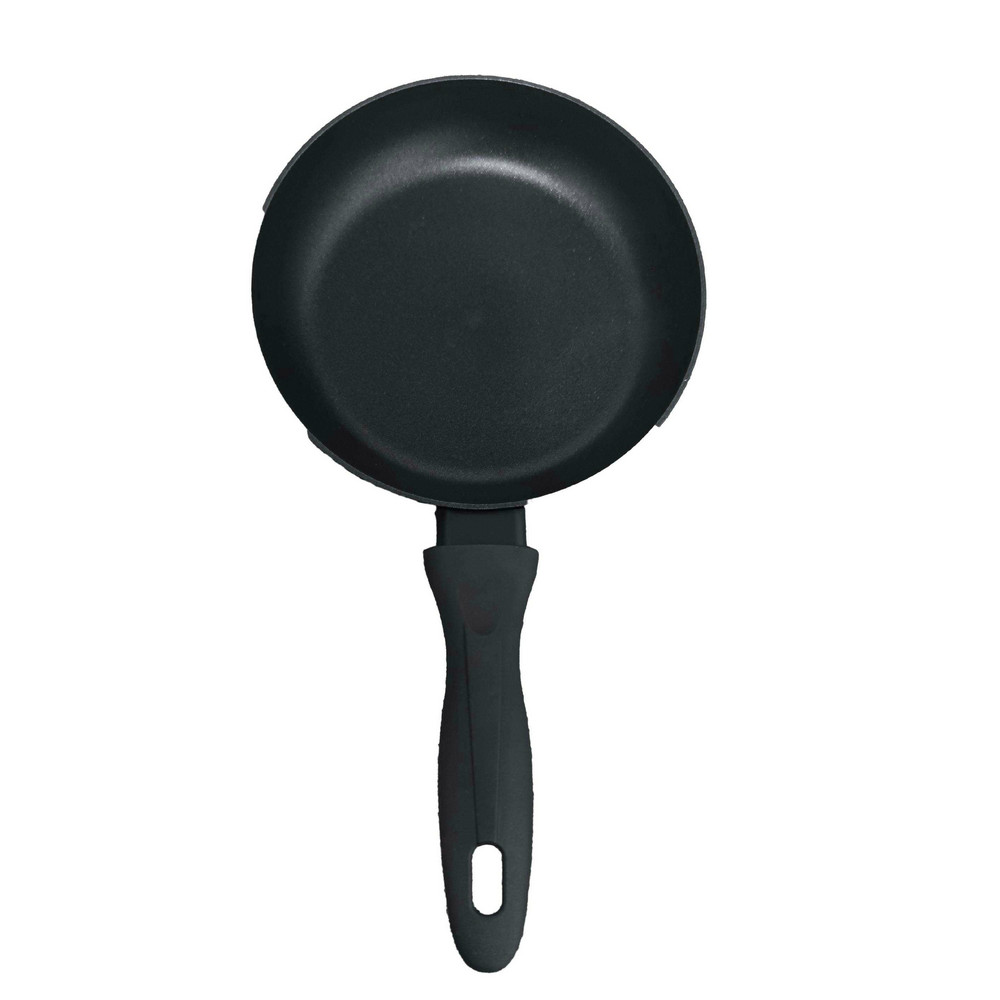
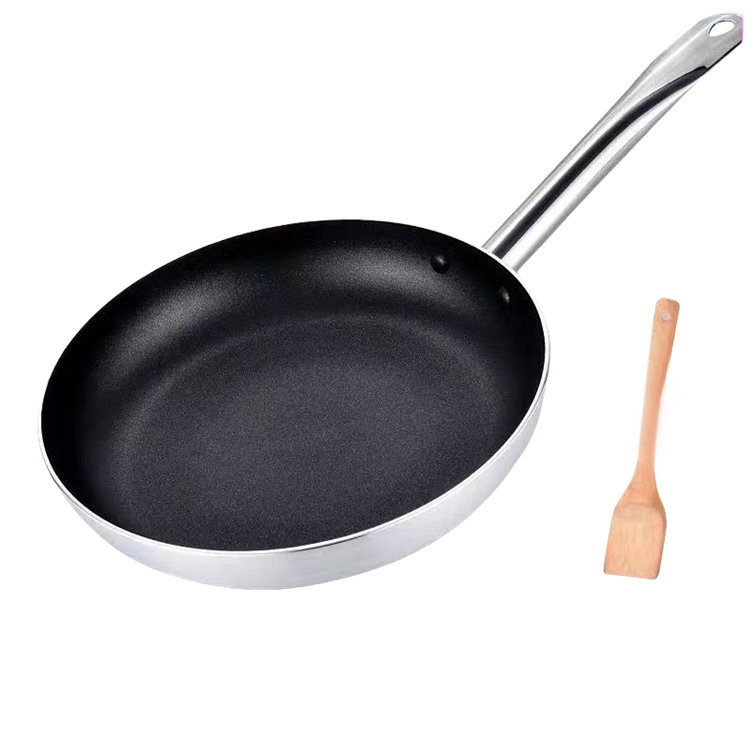
The pan's own construction also matters. A forged aluminum base of 2.5 mm to 3.0 mm thickness resists flexing, so the pan's rim stays flat and does not bite into the pan next to it. Our white nonstick frying pans with reinforced aluminum bodies are built with this thickness range specifically so they survive years of nested storage without warping.
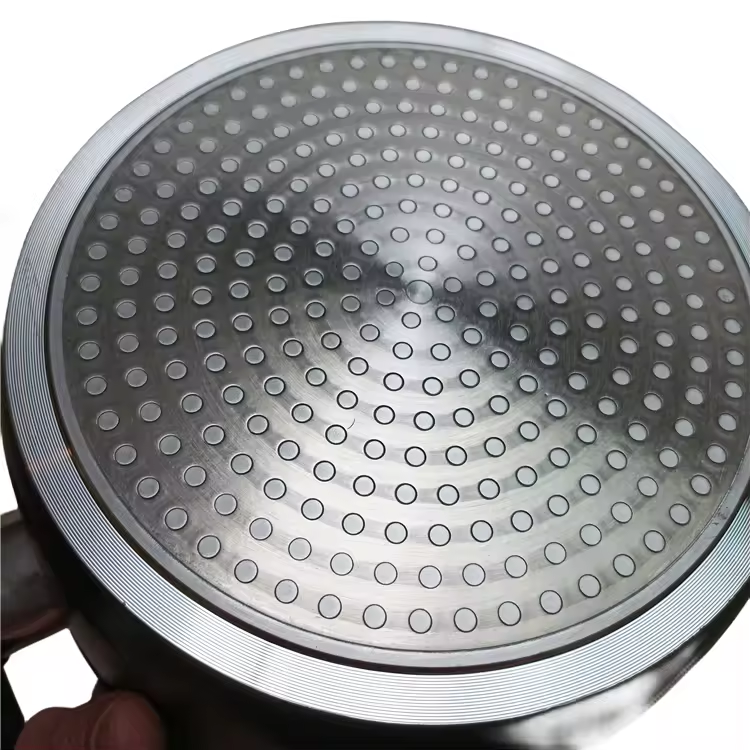 Kitchen Cooking Cookware Non Stick White Frying Pans Suppliers, OEM/ODM CompanyNingbo Leer Kitchenware Co., Ltd is China Kitchen Cooking Cookware Non Stick White Frying Pans suppliers and Kitchen Cooking Cookware Non...View Product →
For a deeper look at what wears a coating down — storage abrasion, cleaning temperature, metal utensils — read our factory analysis of how nonstick coating durability is tested.
How to Store Stock Pots, Casseroles, and Soup Pots
Stock pots and casseroles are the heaviest members of any cookware family, and they carry the largest lids. Their storage problems are about weight distribution and glass-lid safety, not just organization.
Nest Small Into Large, but Always Separate the Surfaces
Nesting stock pots in graduated sizes saves significant cabinet space. The critical detail is the separator: a felt liner between each pot is mandatory. When two pot rims rub during retrieval, the friction can chip enamel, scratch anodized aluminum, and transfer metal marks. A thin felt pad eliminates this risk entirely.
Store Heavy Pots on Lower Shelves
A fully loaded 5-quart casserole weighs about 2 kg empty and reaches 4 to 5 kg with its lid in place. In an overhead cabinet, that weight becomes a falling hazard each time you reach past it. Lower shelves and deep drawers are the correct home for heavy pots. Commercial kitchens follow this rule as a safety standard, not a convenience preference.
Handle Glass Lids Separately
Never lay a glass lid flat on a coated pan surface. The lid rim concentrates the glass's weight onto a narrow circle, and that circle impresses into the coating. Two better approaches exist: invert the lid on top of the pot so the stainless steel rim carries the load, or stand lids vertically in a file-style rack near the pots.
Do Not Hang Cast-Iron Casseroles From Lightweight Hooks
A 26 cm cast-iron casserole weighs roughly 3 kg empty. A hook rated for 10 kg or more, installed into a structural wall, is the minimum. If in doubt, store cast iron flat on a shelf with its lid inverted and a paper towel beneath.
If you cook with ovens and braises, choose a pot whose structure stays true under repeated heating and cooling. Our oven-safe forged aluminum casseroles with glass lids use a rigid forged body that resists warping, which also keeps the rim flat for stable stacking over years of use.
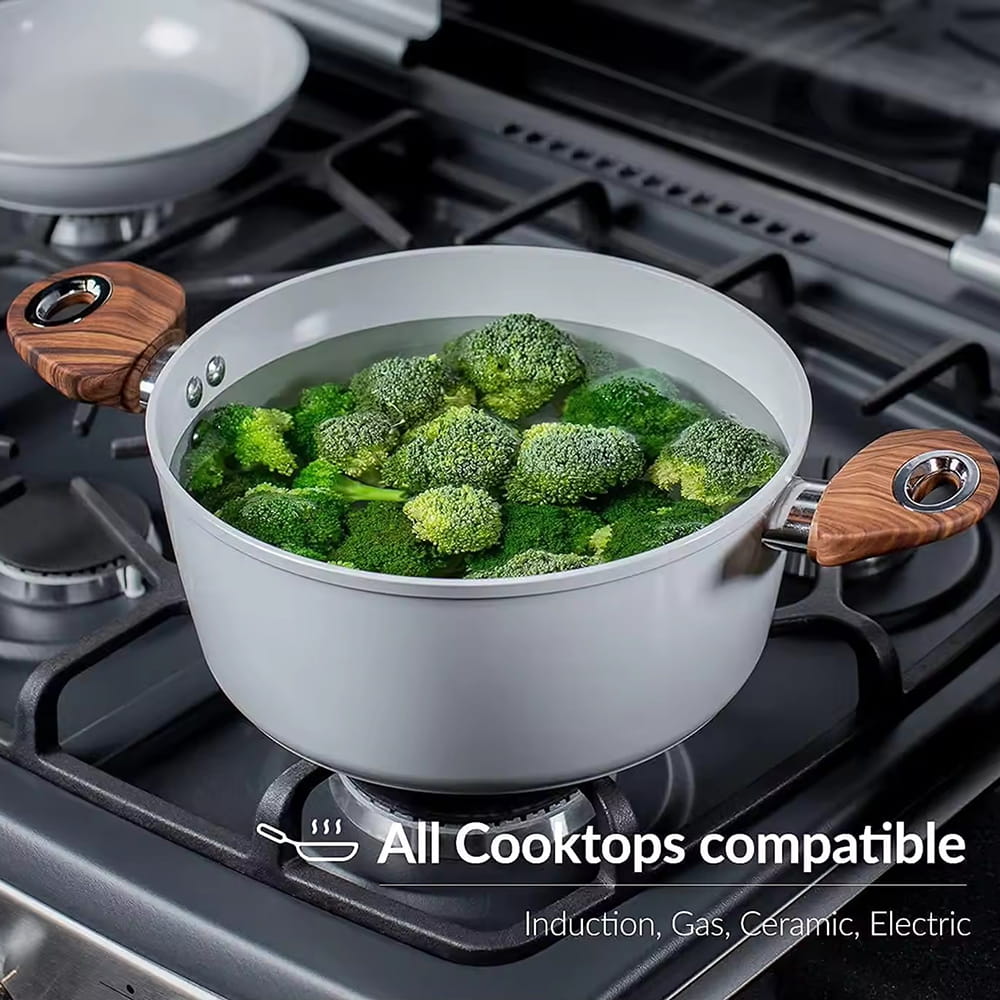 Nonstick oven safe aluminum forged cooking casserole pot set with glass lids SupNingbo Leer Kitchenware Co., Ltd is China Nonstick oven safe aluminum forged cooking casserole pot set with glass lids suppliers and Nons...View Product →
Related technical detail: the base construction of a pot determines how evenly it conducts heat across gas and induction hobs. Our engineers cover this in a dedicated article about how hole-type induction bottoms affect heat distribution.
How to Store a Cookware Set as a Cohesive Unit
Cookware sets present a distinct challenge. A 10-piece or 13-piece set must live in the same cabinet, drawer, or shelf system without becoming a jumbled pile of mismatched pieces. The key is to arrange by frequency of use rather than by size.
Arrange by How Often You Cook With Each Piece
- Daily-use fry pan and sauce pan go on the top shelf or on front hooks.
- Weekly-use stock pot and casserole sit on the lower shelf.
- Lids live in a vertical organizer, never stacked flat on a pan face.
- Bakeware and grill pans store separately to avoid coating-to-coating contact with daily pans.
Keep the Storage Ring If Your Set Has One
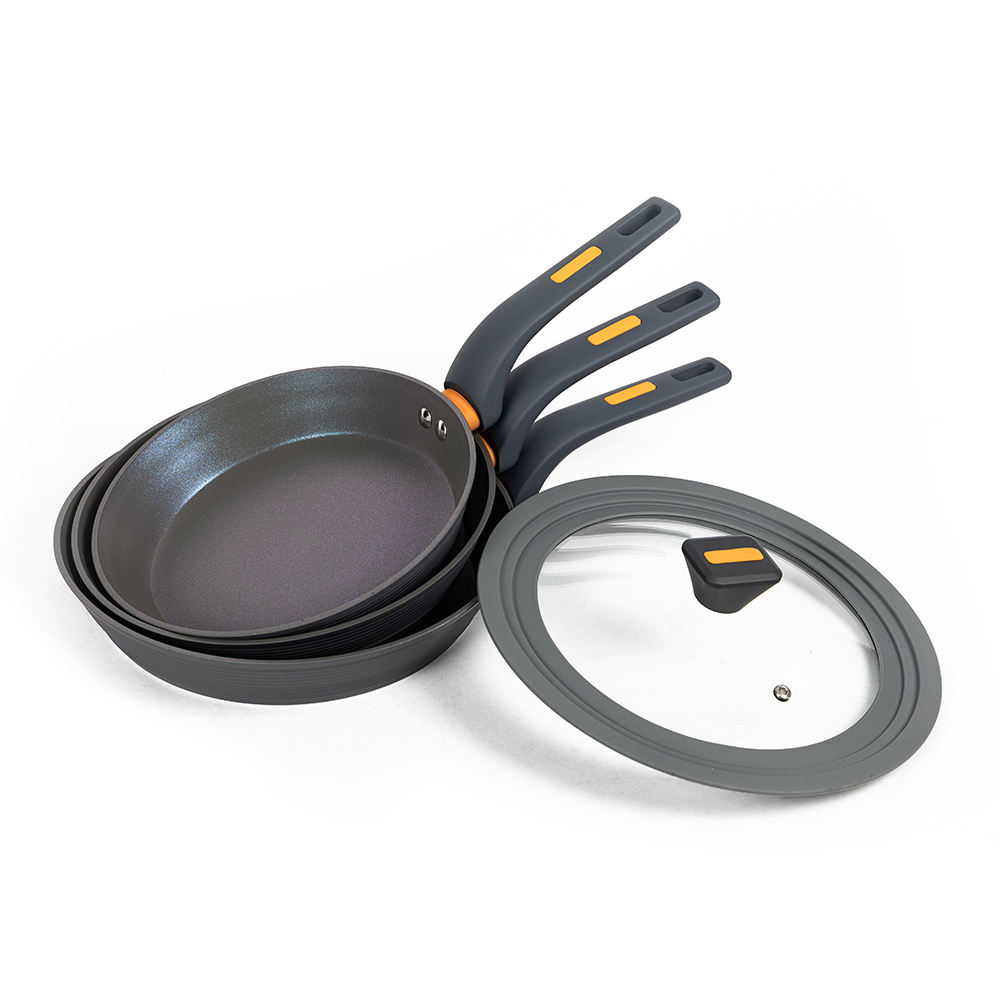
Many multi-piece cookware sets ship with a storage ring, a separator sheet, or a fitted holder. These accessories are not packaging waste; they are part of the set's nesting design. We manufacture long-lasting nonstick cookware sets designed for compact storage in 3-piece, 6-piece, and 13-piece configurations, and every configuration is checked in our factory for fit consistency so the pans nest without grinding against each other.
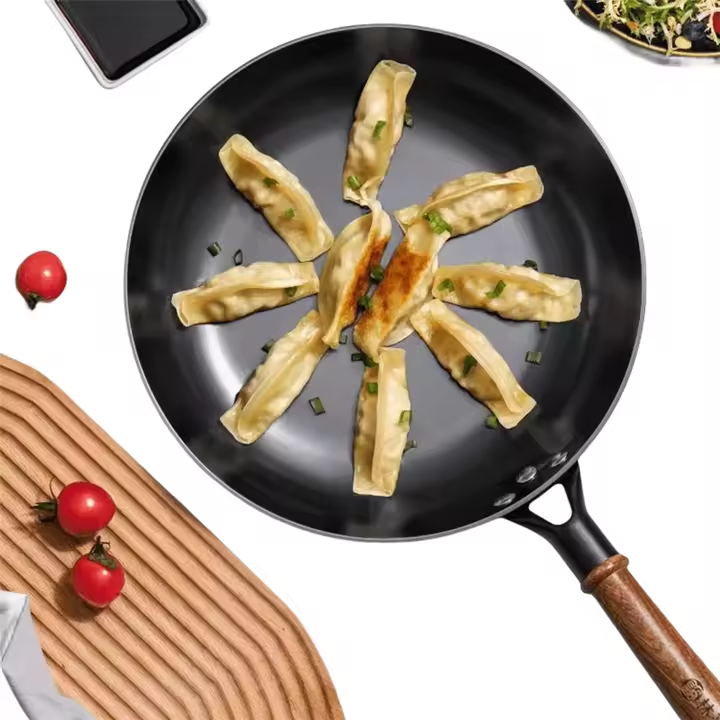 Cookware Set Non-Stick Pan Frying Pan Long-Lasting Non Stick Cookware Set SuppliNingbo Leer Kitchenware Co., Ltd is China Cookware Set Non-Stick Pan Frying Pan Long-Lasting Non Stick Cookware Set suppliers and Cookwar...View Product →
Watch the Drawer Weight Rating
A standard base-cabinet drawer glide is rated for 25 to 35 kg of dynamic load. A 10-piece nonstick set with glass lids can weigh 8 to 12 kg. That is well within the limit for a single drawer, but if you add a cast-iron grill pan, stoneware plates, or other heavy items to the same drawer, you approach the limit quickly. Split heavy pots between lower shelves and the drawer to balance the load.
Finally, assign one specific spot for every lid. The most common source of cookware-set clutter is a drawer full of mismatched glass lids. A vertical lid rack costs little, mounts inside a cabinet door or against a wall, and eliminates the daily lid hunt permanently.
Six Pan Storage Mistakes to Avoid
Years of working with commercial kitchens and home cookware buyers reveal the same patterns of damage. These six mistakes cause most pan failures after purchase:
- Stacking without protection. Bare metal on bare coating is the fastest route to scratches. The damage is not always visible immediately, but the coating's release strength drops steadily with every unguarded shift.
- Hanging heavy pots on adhesive hooks. Adhesive hooks are rated for 2 to 5 kg. A heavy casserole or a cast-iron Dutch oven will pull them out of the wall mid-week. Install every hook into a stud or use rated masonry anchors.
- Storing lids face-down on coated pan surfaces. The lid rim concentrates the entire glass weight onto a narrow ring, leaving a permanent circular dent in the coating over time.
- Overloading overhead cabinets. Domestic kitchen cabinets are typically rated for 40 to 60 kg total. A set of five pots plus their glass lids can weigh 15 to 20 kg. Add a cast-iron grill pan or a stack of stoneware casseroles and you exceed the safe limit.
- Placing the pan rack directly above the stove. Rising heat and steam accelerate coating decomposition, and airborne cooking grease settles onto hanging pans, forming a sticky film that is harder to clean than typical pan residue.
- Ignoring the handle shape when hanging pans. A handle with a downward slope lets the pan slide forward on the hook and ultimately fall. Select hooks with a slight upward tilt or add a rubber end cap to the handle to stabilize the pan.
Each of these mistakes is avoidable with a few minutes of planning, and each one directly contributes to premature cookware replacement. Mark these off your checklist and the pans will pay you back in service life.
How Pan Construction Affects Storage Requirements
Not every pan stores the same way, and the differences come down to how the pan is built. Base metal, coating type, handle design, and bottom structure all change how a pan behaves in a stack, on a hook, or inside a drawer.
Aluminum: Lightweight but Sensitive
Aluminum is the most common cookware base because of its excellent thermal conductivity. Forged aluminum pans with 2.5 mm to 4.5 mm wall thickness are dense and hold their shape under stacking. Thin pressed aluminum pans, by contrast, risk warping when a heavy pot sits on top of them for weeks. Aluminum also oxidizes over time, showing grey or white surface spotting. A nonstick coating covers that tendency, but if the coating gets scratched, the exposed aluminum begins oxidizing underneath the damaged edge.
Cast Iron: Heavy and Moisture-Sensitive
Cast iron is dense, brittle, and prone to rust in humid cabinets. It should be hung on rated hooks or stored flat in a dry location with a light coating of oil on its surface. Never place a cast-iron pan on top of a nonstick pan; the weight alone can deform the nonstick pan's rim even if the surfaces are separated by a protector.
Stainless Steel: Durable but Abrasive to Neighbors
Stainless steel resists corrosion and scratches well, but its rims and edges are hard enough to chip enamel and scratch nonstick coating on adjacent pans. If you store a stainless steel pot next to or above a coated pan, a protector between them is not optional, it is essential.
Induction-Compatible Bottoms: Stable but Heavy
Induction-ready pans carry an extra ferromagnetic layer laminated under the aluminum core. That layer adds weight and creates a harder, more aggressive contact surface. The advantage is that the pan resists warping under heavy stacked loads. The disadvantage is that the harder base presses harder into the pan below it when stored without protection. For induction cookware, pan protectors are a requirement, not an option.
Removable Handles: The Storage Advantage
Pans with removable handles reduce their total height dramatically, allowing three pans to occupy the vertical space normally used by one. This design detail is underrated for tight cabinets. It also makes nesting safer because the pan's silhouette becomes flat and predictable.
From our perspective as a cookware manufacturer, storage behavior is rarely the first topic in a product brief, but it is one of the first things an end customer notices. A pan that comes out of the cabinet scratched triggers returns; a pan that nests cleanly and hangs predictably creates repeat purchases. If you are sourcing pans for your own product line, we are happy to discuss storage-fit compatibility with our product engineers and run a quick nesting test on your target models.
Frequently Asked Questions About Pan Storage
Is it bad to stack pans?
Yes, stacking pans without any surface protection is bad. The base of each upper pan grinds against the surface of the pan below it, creating micro-scratches that weaken the nonstick coating over time. If you must stack, put a felt pan protector, paper plate, or folded towel between every pan. For pans with exposed aluminum or enamel exteriors, protectors also prevent scuffs and rim dents.
What can I put between stacked pans?
Felt pan liners are the standard choice because they are washable, reusable, and thick enough to absorb the pressure of a heavy pan above. Paper plates are a budget-friendly alternative that works in a pinch. Folded cotton kitchen towels also work but trap moisture, which can speed up oxidation on aluminum and rust on cast iron, so replace them regularly. Avoid materials containing metal grommets, zippers, or other hard elements.
Should pans be stored face up or face down?
It depends on the material. Nonstick pans should be stored face up to protect the coating from anything that lands or piles on top. Cast iron pans are best stored face down to keep dust off the seasoned interior, but the rim should sit on a cloth if you place another pan over it. Stainless steel pans can be stored either way. Aluminum pans without coating benefit from face-up storage to avoid water pooling under the rim.
How do I store pans with lids?
The best solution is a vertical lid organizer, which lets you slide a lid in and out without touching other cookware. Alternatively, invert the lid and set it on top of its pot, allowing the stainless steel show rim to carry the load. Avoid placing a glass lid flat against a coating surface, since the rim will press a permanent ring into the coating.
Can I hang pans on a wall?
Yes. A wall-mounted rail with hooks is one of the best storage choices for pans you use daily. Mount the rail into wall studs or use rated masonry anchors; drywall anchors alone will not hold a row of heavy pans. Hang pans so their handles do not stick out into walking paths, and dry pans completely before hanging to keep moisture away from the wall.
How do I store cast iron pans?
Cast iron is best hung or stored flat on a shelf with a paper towel beneath. After washing, dry it thoroughly over low heat, rub the entire surface with a thin layer of cooking oil, and let it cool before storage. Never store cast iron on top of a nonstick pan; the weight will compress and deform the softer pan below.
Do I need to clean pans before storing them?
Yes. Food residue, salt, and grease attract moisture and can corrode aluminum, rust cast iron, and stain enamel. Wipe the pan, wash it thoroughly, dry it completely, and then store it. For cast iron, add the protective oil layer after drying. This routine adds about two minutes per pan and significantly extends useful life.
The Bottom Line for Losing Less Cookware to Bad Storage
Store pans the way they were designed to be treated: heavy pots on low stable shelves or sturdy hooks, nonstick surfaces always separated by a protective layer, and lids in their own vertical space. The exact format — rail, ceiling rack, pull-out drawer, or simple stacking with felt pads — matters less than the principle of keeping coated surfaces away from direct metal contact.
These habits take about ten minutes to set up, and they protect an investment that most households spend several hundred dollars on. For a kitchen that cooks daily, that is time well spent, and the payoff comes every time a pan slides out of its place undamaged, coating intact, ready to cook.
When you are ready to buy the next pan or pot, choose pieces that store as well as they cook. A thick forged base, a flat stable rim, and a handle shaped for hanging will keep the pan in rotation for years. For distributors and brand owners sourcing pans for your own line, our team at Ningbo Leer Kitchenware designs cookware with both cooking performance and storage behavior in mind. Talk to us about your next project, and we will recommend a construction that fits your storage constraints from day one.