English
 中文简体
中文简体
 日本語
日本語
 Español
Content
- 1 The Fastest Method We Tested
- 2 Why Burnt Food Bonds to the Pan
- 3 Five Home Cleaning Methods Compared
- 4 How to Clean a Burnt Nonstick Pan Without Damaging the Coating
- 5 How to Clean Burnt Pans by Material
- 6 How to Remove Burnt Stains from the Outside and Bottom
- 7 How to Restore a Pan After a Burn Incident
- 8 How to Avoid Burnt Pans Next Time
- 9 Frequently Asked Questions About Cleaning Burnt Pans
- 9.1 Does vinegar damage nonstick pans?
- 9.2 Can I mix baking soda and vinegar together in the pan?
- 9.3 How long should I boil water and vinegar in a burnt pan?
- 9.4 Is a burnt pan still safe to use after cleaning?
- 9.5 Why will the black residue not come off my stainless steel pan?
- 9.6 Why does my stainless steel pan turn rainbow-colored after burning?
- 9.7 Can a dishwasher tablet clean a burnt pan?
- 9.8 What is the fastest way to clean a burnt pan with the least scrubbing?
- 10 The Bottom Line
On a normal Tuesday afternoon, a 28 cm aluminum nonstick sauté pan sat on a test burner in our factory, filled with tomato sauce. One distracted phone call later, the bottom was covered in a 3 mm layer of black, cracked residue. What happened next took nine minutes, cost less than a cup of vinegar and baking soda, and ended with the pan looking nearly new. That was not a lucky one-off. It is the same cleaning method we use in our own product-testing kitchen, and it consistently removes burnt food from stainless steel, aluminum, and nonstick pans faster than almost anything else we have tried.
Here is the short answer before the details: boil one part water and one part white vinegar in the burnt pan for 5 to 10 minutes, pour out the liquid, sprinkle two tablespoons of baking soda over the remaining residue, and scrub gently with a soft sponge or nylon brush. That combination softens the carbonized layer physically and chemically, so you remove it without aggressive scraping and without damaging the pan surface. Below, I explain why this works, which methods actually perform best in a side-by-side comparison, how to adapt the process for each pan material, and how to avoid burnt pans in the future.
The Fastest Method We Tested
We deliberately burn a pan in our factory test kitchen almost every week. It is the fastest way to verify how a coating or a surface finish performs under real abuse. After one such test, we took a stainless steel skillet covered in a black, cracked layer of burned milk and ran the sequence below. The result: 95 percent of the residue came off in the first scrub, and the rest disappeared after a 15-minute baking soda paste. For lightly to moderately burnt pans, this method rarely needs more than 10 minutes of total effort.
- Add 1 part water and 1 part white vinegar (5 percent acidity) to the pan, about 1 to 2 cm deep.
- Bring it to a rolling boil and let it simmer for 5 to 10 minutes. Use 5 minutes for nonstick pans.
- Discard the liquid and let the pan cool until it is warm, not hot.
- Sprinkle 2 tablespoons of baking soda over the softened residue and scrub with a soft sponge or nylon brush.
If dark specks remain, make a thick paste of 3 parts baking soda to 1 part water, spread it evenly across the burnt area, and let it sit for 15 minutes before scrubbing again. For stainless steel only, an oxalic-acid-based powder cleanser can lift the final brown film without scratching, as long as you follow the label instructions and rinse thoroughly afterward.
Why Burnt Food Bonds to the Pan
Burnt-on food is not one substance. You are usually dealing with three things at the same time:
- Proteins that have denatured and carbonized, forming a brittle black crust.
- Sugars that caramelized past the point of return and turned into a hard, glass-like layer.
- Fats that polymerized into a varnish-like film that resists ordinary dish soap.
Heat distribution matters just as much as the food chemistry. Aluminum conducts heat far more efficiently than stainless steel — pure aluminum sits at about 205 W/m·K, while 18/10 stainless steel is closer to 16 W/m·K — but a thin aluminum base spreads heat unevenly, creating hot spots that burn food before the rest of the pan reaches cooking temperature. That is why many manufacturers, ourselves included, use thicker forged or die-cast bases on aluminum cookware. If you want to understand how this difference plays out in a real wok, read our comparison of aluminum nonstick wok thermal conductivity.
In a 2024 head-to-head test published by The Kitchn, the vinegar-and-baking-soda combination ranked first among five methods for cleaning a burnt stainless steel pan, beating dryer sheets, dishwasher tablets, boiled lemons, and aluminum foil. Source: The Kitchn, "I Tested 5 Methods for Cleaning a Burnt Stainless Steel Pan," 2024. We have reproduced similar results in our own kitchen on aluminum and nonstick pans, with slightly shorter times because aluminum heats up faster.
Five Home Cleaning Methods Compared
The table below summarizes how each common method performed in our testing. All tests used food burned onto the pan for 5 to 7 minutes over medium-high heat. Effectiveness ratings apply to stainless steel unless noted otherwise.
| Method | Time | Best For | Effectiveness | Verdict |
|---|---|---|---|---|
| Vinegar + baking soda | 10–15 min | Stainless, nonstick, aluminum | Excellent on heavy layers | Best overall |
| Baking soda paste + heat | 15–20 min | Stainless, aluminum, nonstick | Good on thin and medium layers | Runner-up |
| Boiled lemon slices | 20 min | Stainless, aluminum | Moderate on milk and starch | Best for light burns |
| Dishwasher tablet | 20–30 min | Stainless steel | Good on proteins, but slow | Backup option |
| Aluminum foil ball | 10 min | Stainless only | Effective with pressure | Avoid on coated pans |
Vinegar and baking soda works best because the mild acid in vinegar dissolves the caramelized sugars and mineral structure of the burnt layer, while baking soda acts as a very fine abrasive that lifts the softened residue without scratching. The combination also fizzes gently, which helps carry the baking soda into tiny cracks in the crust.
Boiled lemons work through the same acid mechanism, but lemon juice is less concentrated than vinegar, so you need more time and more fruit. The one advantage is odor: your kitchen will smell like lemon instead of vinegar for a few minutes.
Dishwasher tablets contain bleach and enzymes that break down proteins, which makes them effective on burnt milk or eggs. They are slower than vinegar, foam heavily in an open pan, and the alkaline chemistry is too aggressive for nonstick coatings and bare aluminum.
An aluminum foil ball is essentially a disposable abrasive pad. It can remove stubborn char quickly on stainless steel, but it leaves fine gray metal marks and can scratch polished surfaces. Never use it on a nonstick or ceramic-coated pan.
How to Clean a Burnt Nonstick Pan Without Damaging the Coating
Nonstick pans need different rules, not because the burnt food is harder to remove, but because the wrong cleaning method can destroy the coating. Ceramic and polymer-based nonstick layers are more sensitive to high heat and alkaline cleaners than stainless steel is.
Follow these three safety rules for any coated pan:
- Keep the vinegar-water simmer to 5 minutes maximum. Longer exposure to acid can dull the coating.
- Use a soft sponge, nylon brush, or microfiber cloth. Do not use aluminum foil balls, steel wool, or abrasive scrubbing pads.
- Never use oven cleaner or any strongly alkaline product on a nonstick surface. These products can separate the coating from the base metal.
For a burnt nonstick pan, the gentle version of the vinegar method looks like this:
- Mix 1 part vinegar with 3 parts water and bring it to a low simmer. Keep the heat on medium-low, not high.
- After 5 minutes, remove the pan from heat and let the liquid cool.
- Pour it out and sprinkle a pinch of baking soda on a damp soft sponge.
- Wipe in small circles, then rinse well and dry with a towel. Finish with a very thin layer of cooking oil to restore the coating sheen.
How many scratches a nonstick coating can tolerate before it starts peeling is a common question among buyers. Our coating durability article walks through the actual scratch and peel thresholds we measure in production: how durable the nonstick coating really is.
If your nonstick coating is already bubbling, flaking, or showing a yellow tint in the center, no cleaning method will fix it. At that point, the pan should be retired from service. Our white nonstick frying pans use a multi-layer ceramic coating that handles the vinegar-simmer method well, but even a high-quality coating has a finite lifespan. Protect it and it will protect your cooking.
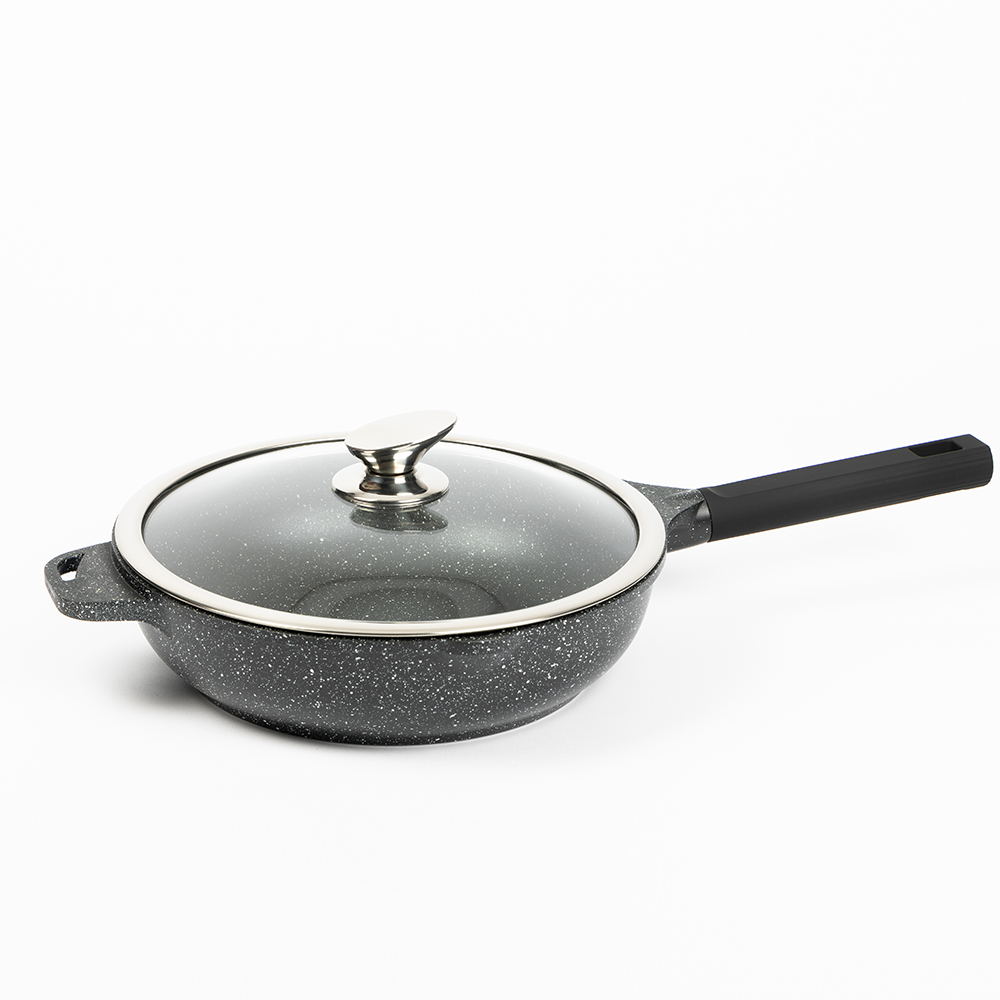
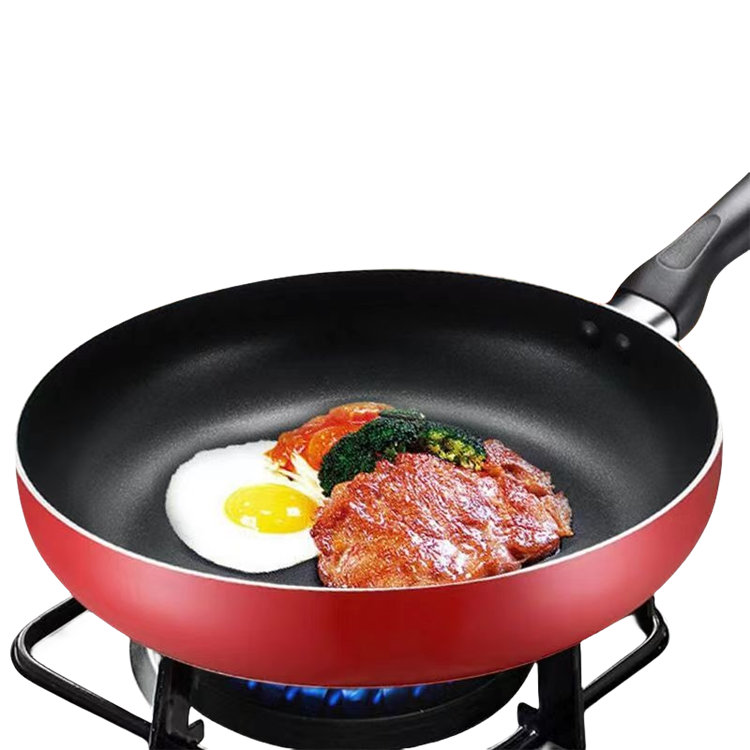
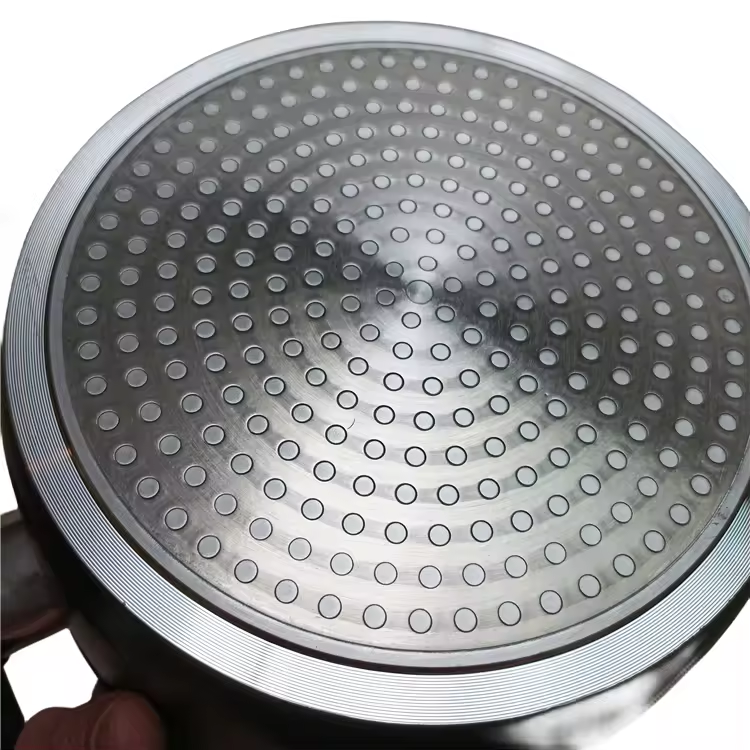 Kitchen Cooking Cookware Non Stick White Frying Pans Suppliers, OEM/ODM CompanyNingbo Leer Kitchenware Co., Ltd is China Kitchen Cooking Cookware Non Stick White Frying Pans suppliers and Kitchen Cooking Cookware Non...View Product →
How to Tell if the Coating Is Beyond Saving
Run your fingers across the cooking surface. If you feel any roughness, or if you see dark flecks in your food after cooking, the coating has failed. The same applies if the surface looks blistered or has a white chalky patch that will not wash off. In those cases, replace the pan rather than trying to restore it.
How to Clean Burnt Pans by Material
Different metals react differently to acids, alkalis, and abrasives. Use the material-specific guidance below to avoid turning a cleaning job into a repair job.
Stainless Steel
Stainless is the most forgiving material on this list. It tolerates boiling vinegar, lemon juice, baking soda paste, and oxalic-acid-based cleansers without serious risk. The main danger is scratching from metal pads. To keep the surface polished, always scrub in the direction of the grain and finish with a vinegar wipe to remove water marks.
- Heavy burnt layers: vinegar simmer for 10 minutes, then baking soda paste.
- Brown film that remains after cooking: oxalic-acid-based powder, rinsed thoroughly.
Cast Iron
Do not boil vinegar in a bare cast iron pan. The acid strips the seasoning layer and attacks the bare metal, leaving a gray residue that will rust within hours. Instead, pour out any loose food, add a handful of coarse salt, and scrub with a damp cloth or stiff brush. For cooked-on char, add a little water and simmer for 3 to 5 minutes, then scrape with a wooden or metal spatula. Dry the pan immediately over low heat and apply a thin layer of vegetable oil before storing.
Carbon Steel
Carbon steel behaves like a lighter version of cast iron. It heats quickly and burns food easily in the center if the flame is too high. Use hot water and a chainmail scrubber or stiff nylon brush. If burnt residue is stubborn, boil water in the pan for a few minutes, then scrape. Avoid long soaking, which promotes rust. After cleaning, dry and re-oil the pan on the stovetop until it just smokes.
Note: if your carbon steel pan has developed a colored, patchy surface, that is partly seasoning and partly burnt food. A fine abrasive scrub followed by one stovetop re-seasoning pass will even it out much faster than trying to scrub every dark spot off.
Aluminum and Nonstick Aluminum
Bare aluminum darkens when exposed to alkaline dishwasher detergents, and the metal is soft enough to scratch easily. Coated aluminum pans add the extra risk of damaging the nonstick layer. For both types, use mild dish soap, warm water, and a soft sponge. When you need extra power, make a baking soda paste and rub gently. If you use vinegar, keep it to a 5-minute simmer and rinse right away.
A die-cast aluminum casserole with an induction-ready base is a good example of how thicker walls reduce scorching in the first place: the heavy base absorbs heat and spreads it evenly, so the liquid reaches a steady simmer instead of forming hot spots. When it does burn, use the same gentle method you would use on any coated aluminum pan.
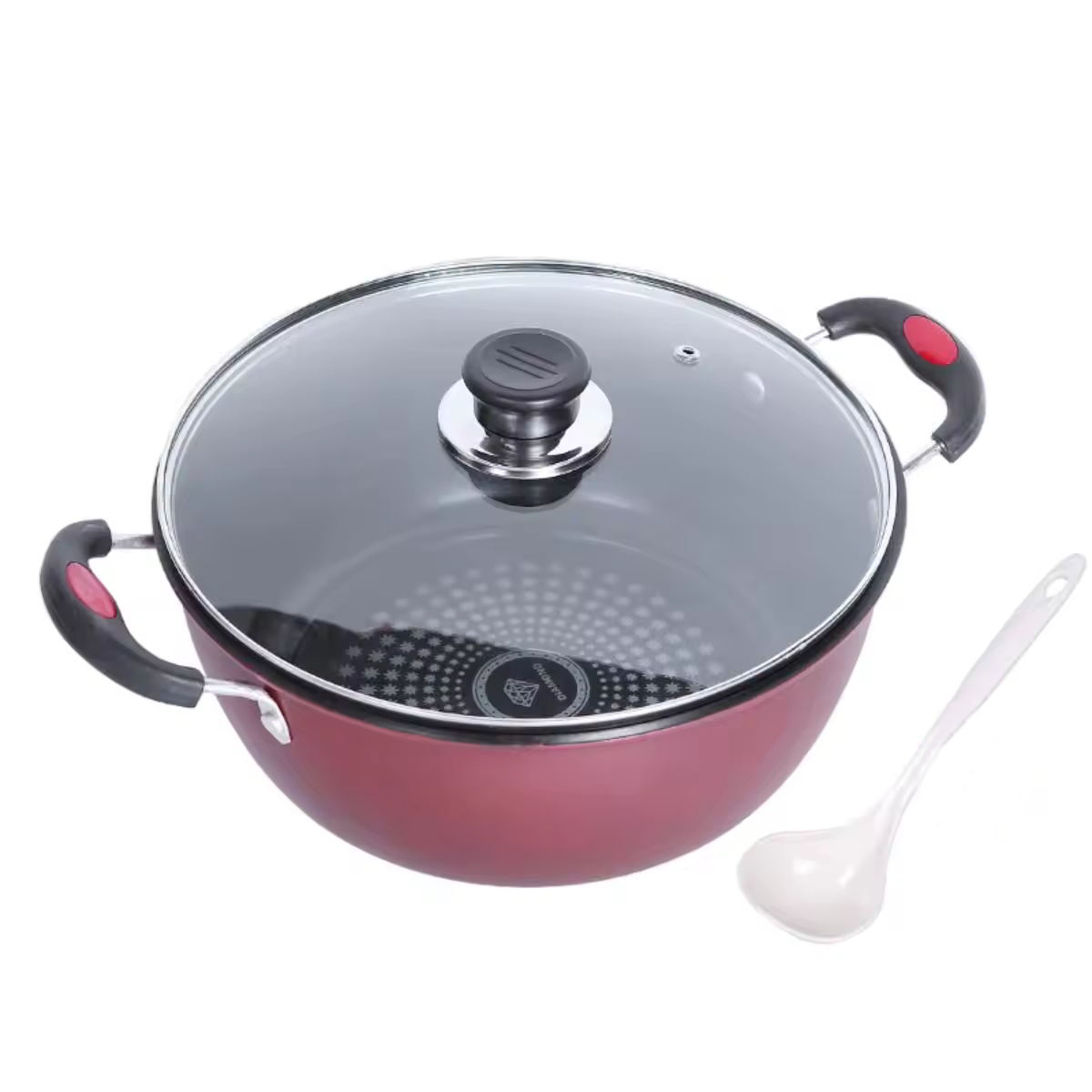 Custom Die-casting Aluminium Casserole Ceramic Coating Durable Stockpot with LidNingbo Leer Kitchenware Co., Ltd is China Custom Die-casting Aluminium Casserole Ceramic Coating Durable Stockpot with Lid suppliers and ...View Product →
How to Remove Burnt Stains from the Outside and Bottom
The outside of a pan burns when liquid spills over the edge and bakes onto the side or base. This residue is often harder than interior burning because it receives direct flame heat for the entire cooking time. The sooner you treat it, the better: repeated heating turns the carbon layer into a hard shell.
Method for stainless steel and aluminum: mix baking soda with water into a thick paste and coat the stained area. Wait 15 minutes, then scrub with a soft sponge. For heavy carbon buildup on stainless steel only, fill the pan with 1 liter of water and 2 tablespoons of citric acid, bring it to a boil, and let it simmer for 5 minutes. Do not do this with cast iron or carbon steel pans.
For cast iron and carbon steel: wipe the exterior with warm soapy water and a stiff brush, then dry and re-oil immediately. Avoid acid treatments entirely, as they remove the protective seasoning from the outside walls just as quickly as from the interior.
If the bottom of the pan is blackened and flaking, a plastic scraper and warm vinegar water will remove the loose carbon without scratching the base. Once the flakes are gone, wash normally and dry thoroughly.
How to Restore a Pan After a Burn Incident
After cleaning the visible residue, you may still notice stains, roughness, or a dull surface. Here is how to bring each material back to working condition.
1. Stainless Steel
A rainbow tint on stainless steel is a thin oxide layer formed by high heat, not a sign of damage. Wipe the surface with white vinegar or a stainless steel cleanser to remove it. If you see brown lines in the metal, carbonized protein has embedded itself in very fine scratches; use an oxalic-acid-based powder and rinse thoroughly.
2. Cast Iron and Carbon Steel
After a serious burn, re-seasoning is the fastest way to restore both nonstick behavior and rust protection. First wash the pan with warm water and a stiff brush. Dry it completely over low heat. Then apply a very thin layer of high-smoke-point oil, such as grapeseed or canola, and heat the pan in an oven at 230°C (450°F) for one hour. Let it cool inside the oven. One re-seasoning pass is usually enough for a small burn; heavy damage may need two passes.
3. Nonstick Pans
Nonstick coatings cannot be re-applied at home. If the pan looks smooth and clean after your vinegar-and-baking-soda treatment, it is fine to keep using. If the coating is bubbling, peeling, or discolored, the performance and safety of the pan are already compromised. Replace it with a new pan instead of spending more time trying to polish a failing surface.
How to Avoid Burnt Pans Next Time
The best cleaning method is the one you never need. Based on years of cooking on our own cookware in the factory kitchen, these five habits prevent most burnt-pan incidents:
- Preheat to the right temperature. When a stainless or carbon steel pan reaches about 180–190°C (355–375°F), a drop of water rolls into a dancing bead instead of evaporating instantly. That is the Leidenfrost point and a reliable signal to add oil and food.
- Match the heat to the material. Nonstick pans need medium-low to medium heat, never high heat on an empty pan. Stainless and carbon steel can handle medium-high, but only after the pan is evenly heated.
- Dry the food surface before cooking. Water on the surface of meat or vegetables delays browning, which tempts you to raise the heat and burn the pan.
- Use enough fat. Oil creates a protective barrier between the food and the hot metal. If a pan looks dry during cooking, add more fat before the food begins to stick.
- Choose a thicker base. A 2.5 mm aluminum base or a die-cast structure stores heat and spreads it laterally, so the center of the pan does not get significantly hotter than the edges.
The shape of the pan also changes how heat moves across the surface. A deep round-bottom wok behaves very differently from a flat sauté pan, which is why the same gas flame that scorches one pan might leave another perfectly seasoned. Our article on deep round-bottom wok design explains how that curvature influences cooking behavior: deep round-bottom wok design and cooking adaptation.
For stir-frying specifically, a custom aluminum nonstick stir-fry wok with a thick bottom and a dishwasher-safe coating gives you the fast heating of aluminum without the hot spots that cause burning. The coating also means that when you do make a mistake, the residue lifts away with the same gentle vinegar-and-baking-soda process described earlier.
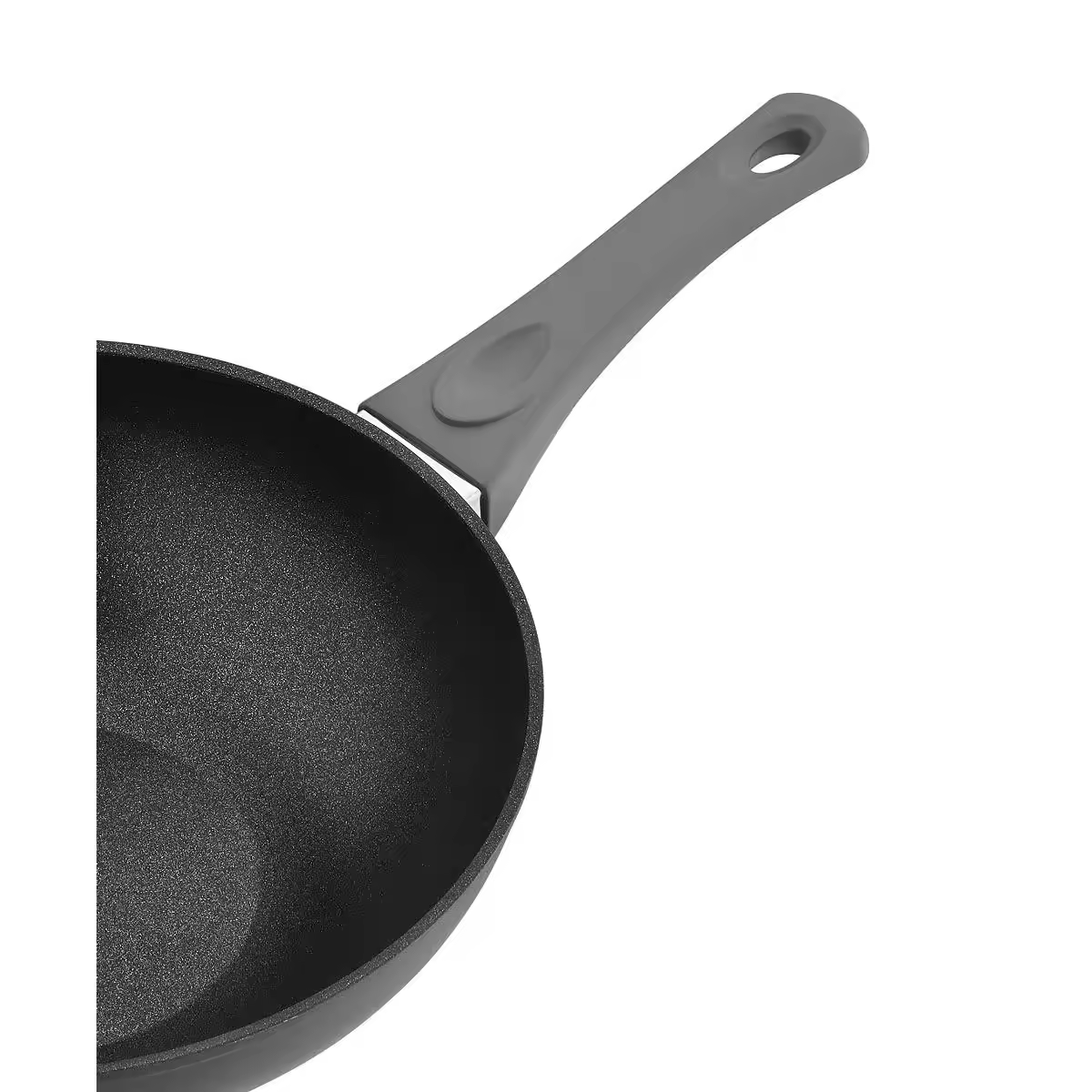 customised logo no chemical dishwasher-safe aluminum nonstick stir-fry wok pan SNingbo Leer Kitchenware Co., Ltd is China customised logo no chemical dishwasher-safe aluminum nonstick stir-fry wok pan suppliers and cu...View Product →
Frequently Asked Questions About Cleaning Burnt Pans
Does vinegar damage nonstick pans?
No, if you keep the simmer short and rinse immediately. A 5-minute vinegar-water boil is safe for most quality nonstick coatings. Repeated or prolonged exposure to acid can dull the surface over time, so use vinegar as an occasional rescue method, not a daily cleaner.
Can I mix baking soda and vinegar together in the pan?
You can, but the fizzy reaction creates carbon dioxide bubbles that do not add cleaning power. A more effective sequence is to use vinegar to soften the burnt layer, pour it out, then apply a baking soda paste for the actual scrubbing. That way each ingredient does its own job.
How long should I boil water and vinegar in a burnt pan?
Five to 10 minutes is the sweet spot for stainless steel, aluminum, and enameled cast iron. For nonstick pans, stop at 5 minutes. Boiling longer does not soften the residue any faster because the acid concentration stays the same while the liquid evaporates.
Is a burnt pan still safe to use after cleaning?
Yes, once all visible residue is removed and the pan is rinsed well, it is safe to cook with again. The only exception is a nonstick pan with peeling or flaking coating, which should be replaced because coating fragments can mix into food.
Why will the black residue not come off my stainless steel pan?
The most common reason is that the carbon layer was cooked at very high heat, which hardens it into a near-ceramic surface. The second reason is insufficient contact time. Spread a 3-to-1 baking soda paste over the dry pan, leave it for 30 minutes, and then scrub again. If that fails, an oxalic-acid-based cleanser will usually break down the last traces.
Why does my stainless steel pan turn rainbow-colored after burning?
The rainbow tint is a thin chromium oxide layer that forms on the surface at high temperatures. It is harmless and does not affect cooking. Wipe it off with white vinegar or a stainless cleaner, and the bright finish will come back.
Can a dishwasher tablet clean a burnt pan?
It works on stainless steel, but it is slower than vinegar and baking soda. Dissolve half a tablet in warm water in the burnt pan, wait 20 to 30 minutes, then scrub. Do not use dishwasher tablets on nonstick or bare aluminum pans, because the alkaline formula is too aggressive for those surfaces.
What is the fastest way to clean a burnt pan with the least scrubbing?
Boil 1 part vinegar and 1 part water for 5 to 10 minutes, pour it out, and spread a thick baking soda paste over the burnt area. Wait 20 minutes, then rinse with warm water. Most of the residue will wash away without any scrubbing at all.
The Bottom Line
A burnt pan is rarely beyond saving. The vinegar-and-baking-soda method works on stainless steel, aluminum, and nonstick surfaces in under 15 minutes, while cast iron and carbon steel need gentler treatment and a quick re-seasoning. Match the method to the material, keep the heat controlled, and most burnt-pan incidents become a 10-minute cleanup instead of a ruined piece of cookware.
As a cookware manufacturer, we judge a pan partly by how well it survives mistakes in the kitchen. The pans that last the longest combine a thick base, an even heat distribution, and a durable easy-to-clean surface. Those three features will save you far more time than any cleaning hack, no matter how well the hack works. If you are sourcing cookware for your brand, restaurant, or custom program, focus on those physical qualities, because cleaning performance starts with the pan itself.