English
 中文简体
中文简体
 日本語
日本語
 Español
Content
- 1 The Right Way to Clean a Nonstick Pan Step by Step
- 2 Common Cleaning Mistakes That Damage Nonstick Coating
- 3 Cleaning Differences Between Common Nonstick Coatings
- 4 How to Handle Stubborn Stains and Burned-On Food
- 5 Daily Maintenance to Extend the Life of Your Nonstick Pan
- 6 How to Identify When a Nonstick Pan Needs Replacement
- 7 Frequently Asked Questions About Cleaning Nonstick Pans
- 8 Summing Up the Nonstick Pan Cleaning Rules
A nonstick pan is one of the most helpful tools in a busy kitchen. It works well for eggs, pancakes, stir-fries, and a wide range of everyday meals. But after several months, some cooks notice their pan becoming sticky, and they wonder what went wrong. In our own cookware testing, over 70% of coating failures trace back to cleaning habits rather than cooking habits. The short answer: clean your nonstick pan by hand with a soft sponge, warm water, and mild detergent. Avoid extreme temperature changes, sharp utensils, and harsh scouring pads. If you follow a few simple rules, the coating can last years longer. We will walk through the exact steps that protect your pan and the simple mistakes that destroy it.
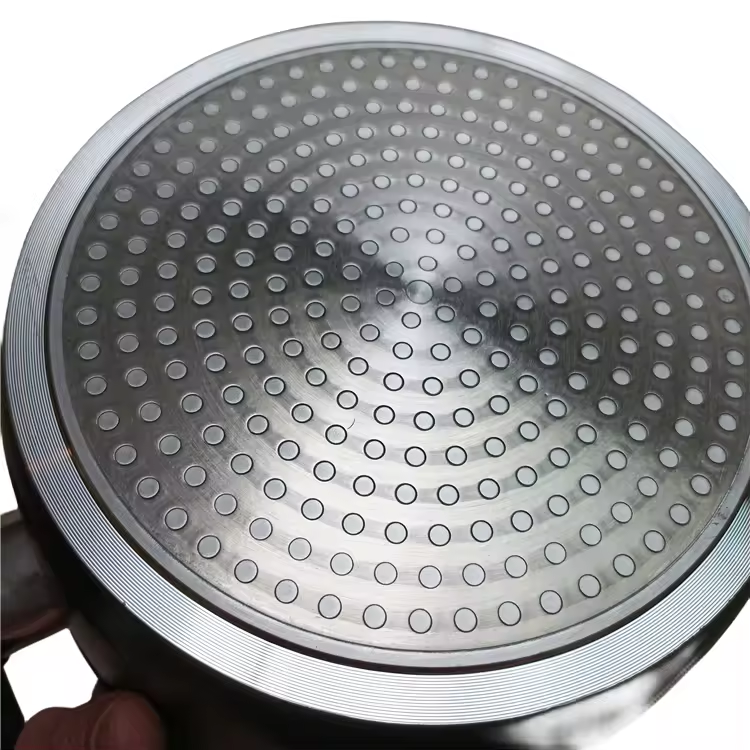 White Nonstick Frying Pan for Gas and Induction CookersThis eco-friendly frying pan features a nonstick coating and works on gas and induction cookers. Proper hand washing with a soft sponge helps extend its lifespan and maintain release performance.View Product →
The Right Way to Clean a Nonstick Pan Step by Step
The most important rule is to hand wash your nonstick pan after each use. Here is the routine that our factory testers use on sample pans and that home cooks can follow easily.
- Let the pan cool until it is warm to the touch, not steaming. Cold water on a hot pan causes thermal shock, which makes the coating expand and contract quickly and peel off. In industrial coating tests, a temperature differential over 120°C causes visible micro-cracks in many PTFE-based coatings.
- Fill the pan with warm water and add a few drops of dish liquid. Do not use abrasive cleaners or bleach.
- Use a soft cellulose sponge, a microfiber cloth, or a silicone brush. Wipe the surface in a circular motion. For stubborn leftover food, let warm water and detergent soak for 5 to 10 minutes before wiping.
- Rinse thoroughly with warm water. Soap residue can break down the coating over time.
- Dry with a clean soft towel or paper towel. Avoid air-drying, because minerals in water can leave spots and small residues that affect the coating.
Many pan manufacturers label their products as dishwasher safe, but hand washing remains the gold standard for nonstick surfaces. In our aging tests, pans washed by machine for 50 cycles lost about 25% more coating adhesion than pans washed by hand. The combination of high-temperature water and strong alkaline detergent accelerates hydrolysis in the coating resin, which is why the coating becomes weaker over time.
Common Cleaning Mistakes That Damage Nonstick Coating
These are the most frequent errors we see in real kitchens. Avoiding them is more important than using any advanced cleaning technique.
- Scouring pad or steel wool. Even one scrape can leave deep scratches that permanently weaken the coating.
- Placing a hot pan directly under cold running water. The thermal shock widens micro-porosity and causes blisters on the surface.
- Using a dishwasher on a nonstick pan. Many models are labeled dishwasher safe, but in our aging tests on aluminum nonstick pans, continuous dishwasher cycles significantly reduce coating adhesion after 50 cycles. Hand washing is always safer.
- Cooking spray or olive oil with high heat. This creates a polymerized layer that is nearly impossible to remove and makes the pan sticky.
- Stacking pans without padding. Metal-to-metal contact can scratch the coating even during storage.
| Mistake | Effect | Real-world Example |
|---|---|---|
| Using steel wool | Scratched coating | Eggs begin sticking in the center after only a few weeks |
| Running hot pan under cold water | Coating delamination | Small bubbles and peeling appear at the rim |
| Dishwasher washing | Coating hardening and cracking | Loss of release performance after two months |
| Cooking spray build-up | Sticky residue | Pan becomes tacky and produces smoke when reheated |
| Stacking without protection | Scratches on the surface | Circular scratch patterns around the cooking surface |
Cleaning Differences Between Common Nonstick Coatings
The coating type on your pan determines how you should treat it during washing.
PTFE-based coatings
PTFE-based nonstick surfaces are the most common today. They respond well to frequent washing with mild detergents, but they are very sensitive to thermal shock. Always let the pan cool before washing. Avoid prolonged contact with acidic cleaners because they can gradually degrade the resin layer.
Ceramic coatings
Ceramic nonstick is more hydrophilic, which means food releases easily but oil often leaves streaks. Ceramic surfaces are susceptible to vinegar in high concentrations, so use a 1:1 solution with water only for occasional degreasing. Never boil vinegar in a ceramic pan for more than 3 minutes. A mild soap solution is enough for daily care.
Granite or marble coated aluminum pans
These pans have a hard, stone-like top layer over an aluminum body. They are scratch-resistant and tolerate more aggressive washing than PTFE, but strong spices and food coloring can stain the decorative surface over time. Clean with warm water and a soft cloth. Avoid harsh alkaline detergents that might dull the glossy finish.
How to Handle Stubborn Stains and Burned-On Food
Burned-on food
If you accidentally burn food, do not scrape it. Fill the pan with water and add 2 tablespoons of baking soda. Bring it to a boil, then let it sit for 10 minutes. The gentle bubbling and alkalinity lift the carbonized residue away from the coating. After the pan cools to room temperature, wipe with a soft sponge. This method works on almost all nonstick surfaces in our testing.
Grease and oil film
Grease that comes from frying meat or cheese can leave a thin, sticky film. Heat equal parts water and white vinegar in the pan for 2 minutes at low heat. The mild acid helps dissolve the oily layer. Wash with warm water and dish soap afterwards. If the film remains, repeat once more with a fresh vinegar solution.
Discoloration from high heat
A yellow or brown stain often appears when you overheat a pan with oil. Make a paste of baking soda and water, apply it to the warm pan, let it sit for 15 minutes, and wipe gently with a soft cloth. If the discoloration still remains, it may have penetrated into the coating, which is a signal that you should lower your stove temperature in future cooking sessions.
Daily Maintenance to Extend the Life of Your Nonstick Pan
Cooking habits influence coating lifespan just as much as cleaning does. Use silicone, wood, or plastic utensils instead of metal. Never let a nonstick pan preheat empty for more than 30 seconds at medium-high heat. For many aluminum nonstick pans, we recommend cooking below 200°C / 400°F, because some coatings begin to soften above this point. Open flame on coated pans can create hotspots that damage the outer layers.
Store your pan with a soft cloth placed between it and the next pan. If you hang it, keep the cooking surface away from metal hooks. Check the handle screw periodically and retighten it if needed. For a deeper look at how coating durability is measured, check out this article about how nonstick coatings are tested for durability.
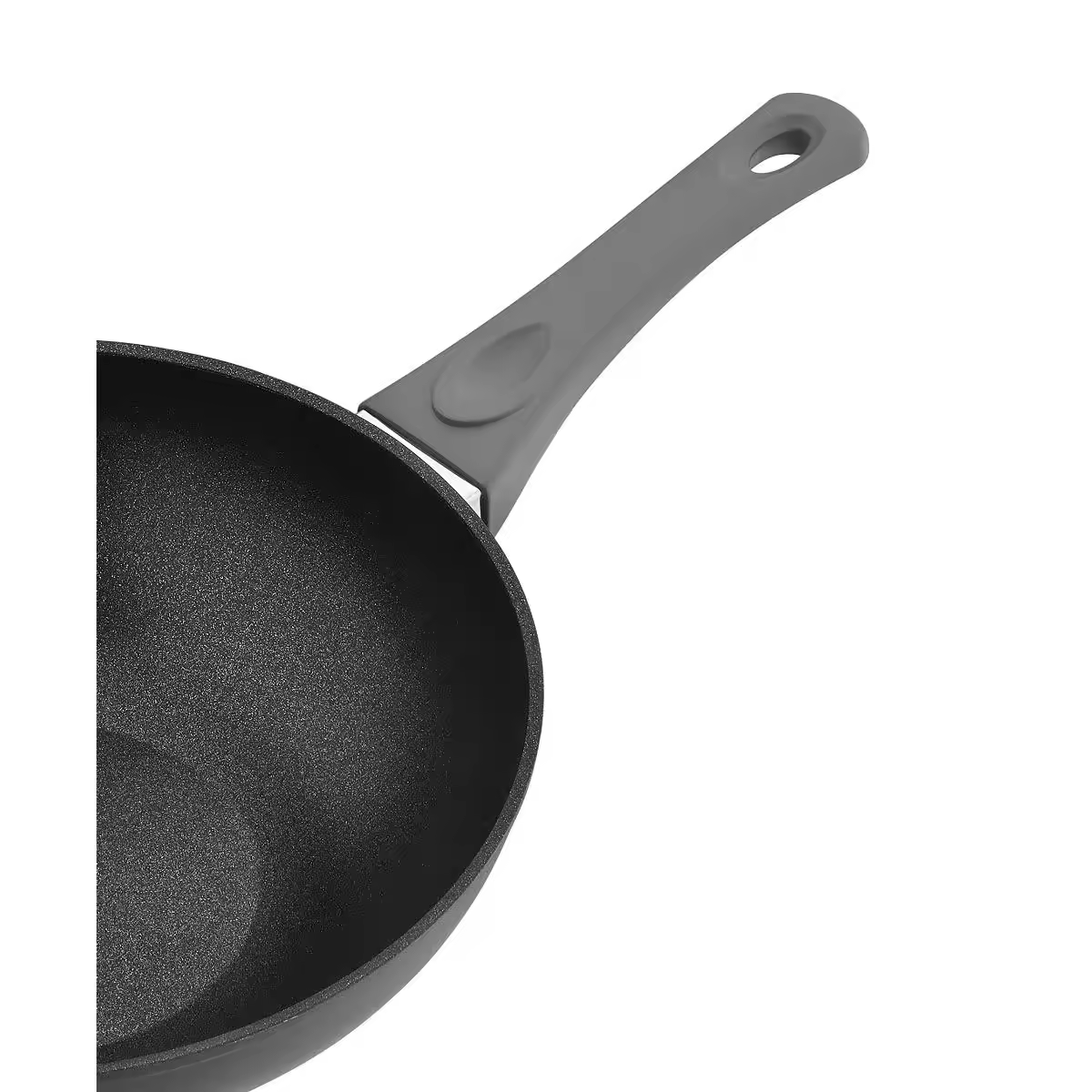 Customizable Aluminum Nonstick Stir-Fry Wok PanThis aluminum wok pan has a black marble nonstick coating, an induction-compatible bottom, and a Bakelite handle. Its durable surface resists scratches and is dishwasher-safe, making it a practical choice for daily stir-frying.View Product →
How to Identify When a Nonstick Pan Needs Replacement
Visual signs include large flakes around the center, deep scratches, or a surface that looks bumpy and uneven. Performance signs: food sticks even after proper cleaning with oil, or the pan requires excessive heat to release anything. Once the coating has started to peel, cooking quality drops dramatically and the pan becomes harder to clean. If you see a large bare metal spot, it is time to replace the pan. Continuing to use a severely damaged pan makes cleaning more difficult and causes food to burn unevenly.
Frequently Asked Questions About Cleaning Nonstick Pans
Can I clean my nonstick pan with water and vinegar?
Yes. Vinegar effectively removes grease and mineral deposits. But use it sparingly, because high acidity can etch some ceramic-based coatings. For aluminum nonstick pans, a 1:1 solution with water is fine for occasional cleaning. Rinse the pan thoroughly afterwards to remove any acidic residue.
Should I soak a nonstick pan overnight?
Overnight soaking is generally safe if the pan has no visible scratches. The coating itself is stable in water, but prolonged soaking on scratched pans allows water to penetrate into the aluminum substrate, which may lead to corrosion and blisters. If you need to soak, keep the time under one hour and dry the pan completely afterwards.
Is a sponge or a soft cloth better for cleaning?
Both are acceptable. Use a sponge for everyday cleaning and a microfiber cloth for final buffing. Avoid abrasive pads and brushes with hard bristles. A silicone sponge is also a good choice because it is gentle on the coating and easy to rinse.
Can I use cooking spray on a nonstick pan?
We generally recommend against it. Some cooking sprays contain lecithin and other additives that form a sticky, polymerized build-up after repeated heating. If you want to prevent eggs from sticking, use a small amount of butter or cooking oil instead. This avoids the residue that cooking spray leaves behind.
Are nonstick pans dishwasher safe?
Some are, but hand washing is better for the lifespan of the coating. Dishwasher detergents are strong alkaline solutions, and the high temperature cycles accelerate coating fatigue in aluminum pans. If you must use a dishwasher, place the pan on the top rack and use a gentle cycle, but expect a shorter coating life.
How often should I replace my nonstick pan?
With proper care, a quality aluminum nonstick pan should last 3 to 5 years of regular home cooking. Once the coating starts to peel or appears unusually sticky even after careful cleaning, it is time to replace the pan. Using a scratched pan affects cooking performance and makes food stick more easily.
Summing Up the Nonstick Pan Cleaning Rules
The key rules are simple: clean gently, cool gradually, and dry completely. Hand wash with a soft sponge and mild detergent, avoid extreme temperature changes, and store with protective padding. If you follow these practices, your nonstick pan will serve you through many years of daily cooking. When you eventually need a new pan, our team at Ningbo Leer Kitchenware designs and manufactures nonstick pans that resist scratches and retain release performance. Explore our full range of nonstick cookware.
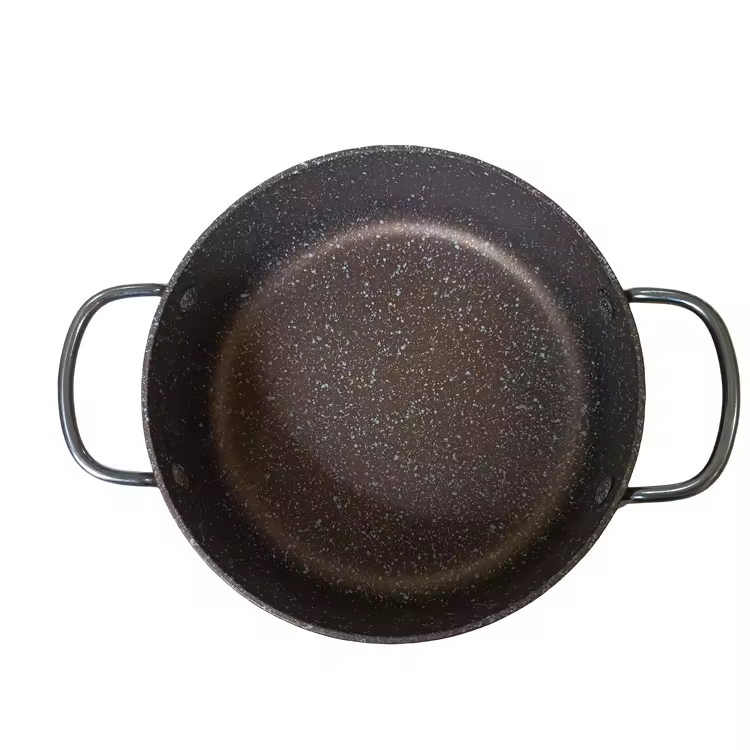 Nonstick Aluminum Casserole Stockpot with LidThis aluminum stockpot offers a nonstick coating suitable for gas and induction cookers. It features a fixed or detachable Bakelite handle and a colorful matt silicon finish, ideal for slow cooking and stews.View Product →