English
 中文简体
中文简体
 日本語
日本語
 Español
Content
- 1 How Long Does a Non-Stick Pan Actually Last
- 2 How a Non-Stick Coating Actually Works
- 3 Average Lifespan by Coating Type
- 4 What Actually Wears a Non-Stick Coating Down
- 5 Does the Type of Stove Change How Long the Pan Lasts
- 6 Does the Cooking Oil You Use Matter
- 7 Early Warning Signs Your Non-Stick Pan Is Failing
- 8 A Simple Test to Check If Your Pan Still Works
- 9 Simple Habits That Add Years to a Non-Stick Pan
- 10 Home Kitchen vs Commercial Kitchen Lifespan
- 11 Cost Per Use: Is a Cheaper Pan Replaced Often Actually More Expensive
- 12 Non-Stick vs Cast Iron vs Stainless Steel: How Lifespan Compares
- 13 Common Myths About Non-Stick Pan Lifespan
- 14 When to Keep Using It and When to Replace It
- 15 What to Look For When Buying a Replacement
- 16 Retiring an Old Non-Stick Pan Responsibly
- 17 Frequently Asked Questions
- 17.1 How often should a non-stick frying pan be replaced?
- 17.2 Is it dangerous to cook with a scratched non-stick pan?
- 17.3 Can a non-stick pan be reseasoned like cast iron?
- 17.4 Does the dishwasher really shorten a non-stick pan's life?
- 17.5 Does a ceramic non-stick pan last longer than a regular one?
- 17.6 Is it normal for a new non-stick pan to smoke the first few times?
- 17.7 Can a warped non-stick pan be fixed instead of replaced?
- 17.8 What is the single best way to make a non-stick pan last longer?
How Long Does a Non-Stick Pan Actually Last
A typical non-stick frying pan holds its coating for 1 to 5 years of regular use, depending on the coating type, how often it is heated to high temperatures, and how it is cleaned. Everyday home cooks who use metal utensils, run the pan through a dishwasher, or preheat it empty often see noticeable sticking within 12 to 18 months, while a pan that is hand washed and used only with wood or silicone tools can stay fully functional for 4 years or longer.
The coating does not usually fail all at once. It degrades gradually, so the real question is not just how long a non-stick pan lasts, but how to recognize when it has quietly stopped protecting your food, and what habits actually change that timeline in either direction.
How a Non-Stick Coating Actually Works
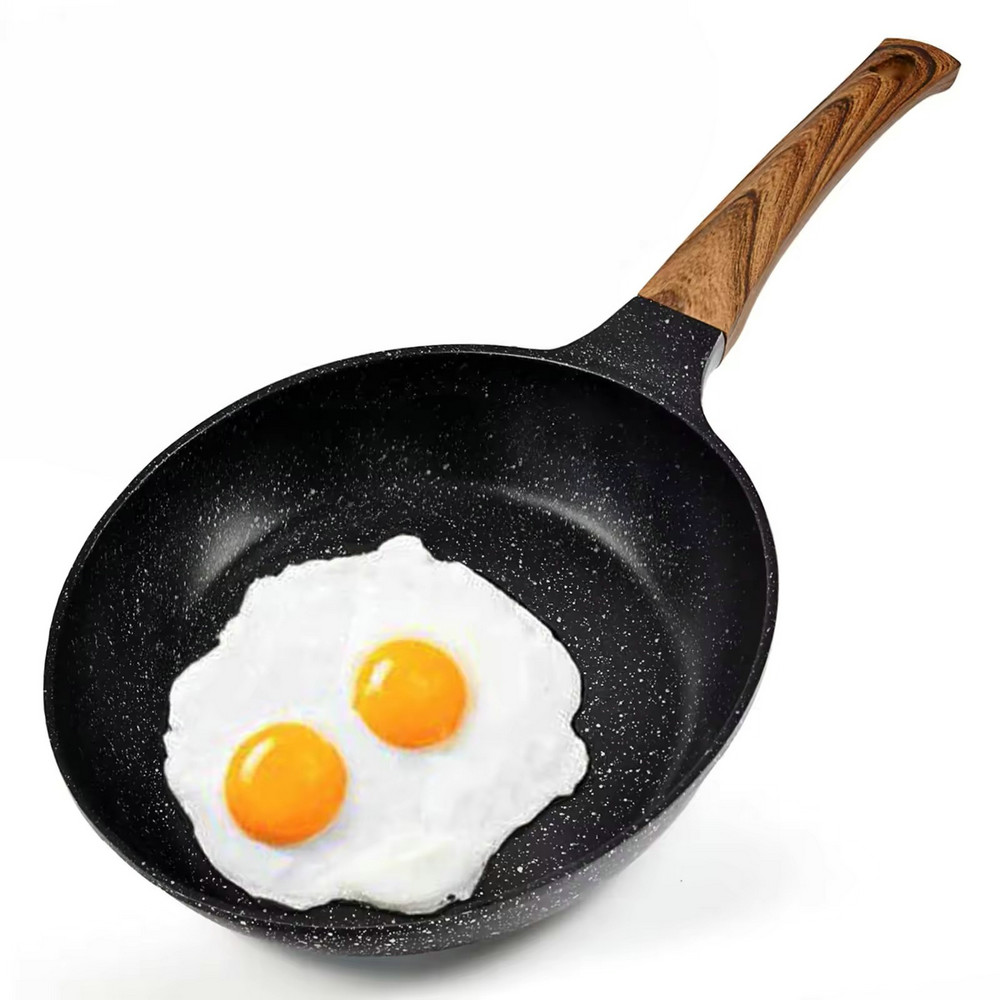
Before looking at lifespan numbers, it helps to understand what is physically happening on the surface of a non-stick frying pan. The coating is a thin, engineered layer applied over a metal base, usually aluminum or an aluminum core wrapped in stainless steel. That layer creates an extremely low-friction surface so food releases without sticking, without needing large amounts of oil or butter.
The Base Metal
Aluminum conducts heat quickly and evenly, which is why it is the most common core for non-stick frying pans. A heavier base resists warping better than a thin, lightweight one.
The Primer Layer
A bonding layer is applied first so the non-stick top coat adheres properly to the metal instead of peeling away after a few uses.
The Non-Stick Top Coat
This visible surface layer is what actually releases food. It is also the thinnest part of the pan and the part that wears away first over repeated use.
Because the top coat is so thin, even small amounts of abrasion or repeated high heat gradually thin it out. Once enough of that layer wears away, the aluminum or bonding layer underneath starts to show through, and the pan's non-stick behavior effectively ends even though the pan may still look usable at a glance.
Average Lifespan by Coating Type
Not every non-stick frying pan is built the same way, and the coating material is one of the biggest factors in how long it stays usable. The table below breaks down the typical service life reported by regular home users for each common coating category.
| Coating Type | Typical Lifespan | Heat Tolerance |
|---|---|---|
| Standard PTFE (Teflon-style) | 1 to 3 years | Up to roughly 260°C / 500°F |
| Reinforced PTFE with metal or ceramic particles | 3 to 5 years | Similar to standard PTFE, better scratch resistance |
| Sol-gel ceramic coating | 1 to 2 years of true non-stick performance | Higher heat tolerance, but slickness fades faster |
| Hard-anodized aluminum with non-stick layer | 3 to 6 years | Good warp resistance at moderate to high heat |
These ranges assume a household that cooks with the pan several times a week. Restaurant kitchens, food trucks, and anyone searing at very high heat daily will typically see coating breakdown much sooner, sometimes inside six to twelve months, which is discussed in more detail further down this guide.
What Actually Wears a Non-Stick Coating Down
A frying pan non-stick surface fails for a small set of predictable reasons. Recognizing these habits is more useful than any single lifespan number, because two identical pans in two different kitchens can last completely different amounts of time.
- 1 Metal utensils. Spatulas, whisks, and knives scrape microscopic grooves into the surface with every pass, and those grooves add up quickly, especially near the center of the pan where most stirring happens.
- 2 Empty preheating. Heating a dry pan before adding oil or food pushes the coating past its comfortable temperature range and speeds up breakdown, sometimes within seconds on a high-output burner.
- 3 Dishwasher cycles. Hot water combined with abrasive detergent strips away the surface finish far faster than hand washing with a soft sponge, and the prolonged soak can also loosen the bond between coating layers.
- 4 Cooking sprays. Aerosol sprays leave a sticky residue that bakes onto the surface over time and gradually blocks the non-stick properties, creating a dull film that is difficult to remove with normal washing.
- 5 Stacking pans without protection. Storing pans directly on top of each other lets the rims and other cookware scratch the cooking surface during storage, not just during cooking, which is an easy factor to overlook.
- 6 Thermal shock. Rinsing a hot pan under cold water right after cooking causes rapid contraction that can stress the bond between the coating and the metal base over repeated cycles.
Does the Type of Stove Change How Long the Pan Lasts
The heat source underneath a non-stick frying pan changes how evenly and how quickly it heats up, which in turn affects coating wear.
| Cooktop Type | Heating Pattern | Effect on Coating |
|---|---|---|
| Gas | Flame concentrated at the base center | Can create hot spots that age the coating unevenly if the flame extends past the pan base |
| Electric coil or radiant | Slower to heat, slower to cool | Lower risk of sudden overheating, but easy to leave on high for too long |
| Induction | Very fast, even heating across the base | Reaches target temperature quickly, so it is easy to overshoot the coating's ideal heat range without noticing |
Does the Cooking Oil You Use Matter
The fat used in a non-stick pan affects more than flavor. Every oil and butter has a smoke point, the temperature at which it starts to break down and release smoke, and cooking past that point creates residue that bakes onto the coating.
- Butter and extra virgin olive oil have relatively low smoke points, so they work best on low to medium heat, which also happens to be gentler on the coating.
- Refined vegetable and avocado oils tolerate higher heat, which reduces the chance of burnt residue forming on the surface during searing.
- A very thin, even layer of oil protects the coating better than either a dry pan or a heavy pool of oil left to smoke.
Early Warning Signs Your Non-Stick Pan Is Failing
The coating rarely fails overnight. Instead, it moves through a few recognizable stages, and catching them early lets you plan a replacement instead of being surprised by a ruined omelet.
Food Sticks Even With Oil
If eggs or fish start sticking despite using butter or oil, the coating has thinned enough to lose its release properties.
Visible Scratches or Dull Patches
Fine scratch lines or a dull, matte patch in the center of the pan usually mark where the coating has worn thinnest.
Flaking or Peeling
Small chips or flakes coming loose is the clearest signal to stop using the pan and replace it right away.
Warped Base
A pan that no longer sits flat on the stovetop heats unevenly and stresses the coating in the raised areas.
Discoloration Near the Edges
A yellowish or brownish tint creeping in from the rim often points to repeated overheating rather than normal cooking use.
Smoke at Low Heat
A pan that starts smoking on medium heat, well below what it once tolerated, usually has a coating that has broken down structurally.
A Simple Test to Check If Your Pan Still Works
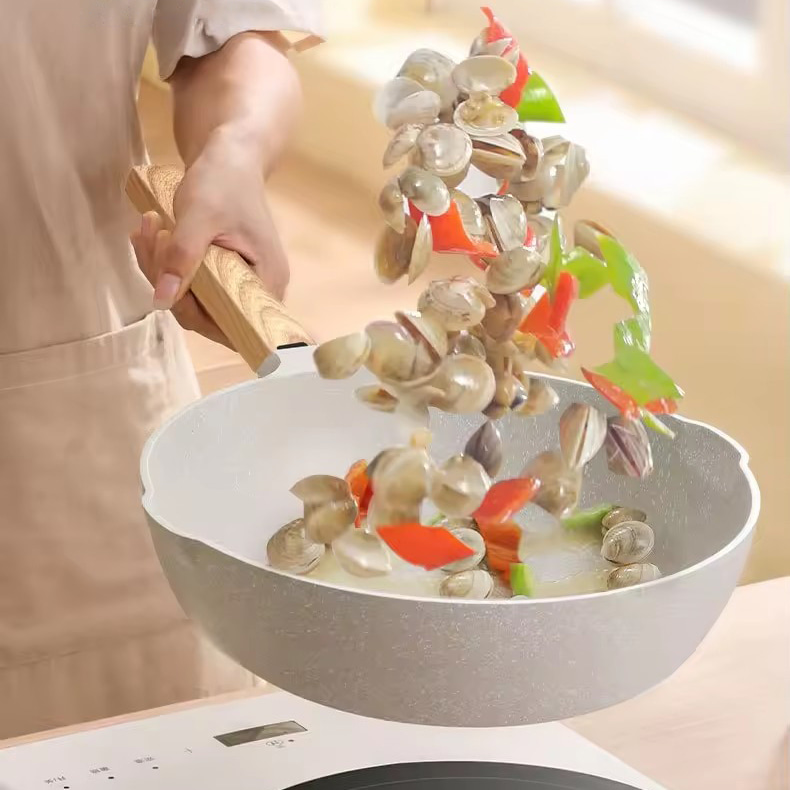
A quick water droplet test gives a fast read on whether a non-stick frying pan is still performing as intended, without needing to cook a full meal first.
- Heat the empty, clean pan on medium heat for about one minute.
- Add a few drops of water to the surface.
- Watch how the droplets behave. On a healthy coating, they should bead up and roll around loosely, sometimes referred to as the surface acting like it is beading water.
- If the water spreads flat, sizzles away instantly, or sticks in place, the coating has likely degraded significantly and the pan is due for replacement soon.
Simple Habits That Add Years to a Non-Stick Pan
Extending the working life of a non-stick pan comes down to a handful of consistent habits rather than any single trick.
Cook on low to medium heat
Most non-stick coatings perform best below medium-high heat. Reserve high heat searing for stainless steel or cast iron cookware instead.
Use wood, silicone, or nylon utensils only
Keep a dedicated set of soft utensils for the non-stick frying pan so metal never touches the surface by accident, even when cooking in a hurry.
Hand wash and dry immediately
A soft sponge, warm water, and mild dish soap protect the coating far better than a dishwasher cycle. Drying right away also prevents water spots and mineral buildup.
Add a small amount of oil or butter every time
A thin layer of fat reduces direct friction between food and coating, which slows down surface wear even during quick, simple meals.
Let the pan cool before washing
Giving the pan a few minutes to cool naturally before it meets water or a cold countertop avoids the thermal shock that can loosen the coating over time.
Store with a protective layer between pans
A paper towel, felt pan protector, or simply hanging the pan keeps other cookware from scratching the surface in storage.
Home Kitchen vs Commercial Kitchen Lifespan
Usage frequency and heat intensity change lifespan expectations dramatically between a home stove and a professional kitchen.
| Setting | Typical Use Frequency | Replacement Interval |
|---|---|---|
| Occasional home cook | A few times a week | 3 to 5 years |
| Daily home cook | Once or more per day | 1.5 to 3 years |
| Small restaurant or food stall | Multiple uses per shift, high heat | 6 months to 1 year |
Cost Per Use: Is a Cheaper Pan Replaced Often Actually More Expensive
A quick cost comparison often changes buying decisions more than a lifespan estimate alone. The figures below use round, representative price points to illustrate the pattern rather than a specific brand.
Budget pan, replaced yearly
Roughly 20 dollars a year in ongoing replacement cost over a five year span
Mid-range reinforced pan, replaced every 3 to 4 years
Roughly 12 to 15 dollars a year averaged across a five year span
Hard-anodized pan, replaced every 5 to 6 years
Roughly 10 dollars a year when spread across its full working life
The middle and upper tiers usually win on cost per year of use, even though the upfront price is higher, because they need replacing far less often than the cheapest option, and they typically hold their release properties more consistently in the years before replacement.
Non-Stick vs Cast Iron vs Stainless Steel: How Lifespan Compares
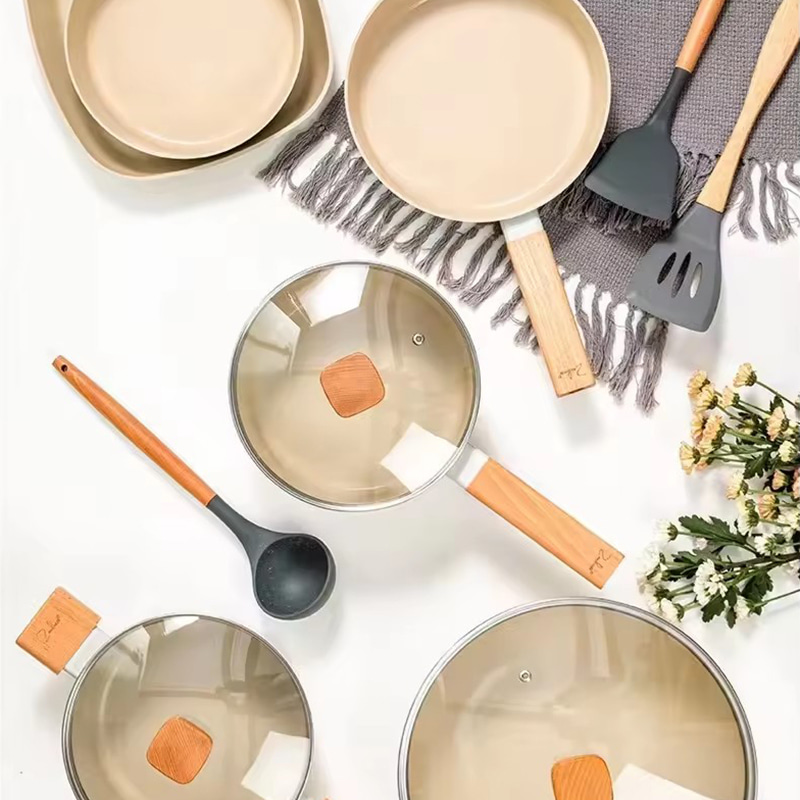
A non-stick frying pan is not always the longest lasting option in the kitchen, which is worth knowing before deciding what to buy for a specific type of cooking.
| Pan Type | Typical Lifespan | Best Suited For |
|---|---|---|
| Non-stick coated | 1 to 5 years | Eggs, fish, pancakes, low-fat cooking |
| Cast iron | Decades with reseasoning | Searing, high heat, oven use |
| Stainless steel | 10 years or more | Browning, sauces, deglazing |
Common Myths About Non-Stick Pan Lifespan
A few widely repeated ideas about non-stick cookware do not hold up well once compared against how the coating actually behaves.
Myth: A shiny surface always means the pan is still good.
Reality: Coating can lose its release properties well before it looks visibly damaged.
Myth: One scratch ruins the pan immediately.
Reality: A single light scratch rarely affects performance right away, though repeated scratching does add up.
Myth: Expensive pans never need replacing.
Reality: Higher-end coatings last longer on average, but every non-stick coating eventually wears down with use.
Myth: Seasoning a non-stick pan with oil restores the coating.
Reality: Unlike cast iron, the non-stick layer cannot be rebuilt at home once it wears away.
When to Keep Using It and When to Replace It
Still Safe to Use
- Light scratches with no flaking or peeling
- Slightly reduced release, but food still comes free with a little oil
- Surface color has dulled but stays smooth to the touch
Time to Replace
- Any visible flaking, chipping, or bubbling of the coating
- A warped base that rocks on the burner
- Food sticking heavily even right after cleaning and oiling
What to Look For When Buying a Replacement
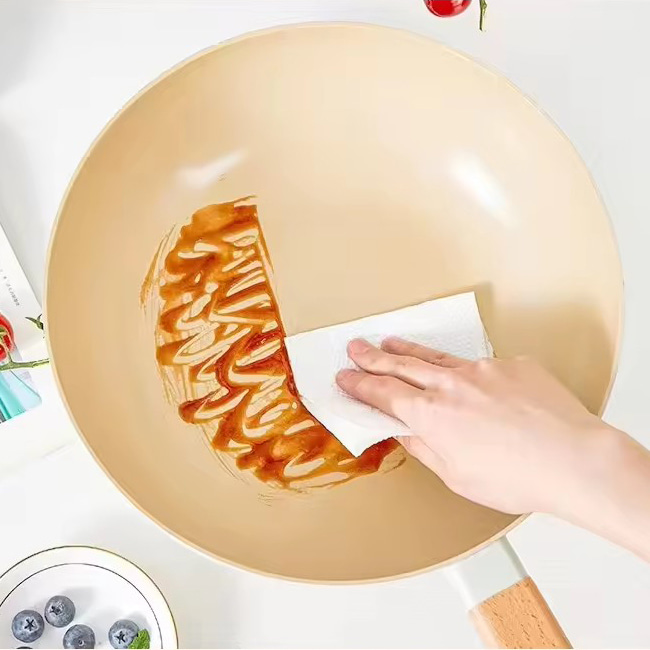
Once a pan reaches the end of its useful life, a few simple checks help narrow down a longer lasting replacement.
- Base thickness. A heavier, thicker base resists warping and holds heat more evenly over time.
- Number of coating layers. Multi-layer or reinforced coatings generally outlast single-layer basic coatings.
- Handle attachment. Riveted or securely welded handles hold up better over years of use than lightweight screw-on designs.
- Stated maximum heat. A higher rated heat tolerance gives more room for error on busy cooking days.
Retiring an Old Non-Stick Pan Responsibly
Once a pan reaches the end of its life, the metal base can often be separated for scrap metal recycling in many areas, even though the coating itself typically cannot be recycled through standard household recycling programs. Checking with a local recycling center or scrap metal collector before throwing the pan in general household trash keeps more of the material out of landfill.
A worn-out non-stick frying pan can also get a second life as a non-food tool around the house, such as holding paint, organizing garage hardware, or serving as a base for a small planter, before it is fully retired.
Frequently Asked Questions
How often should a non-stick frying pan be replaced?
Most households replace a non-stick pan every 2 to 3 years on average, though careful use with soft utensils and hand washing can push that closer to 4 or 5 years.
Is it dangerous to cook with a scratched non-stick pan?
A few light scratches are generally not a health concern, but once the coating starts flaking into food or losing large sections, it is best to stop using the pan and switch to a new one.
Can a non-stick pan be reseasoned like cast iron?
No. Unlike cast iron, most non-stick coatings cannot be restored once they wear down, since the slick surface comes from a manufactured coating rather than a seasoning layer that builds up with oil.
Does the dishwasher really shorten a non-stick pan's life?
Yes, in most cases. Dishwasher detergent is more abrasive than hand dish soap, and the extended exposure to hot water accelerates coating breakdown compared to a quick hand wash.
Does a ceramic non-stick pan last longer than a regular one?
Ceramic coatings often tolerate higher heat, but the slick, food-releasing surface tends to fade faster than reinforced PTFE, so the true non-stick performance window is frequently shorter.
Is it normal for a new non-stick pan to smoke the first few times?
A brief light smoke during the very first use is common as manufacturing residue burns off, but repeated heavy smoking afterward usually points to cooking at too high a heat for the coating.
Can a warped non-stick pan be fixed instead of replaced?
A warped base is generally not repairable at home, since it changes how evenly the pan contacts the burner, so replacement is usually the more practical option once warping is noticeable.
What is the single best way to make a non-stick pan last longer?
Keeping the heat at low to medium and using only wood, silicone, or nylon utensils has the biggest combined impact on how long the coating stays intact.