English
 中文简体
中文简体
 日本語
日本語
 Español
Content
Health Considerations of Non-stick Cookware
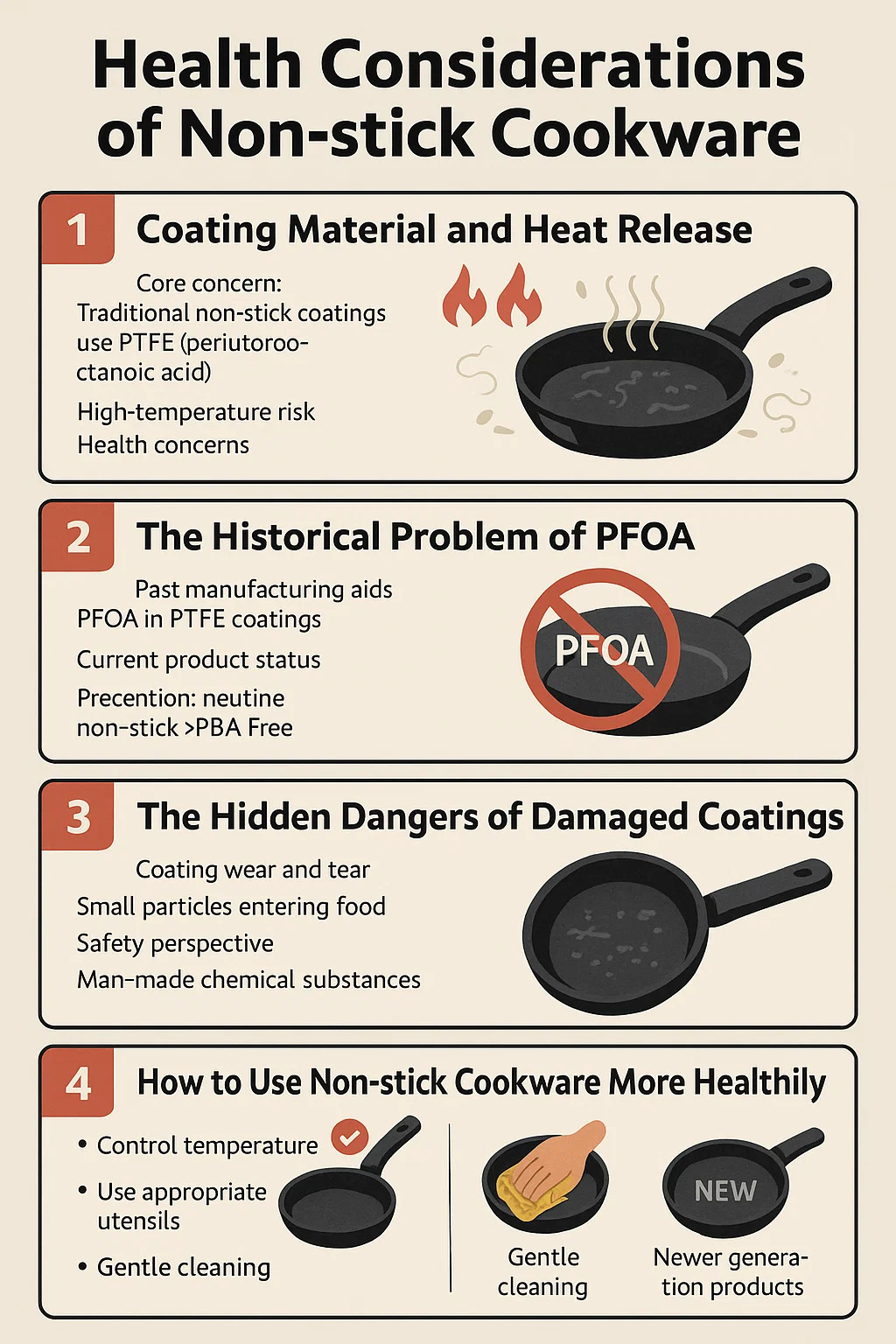
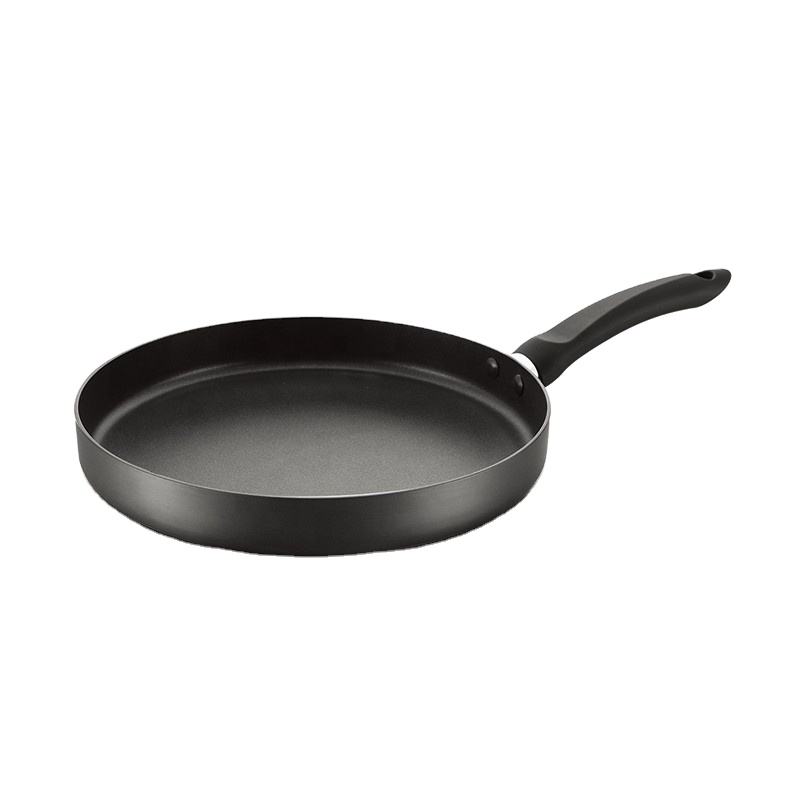
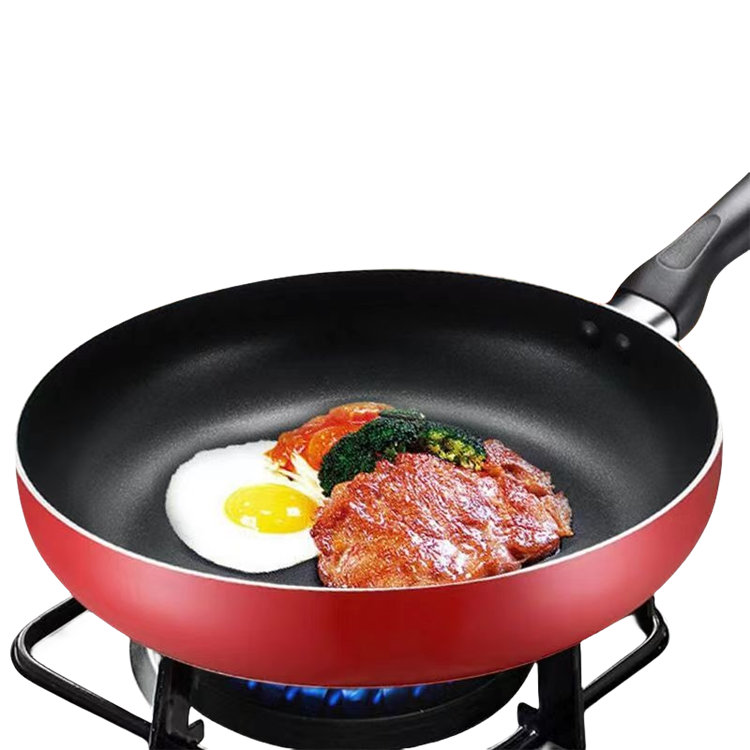
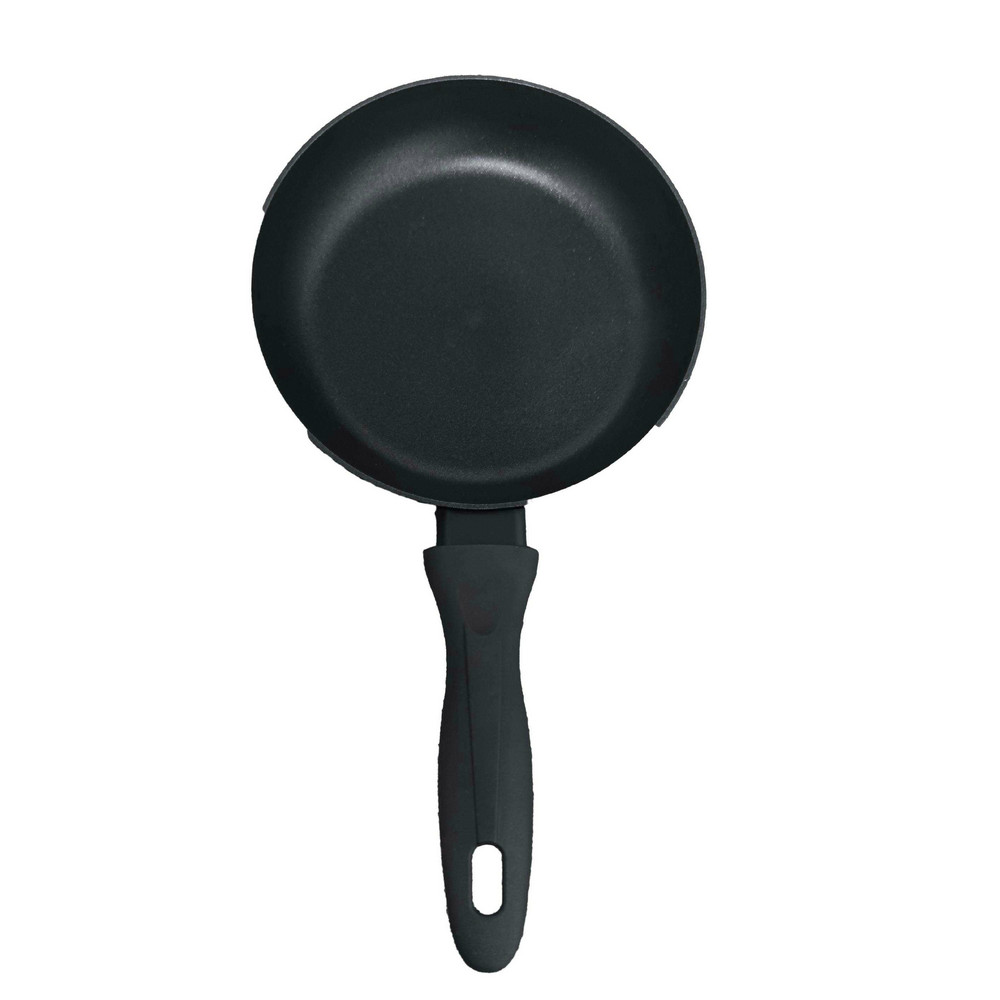
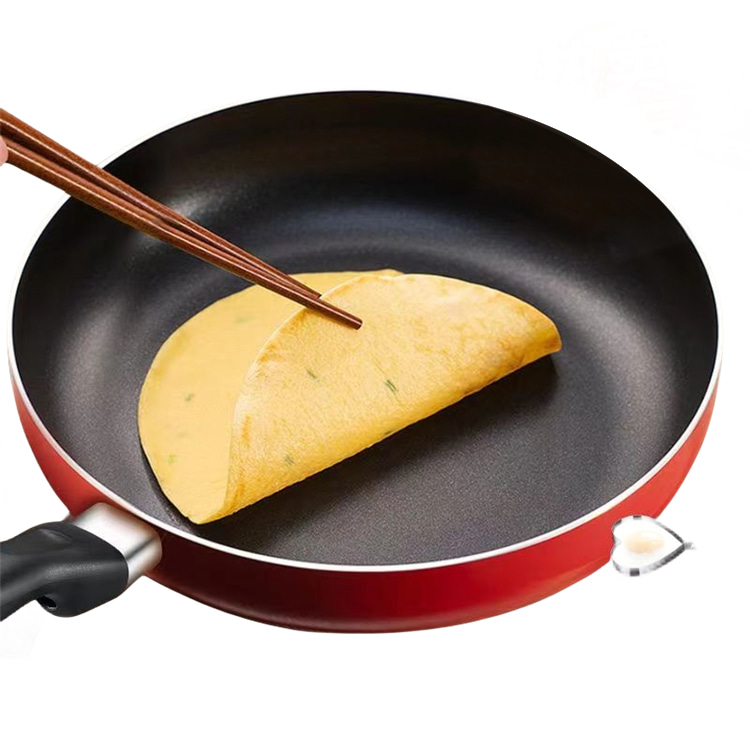
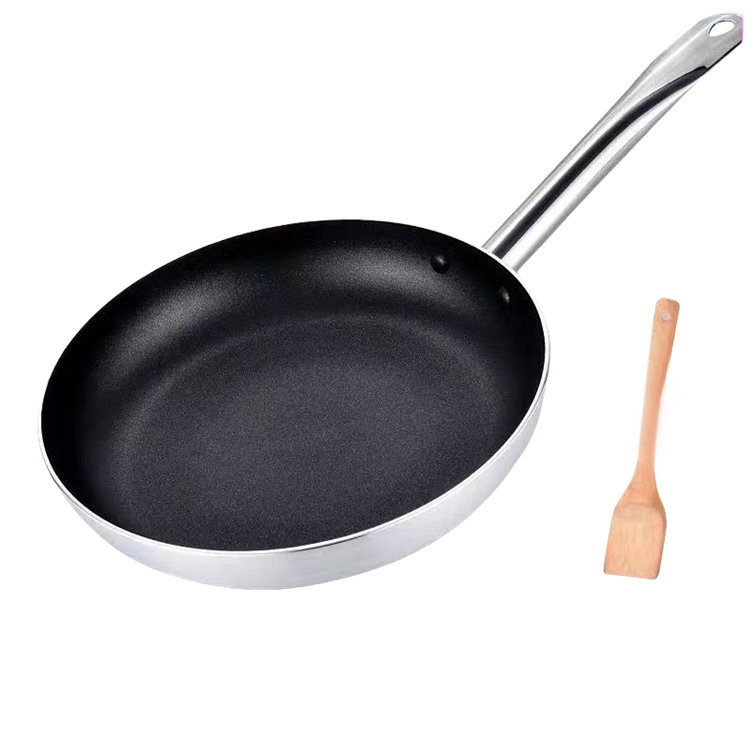
Non-stick cookware is very popular in kitchens because it makes cooking and cleaning easier. However, concerns about their health implications have always existed. This article will provide a detailed, point-by-point explanation of the health factors of non-stick cookware in simple language.
1. Coating Material and Heat Release:
The core concern: Traditional non-stick cookware primarily uses a substance called PTFE (polytetrafluoroethylene) for its coating, commonly known as "Teflon" or similar materials. This makes the surface very smooth, so food naturally doesn't stick. High-temperature risk: Under normal, reasonable cooking temperatures (e.g., stir-frying, frying eggs), this non-stick coating is stable. However, if the non-stick pan is overheated or left empty on the heat for a long time, the temperature will rise very high, and the coating will begin to decompose. Gas release: At extremely high temperatures, the coating may release some tiny, invisible particles and gases. In poorly ventilated environments, inhaling these substances may cause temporary flu-like symptoms, sometimes referred to as "Teflon flu."
2. The Historical Problem of PFOA
Past manufacturing aids: Many years ago, a processing aid called PFOA (perfluorooctanoic acid) was used in the manufacturing of PTFE coatings.
Health concerns: PFOA is a substance that does not easily break down in the environment or the human body. Due to health and environmental concerns, this substance has been phased out globally and is no longer used in the manufacture of modern non-stick cookware.
Current product status: Reputable non-stick cookware available on the market today has coatings that are "PFOA Free." Therefore, when buying a new pan, there is no need to worry excessively about PFOA.
3. The Hidden Dangers of Damaged Coatings
Coating wear and tear: With prolonged use, scraping with metal spatulas, or cleaning with steel wool, the surface coating of non-stick pans will gradually wear down, resulting in scratches or peeling.
Small particles entering food: Once the coating is damaged, tiny fragments of the coating may mix into the food during cooking. Safety Perspective: Although these fragments are generally considered inert (i.e., they are not absorbed or chemically reactive in the body and are excreted), they are still man-made chemical substances. Therefore, if a non-stick pan shows significant scratches or peeling of the coating, replacing it with a new one is a safer option.
4. How to Use Non-stick Cookware More Healthily
Control Temperature: Avoid high-temperature frying or prolonged dry heating with non-stick pans. Medium to low heat is usually sufficient for most cooking and effectively protects the coating.
Use Appropriate Utensils: Use wooden, silicone, or heat-resistant plastic spatulas to avoid scratching the coating.
Gentle Cleaning: Clean with a sponge or soft cloth, avoiding abrasive scouring pads or steel wool.
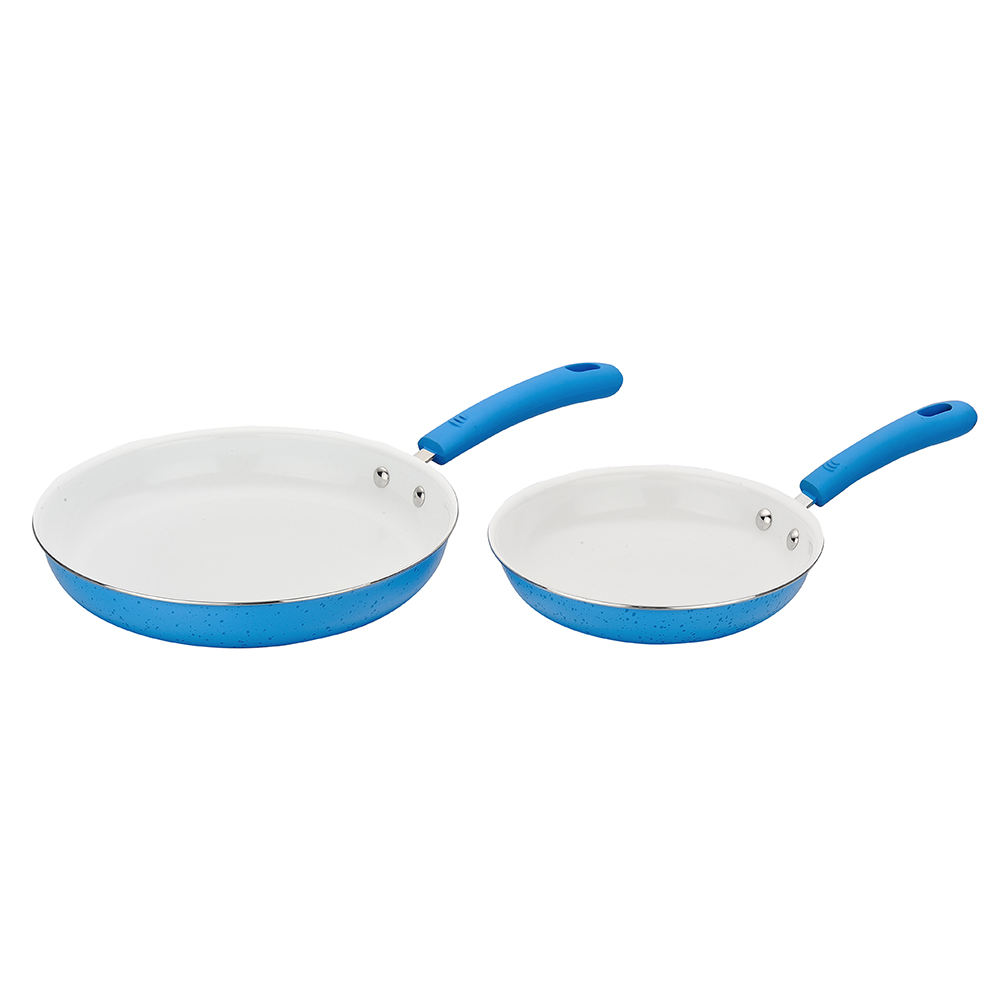
Choose Newer Generation Products: In addition to traditional PTFE coatings, there are also new types of non-stick pans on the market, such as ceramic non-stick pans and hard anodized aluminum pans, which offer alternative non-stick options.