English
 中文简体
中文简体
 日本語
日本語
 Español
Content
Let's talk about which type of non-stick cookware might be more suitable for you. Remember, there's no absolute "best," the key is to consider your needs and how you'll use it.
1. Coating Type: This is the core difference.
• PTFE Coating (commonly known as "Teflon" type):
Advantages: Most common, usually more affordable. Non-stick effect is usually excellent and long-lasting (under normal use), very smooth to use, and food is easy to flip. Mature technology, many options available.
Disadvantages: Not resistant to high temperatures. Dry heating or prolonged high heat (such as the extremely high oil temperature of Chinese stir-frying) may damage the coating and shorten its lifespan. Requires gentle handling (cannot use metal spatulas or steel wool). Although modern products are safe, some people may be concerned about the material source due to long-term usage habits or preferences.
• Ceramic Coating:
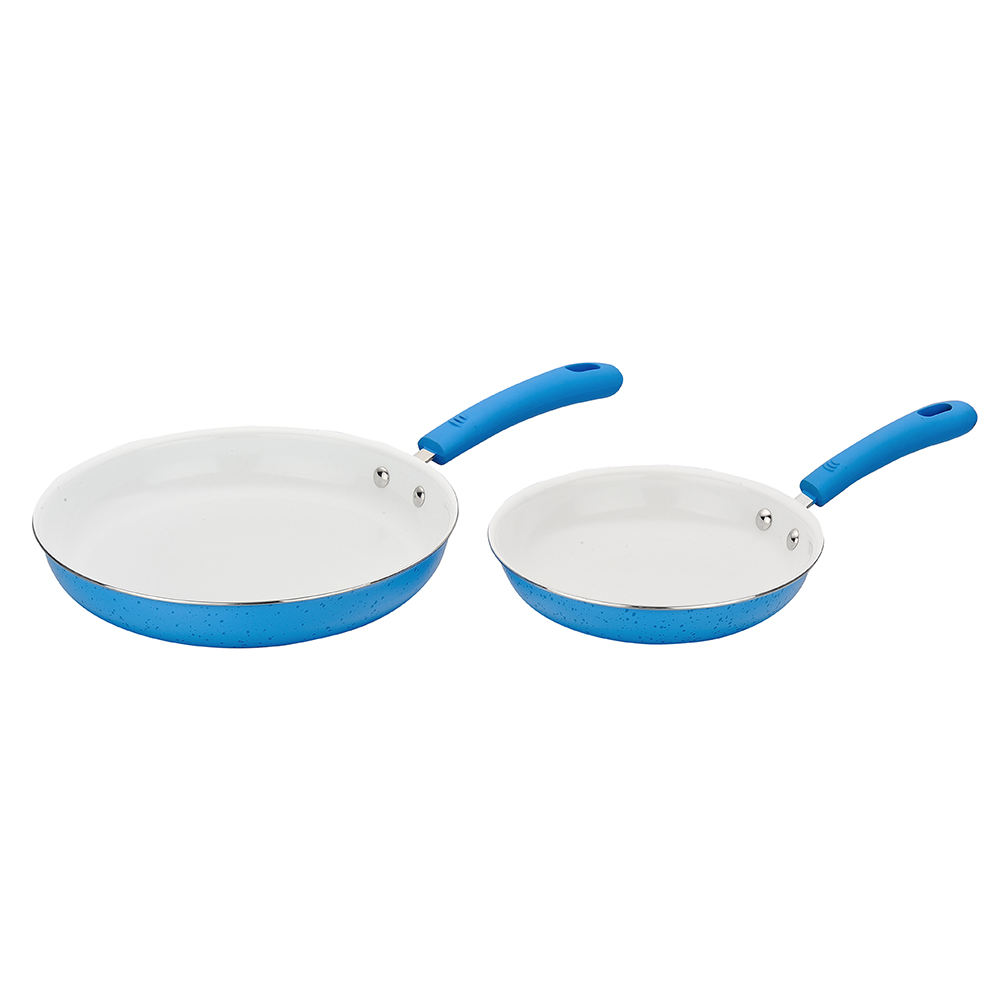
Advantages: Raw materials usually come from minerals (such as sand), giving a more natural and environmentally friendly feel. Heat resistance is usually better, able to withstand higher temperatures than PTFE (but prolonged dry heating or extreme high temperatures are still not recommended). More color options may be available (white, colored, etc.).
Disadvantages: Non-stick lifespan is often relatively shorter; the effect may decrease after a period of time (a few months to one or two years, depending on frequency of use and maintenance), becoming more prone to sticking. Sometimes feels slightly more friction than PTFE coating (not as "slippery"). May be more susceptible to sudden temperature changes (such as pouring cold water into a hot pan).
• Other/Hybrid Coatings:
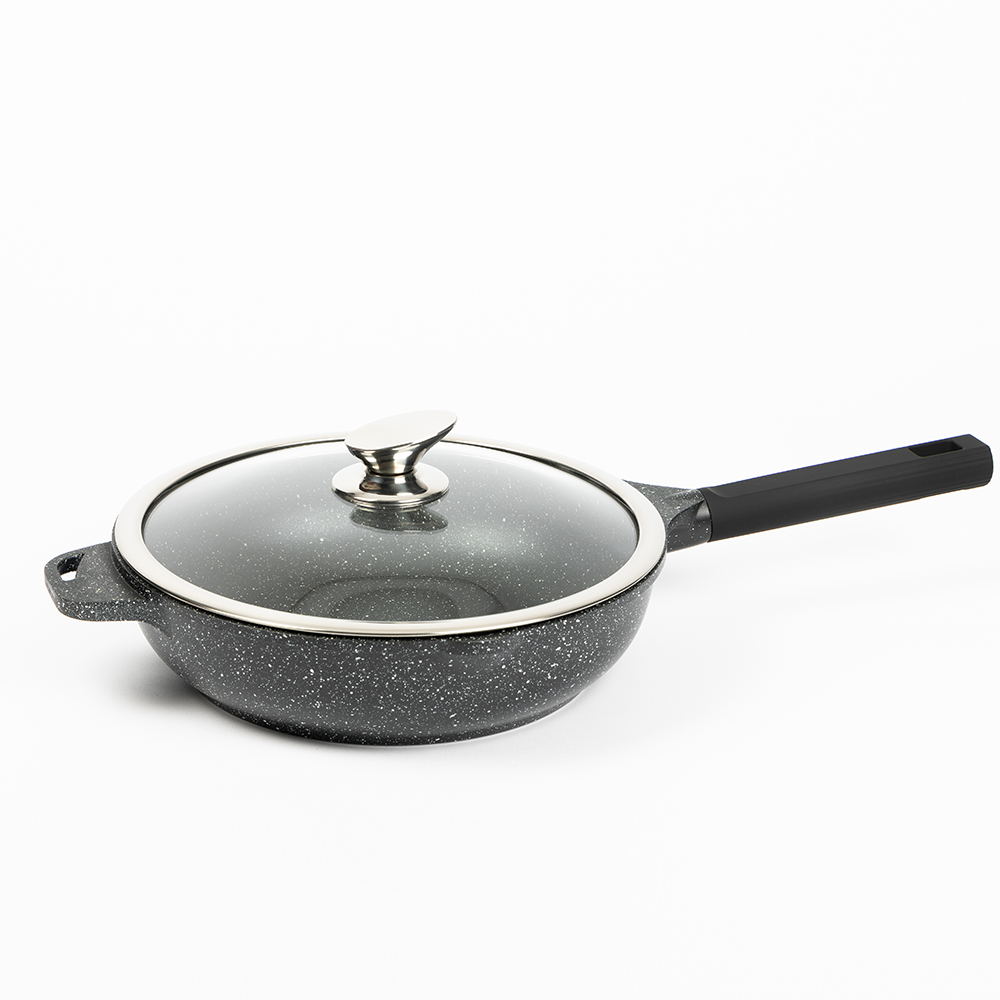
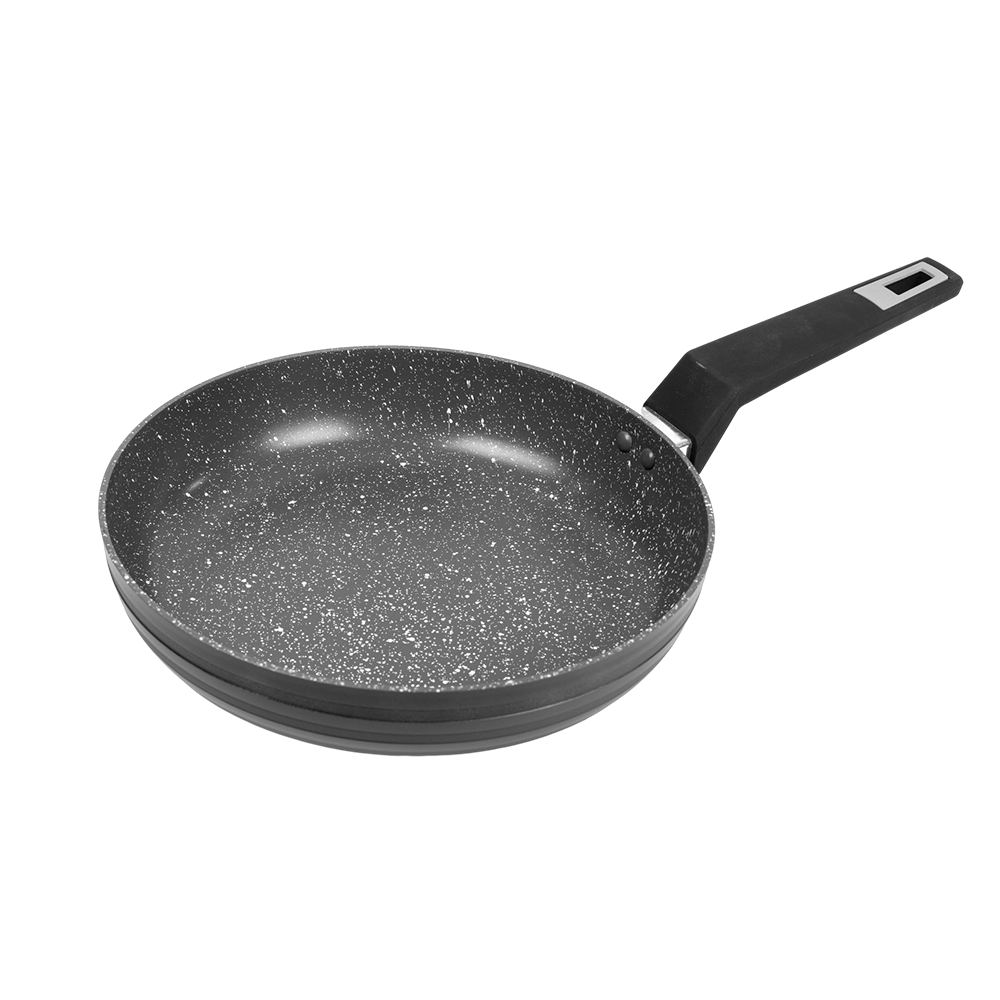
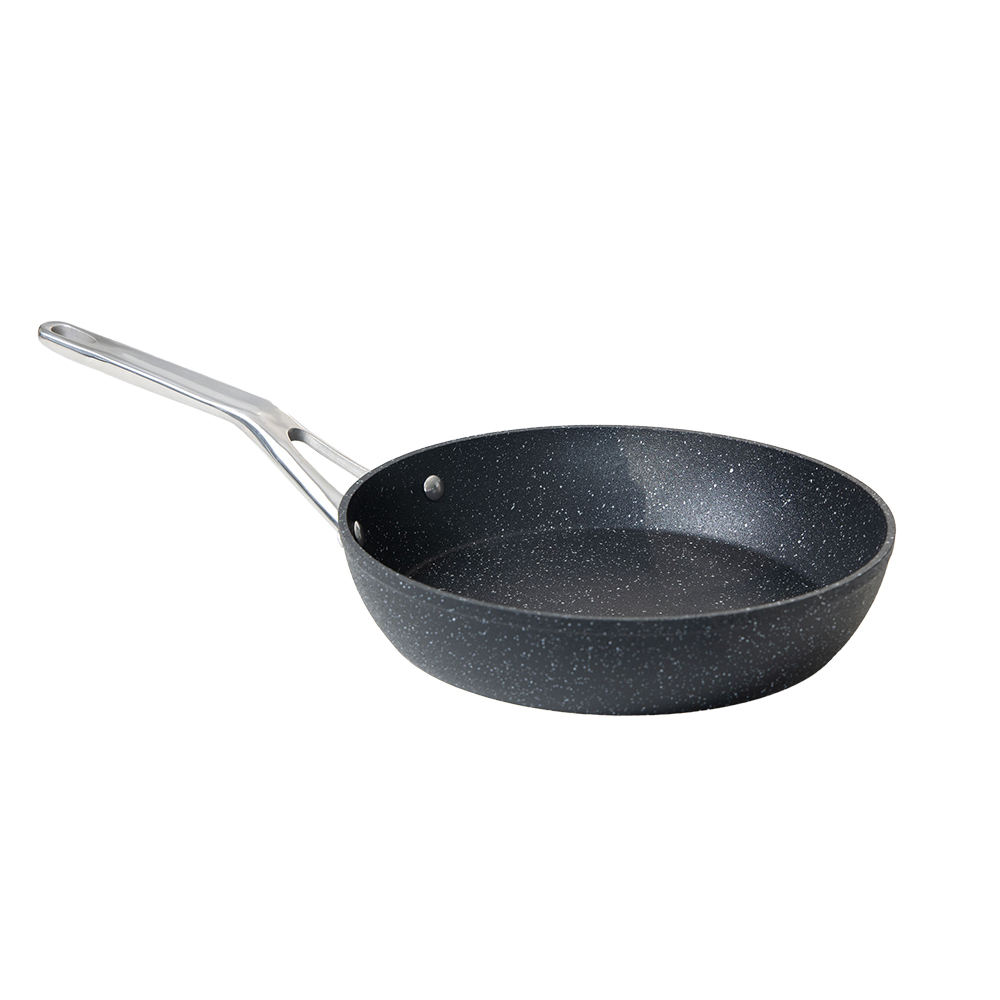
There are also other coatings on the market, such as granite coating (which is actually a PTFE or ceramic coating with added stone patterns, mainly for aesthetics and slightly improved wear resistance), diamond/titanium reinforced coatings (adding harder particles to PTFE, claiming to be more wear-resistant), etc. These are usually enhanced versions of the basic coatings, with slightly improved wear resistance, but the core advantages and disadvantages still depend on the type of basic coating (PTFE or ceramic), and the price will also be higher. Honeycomb non-stick pans (with raised patterns): The surface has raised patterns, reducing the contact area with food, and combined with the coating to achieve non-stick properties. Theoretically, it is more scratch-resistant (the spatula touches the raised metal patterns), but the grooves may trap dirt and grime, making cleaning slightly more difficult, and the price is higher.
2. Pot Body Material: Affects Heating and Feel
• Aluminum Alloy Pot Body:
Most common. Lightweight, conducts heat quickly and evenly (especially those with thick bases or layers), and affordable. It's the choice for most non-stick pans. However, aluminum itself is relatively soft, and the pot body is not as impact-resistant.
• Stainless Steel Pot Body:
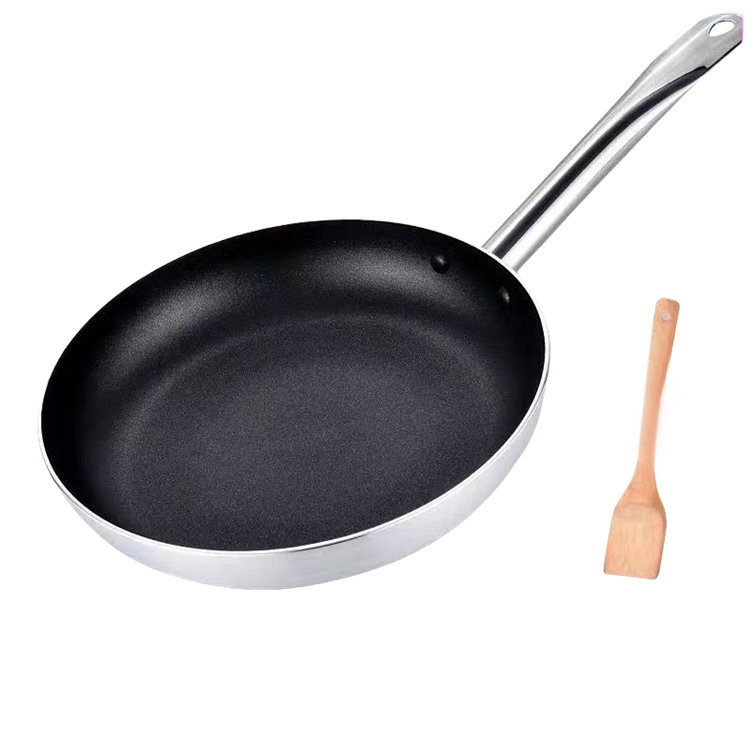
More robust and durable, resistant to drops and bumps. Has a brighter appearance. However, heat conduction is not as even as aluminum (prone to being hot in the middle and cooler around the edges), usually requiring a composite base (with an aluminum layer) to improve this. It's heavier and more expensive.
• Cast Iron Pot Body (with coating):
Relatively rare. Cast iron itself retains heat well, but is very heavy. The added coating provides some non-stick properties, but maintenance is more troublesome than pure cast iron pans or ordinary non-stick pans (the coating is susceptible to damage from bumps, and rust prevention is necessary).
• Which to choose?
For daily household use, an aluminum alloy pot body with a thick composite base (such as an aluminum core) is usually the balance point between cost-effectiveness and performance. If you prioritize extreme durability and don't mind the weight, choose a composite base stainless steel pan. If lightweight and fast heating are your priorities, choose aluminum alloy.
3. Your Usage Habits are Key:
• What kind of dishes do you usually cook?
If you mainly fry eggs, fish, pancakes, or stir-fry rice, most non-stick pans will suffice. If you occasionally need to stir-fry over high heat, a ceramic coating or a PTFE coating that is rated for higher temperatures (and with careful heat control) might be slightly better, but no non-stick pan is suitable for prolonged dry heating over high heat.
• What kind of stove do you use?
Open flame, induction cooker, electric ceramic stove, or induction hob? Ensure the pot bottom is flat and compatible with your stove (especially induction cookers require a magnetic base).
• Are you diligent?
If you habitually use metal spatulas or steel wool to clean the pan, or are careless with heat control, even the best non-stick pan will quickly be damaged. Choosing a wear-resistant reinforced coating or a honeycomb pan might be slightly better, but changing your habits is the fundamental solution. Ceramic pans may require more careful handling to avoid sudden temperature changes.
• What is your budget?
PTFE-coated aluminum pans are the most economical; ceramic, reinforced coating, or composite stainless steel pans are more expensive.
4. To summarize how to choose a "good" non-stick pan:
• For most people:
A thick-bottomed, multi-layered aluminum pan with a reliable PTFE coating is a practical and cost-effective choice. Pay attention to whether the coating has recognized certifications (not specific brands, but look for relevant safety and durability certification marks).
• If you prioritize environmental friendliness or high-temperature resistance:
You can choose a ceramic-coated pan, but be prepared for a potentially shorter non-stick lifespan.
• If you are worried about the coating scratching or are not particularly careful with your cookware: Consider wear-resistant reinforced coatings (diamond/titanium) or honeycomb-structured non-stick pans, but these will be more expensive and may be slightly more difficult to clean.
• If you prioritize durability and don't mind the weight:
Choose a non-stick pan with a multi-layered stainless steel body.
• Regardless of your choice:
A comfortable weight, a sturdy and heat-resistant handle, a flat base that matches your stovetop, and a smooth, flawless coating are basic requirements. Learning proper use and maintenance (medium-low heat, using silicone/wooden spatulas, cleaning with warm water and a soft cloth, avoiding dry heating, and avoiding pouring cold water into a hot pan) is more important than the type of pan you choose! This directly determines how long your non-stick cookware will last.