English
 中文简体
中文简体
 日本語
日本語
 Español
Content
When choosing Cookware, ceramic cookwares and traditional non-stick cookwares are often compared. Both have their advantages and disadvantages, and there's no single "better" option; it depends on what you prioritize.
Here's a detailed breakdown from several everyday usage perspectives:
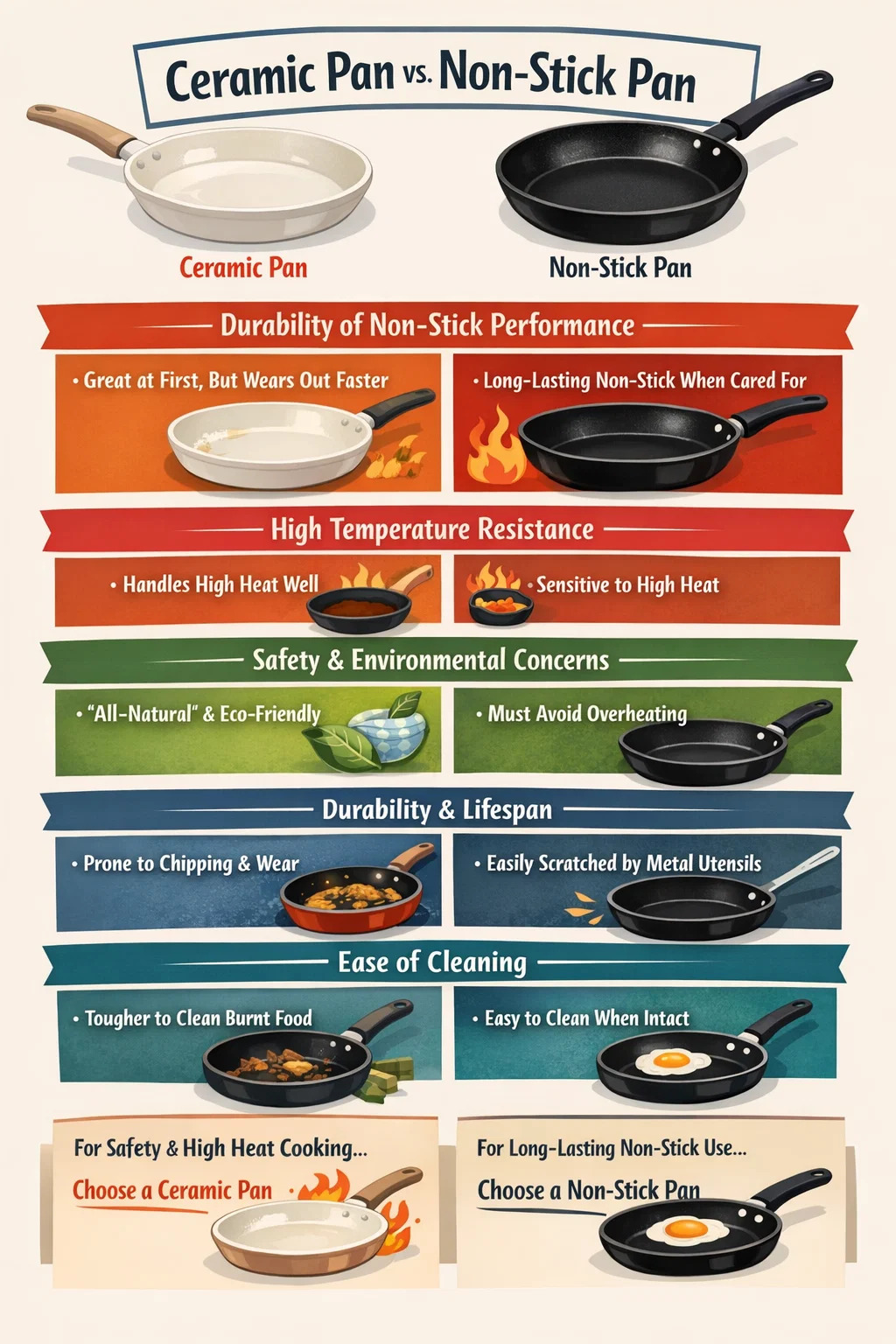
1. Durability of Non-Stick Performance
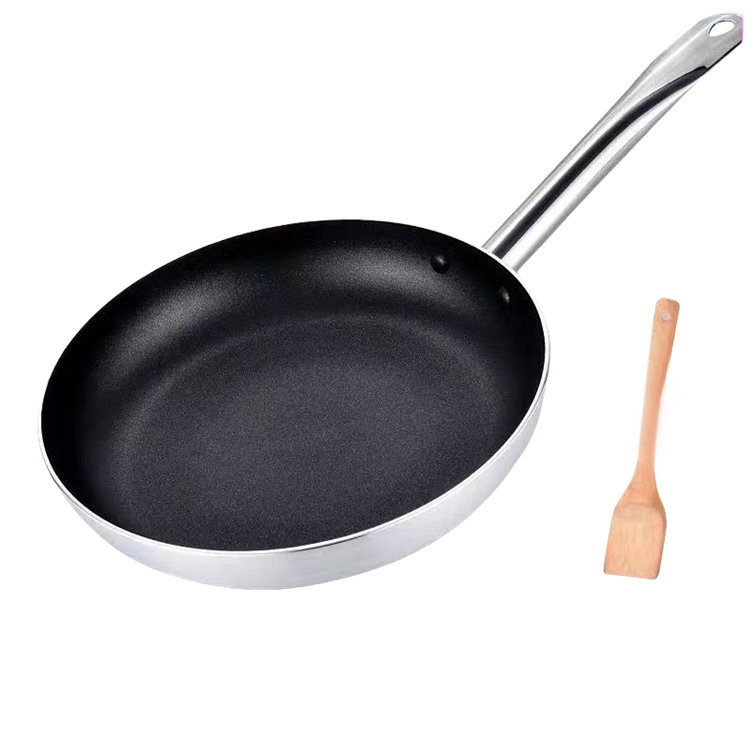
Traditional Non-Stick Cookwares: These Cookwares use a very smooth material. When new, their non-stick properties are usually at their best. With proper care, this non-stick effect can last for a relatively long time.
Ceramic Cookwares: The ceramic coating also works well initially, making frying eggs and fish easy. However, a common problem with ceramic coatings is that their non-stick properties degrade relatively quickly. Many users find that after a few months to half a year, ceramic Cookwares start to "stick" to food.
2. High Temperature Resistance
Ceramic Cookwares: A major advantage of ceramic Cookwares is their high heat resistance. Even if the heat is occasionally turned up too high, they remain relatively stable and are less likely to release unpleasant odors due to high temperatures. For those who like stir-frying or tend to forget to turn off the heat, ceramic Cookwares offer more leeway.
Traditional Non-Stick Cookwares: These Cookwares are more sensitive to temperature. They are better suited for low to medium heat cooking. If the heat is too high, or if they are dry-heated for a long time, the coating may be damaged or even decompose. Therefore, it's crucial to constantly monitor the heat when using these Cookwares.
3. Safety and Environmental Concerns
Ceramic Cookwares: Many manufacturers promote them as "all-natural" and "green," because their coating is primarily derived from minerals such as sand. For those concerned about synthetic chemicals, ceramic Cookwares offer greater peace of mind and a feeling of being healthier.
Traditional Non-Stick Cookwares: Although modern, reputable brands of non-stick Cookware no longer use the controversial processing aids of the past, their stability at high temperatures remains a focus of concern. However, as long as cooking temperatures are strictly controlled, they are actually safe.
4. Durability and LifesCookware
Ceramic Cookwares: Ceramic coatings are hard but also brittle. They are prone to developing small cracks or chipping, especially when subjected to impacts or drastic temperature changes (such as putting a hot Cookware directly under cold water). Traditional Non-Stick Cookwares: Their coating is relatively flexible, but very susceptible to scratches from hard objects. If you're used to using metal spatulas or scrubbing the Cookware with steel wool, this type of Cookware will quickly become unusable.
5. Ease of Cleaning and Maintenance
Similarities: Regardless of the type of Cookware, for a longer lifesCookware, it's recommended to hand wash rather than put it in the dishwasher.
Differences: Because ceramic Cookwares are heat-resistant, sometimes burnt-on grease is harder to clean completely than with traditional non-stick Cookwares. Traditional non-stick Cookwares, as long as the coating is intact, can be easily cleaned with just water and a sponge.
● Purchasing Advice
If you are a novice cook, prioritize the ultimate non-stick experience and long lifesCookware, and can control the heat well, then a traditional non-stick Cookware is a more convenient choice.
If you are very concerned about the coating ingredients, or occasionally need to cook at high temperatures, and don't mind potentially replacing the Cookware every six months or so, then the more aesthetically pleasing ceramic Cookware is a better option.