English
 中文简体
 日本語
 Español
Content
- 1 Understand What a Non-Stick Coating Can and Cannot Do
- 2 First-Time Use: The 4-Minute Startup Ritual
- 3 The Right Way to Preheat a Non-Stick Pan
- 4 Heat Management: Stay Below 230 °C
- 5 What to Cook in a Non-Stick Pan (and What to Avoid)
- 6 Use Small Pans for Small Jobs
- 7 Choose the Right Utensils
- 8 Clean, Dry, and Store Without Shortening the Coating's Life
- 9 Common Mistakes: A Quick-Reference Table
- 10 How Long Does a Non-Stick Pan Last?
- 11 Frequently Asked Questions
- 12 The Final Word
Put the oil in a cold non-stick pan, then place it on a medium burner and let them heat together. Never preheat the pan empty, never turn the dial past medium, and never drag metal tools across the surface. Those three habits prevent the majority of coating failures. A high-quality non-stick pan used this way stays slippery for 2 to 5 years, while the same pan stressed with high heat and dishwasher cycles can fail within a year.
A non-stick pan is the only pan in your kitchen that does most of its work without fat. It relies on a thin surface layer that releases food, so the entire technique is about protecting that layer. A moderate heat ceiling keeps the coating structure stable, soft utensils keep the surface intact, and gentle washing keeps the coating free of burnt residue. Once you understand those three principles, every other tip in this guide follows naturally.
- Use medium heat or lower for 95% of cooking tasks.
- Add oil or butter before switching on the burner.
- Choose silicone, wooden, or nylon utensils only.
- Hand wash with warm water and a soft sponge.
- Never stack pans without a protective layer between them.
- Replace the pan as soon as food starts sticking across a wide area.
Understand What a Non-Stick Coating Can and Cannot Do
The key fact to remember is that a non-stick coating is a working layer, not permanent armor. Most non-stick pans sold today use one of two technologies: a PTFE-based polymer coating, which is the classic slippery black layer, or a ceramic coating, a mineral-based finish often marketed as stone, marble, or granite. Both follow the same heat rule: stay moderate, because heat destroys them fastest.
| Feature | PTFE-based coating | Ceramic coating |
|---|---|---|
| Recommended maximum heat | 230 °C continuous | 260 °C in short bursts |
| Typical non-stick lifetime | 2 to 5 years with care | 6 to 18 months |
| Scratch resistance | Moderate | Better, but still not metal-safe |
| Food release | Excellent for eggs and fish | Good at first, fades quicker |
| Best cooking tasks | Eggs, pancakes, fish, sauces | General low-oil cooking, simmering |
That temperature ceiling is the single most important number in non-stick cookware. Above roughly 260 °C, a PTFE layer starts to break down, which shows up as discoloration, bubbling, and a permanent loss of slipperiness. Ceramic coatings tolerate short bursts of higher heat but lose their release properties faster when pushed hard. In practical terms, 230 °C is far above what you need for frying eggs at 120 to 150 °C, sautéing vegetables at 160 to 180 °C, or cooking fish at 140 to 160 °C. The ceiling is never a limitation in normal cooking; it is a protection limit to respect, not to test.
First-Time Use: The 4-Minute Startup Ritual
Begin with a wash, not a fry. Factory-applied coatings can carry fine dust or handling grease from the production line, and a quick hand wash removes it before it bakes on. Spend four minutes on this ritual and the coating starts its life clean.
- Wash the pan with warm water and a few drops of mild dish soap, using a soft sponge.
- Rinse thoroughly, then dry with a clean towel or leave it on a warm stove rack for two minutes.
- Rub one or two drops of cooking oil over the entire inner surface with a paper towel until the layer is almost invisible.
- Heat the oiled pan on low for two to three minutes, switch off, cool, and wipe away the excess oil.
The oil film fills microscopic pores in the fresh coating and gives it a slight initial slickness. It also makes the first few cooks easier, especially for omelets and crepes. Do not season a non-stick pan the way you season cast iron. No repeated oil layers and no smoking-hot oven cycles. One thin film is enough.
The Right Way to Preheat a Non-Stick Pan
Always preheat with the fat already in the pan. A cold pan with oil in it is the correct starting point for non-stick cookware. The oil acts as a temperature buffer: it distributes heat across the surface, prevents the coating from overheating, and tells you when the pan is ready. An empty pan, by contrast, keeps absorbing heat silently until the coating is already under stress.
Use these two checks to know when the pan is ready:
- Water test: after one to two minutes on medium heat, flick a drop of water onto the surface. If it forms a round bead and sizzles gently, the pan is ready.
- Oil shimmer test: when the oil thins out and shimmers but does not smoke, it has reached frying temperature around 170 to 190 °C.
A note on butter: butter burns at about 175 °C. If you see the butter turn brown before the pan is hot, lower the heat or use a splash of mild oil such as canola, peanut, or sunflower instead. Oil tolerates higher heat than dairy butter, so it suits the moderate-heat profile of a non-stick pan better.
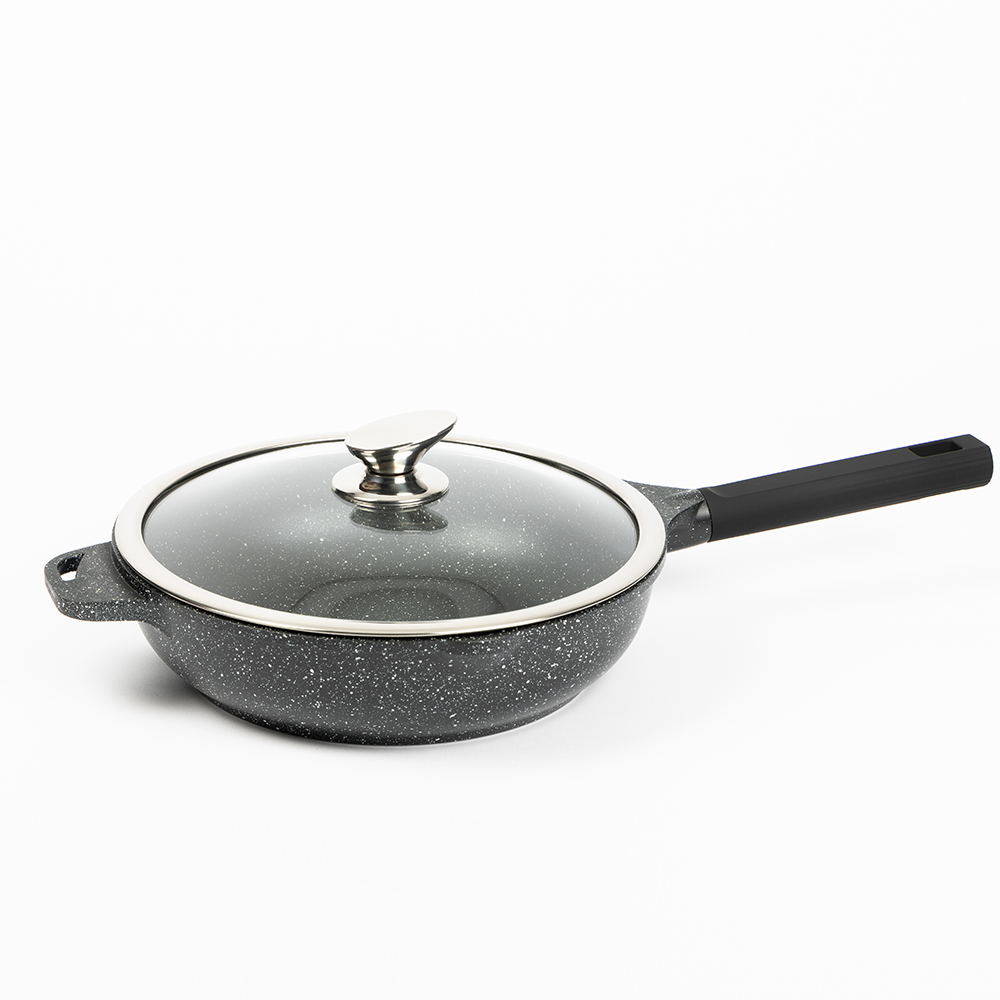
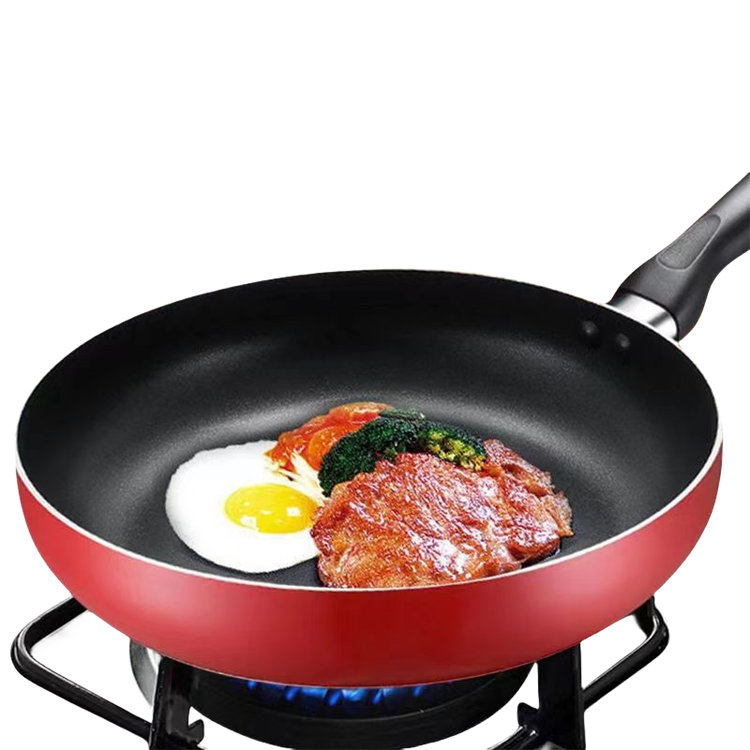
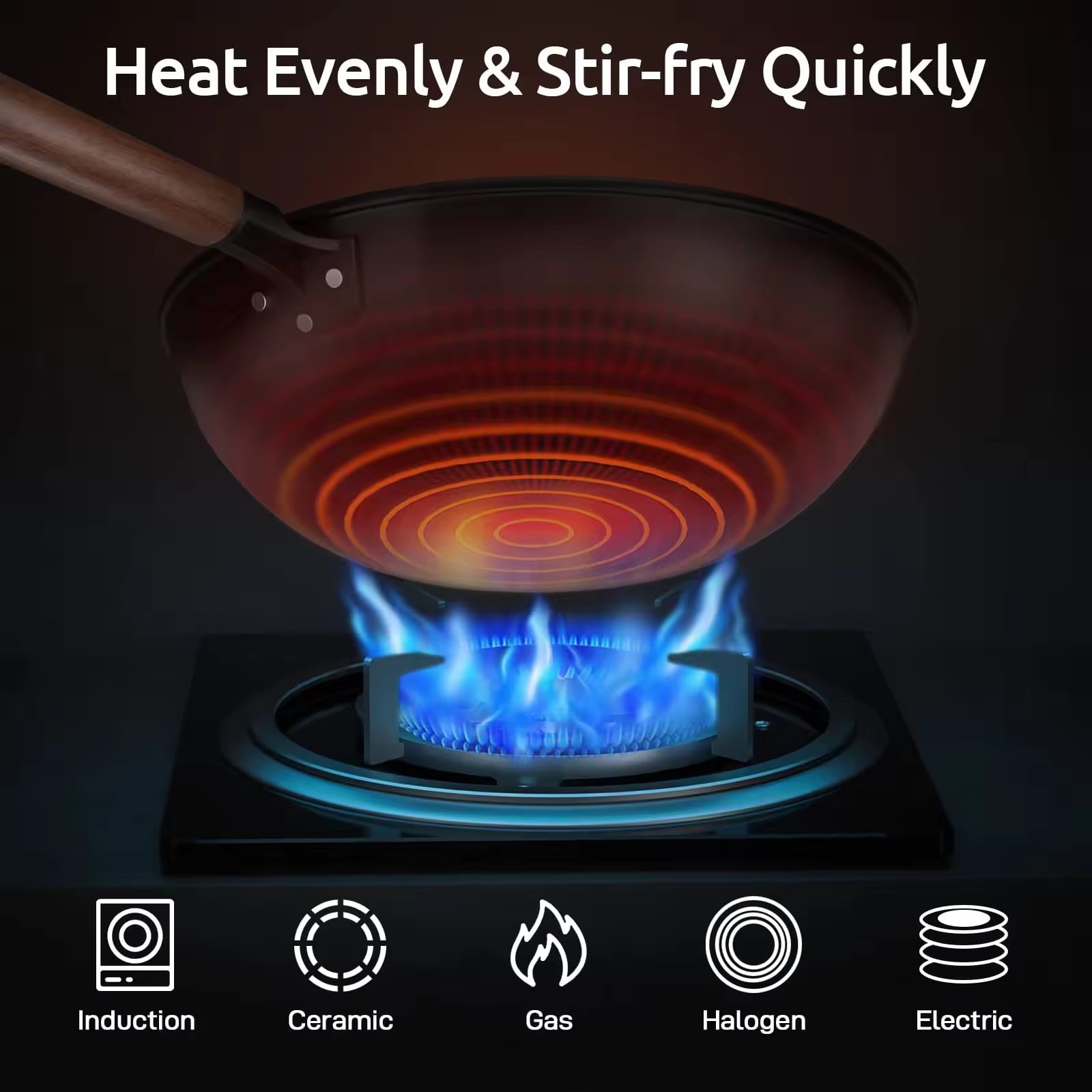 Customized Nonstick Wok Stir-Fry Pan with Induction BottomThis wok offers a non-stick coating suited for moderate heat cooking. Its induction-compatible hole bottom and bakelite handle make it a practical choice for everyday stir-frying at controlled temperatures.View Product →
Heat Management: Stay Below 230 °C
The golden range for a non-stick pan is 120 to 200 °C. Keep the control in the lower half of the dial and you will never need the upper half. Here is what that looks like on each of the common stove types:
- Electric stove: set the dial at 4 to 6 out of 9 and preheat for two to three minutes maximum.
- Gas stove: keep the flame inside the pan base. A flame licking up the sides wastes heat and scorches the exterior.
- Induction: use power levels 3 to 5. Induction is aggressive on cookware, so the pan must have a flat aluminum base that distributes heat evenly.
Why is this a hard limit in practice? First, overheated coatings lose their bond with the aluminum base and start flaking. Second, thermal degradation is cumulative: even one session at maximum heat permanently reduces the non-stick effect, even if the damage is not visible right away. Third, an overheated pan makes food stick in the center, which leads people to scrub harder and shorten the pan's life further.
What to Cook in a Non-Stick Pan (and What to Avoid)
Use a non-stick pan for food that is delicate, starchy, or low in fat. That is the short version. The non-stick surface shines when the food itself would otherwise glue to the metal and fall apart during flipping.
- Eggs (fried, scrambled, omelets)
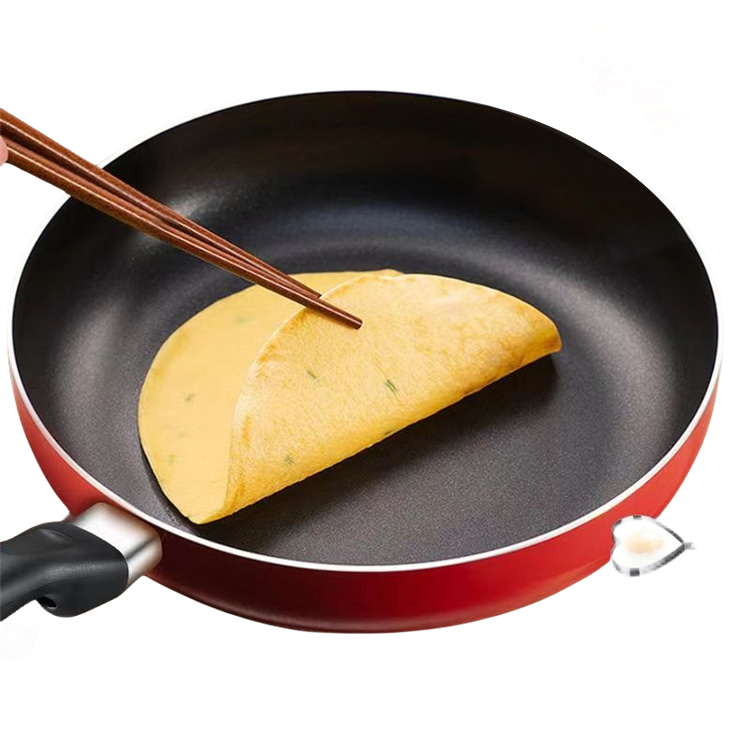
- Pancakes and crepes
- Fish fillets with fragile skin
- Dumplings and potstickers
- Fried rice with a small amount of oil
- Sauces that tend to scorch
- Deep frying with large oil volumes
- Caramelizing sugar at high heat
- High-heat searing of thick steaks
- Charring vegetables on extreme heat
- Crisping reheats that need a smoking pan
If a recipe calls for a smoking-hot pan, that is a signal to use stainless steel or cast iron, not your non-stick pan. Non-stick is also not ideal for heavy browning jobs that rely on browned bits stuck to the pan for a sauce. There are no brown bits in a non-stick pan, because nothing sticks in the first place.
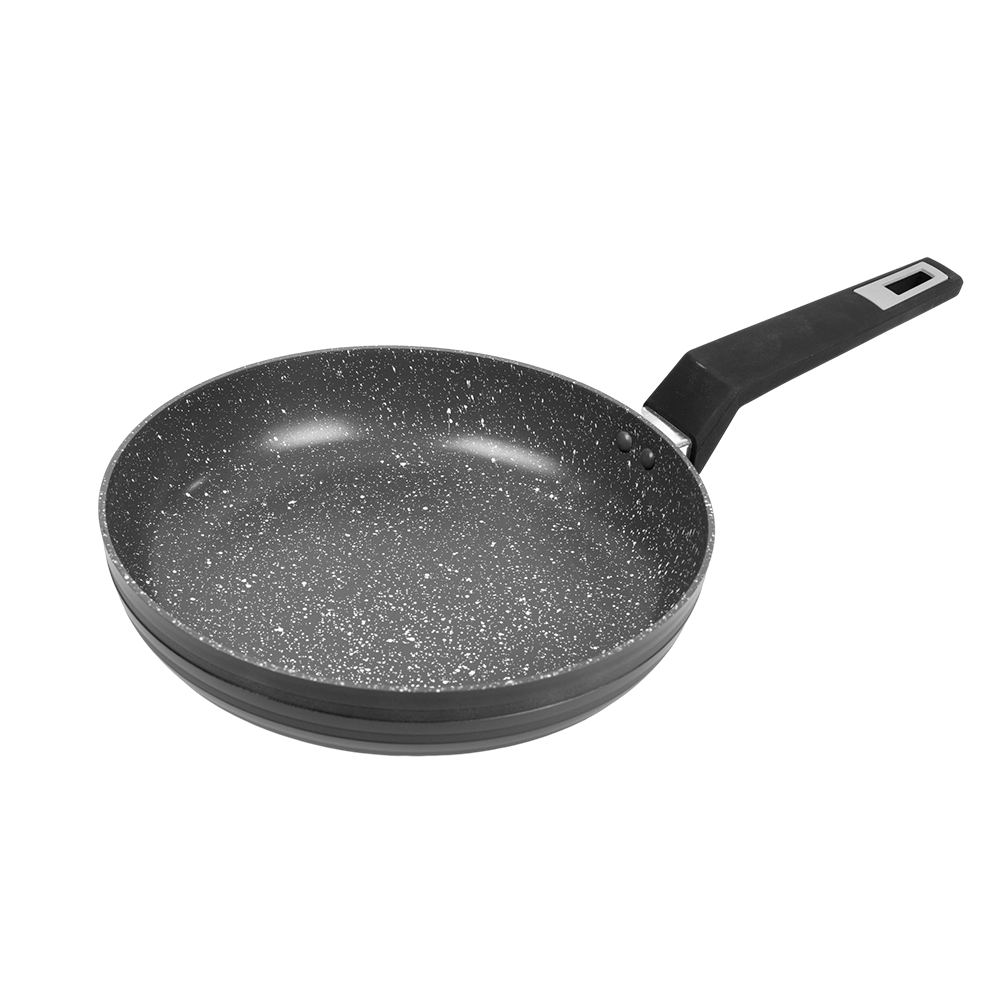
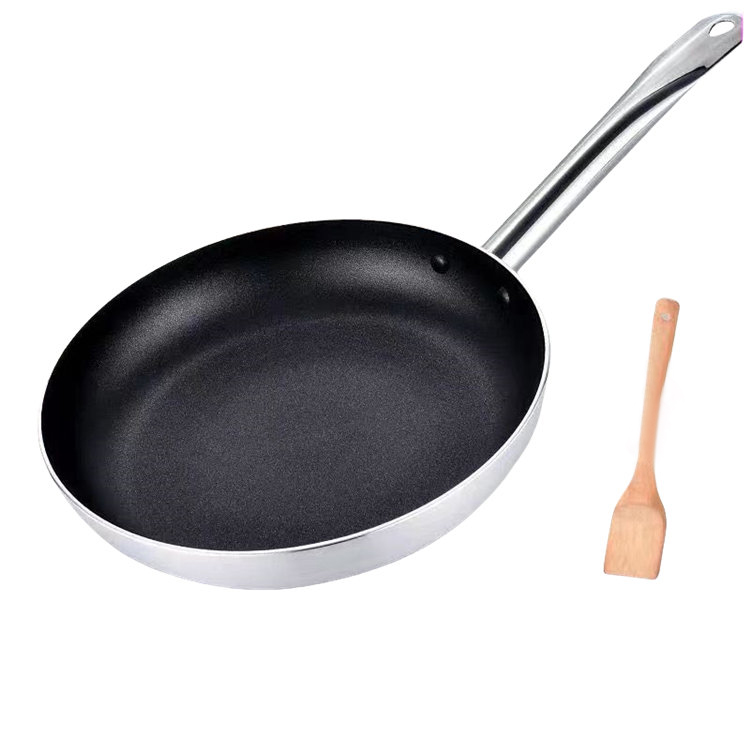
 Multifunctional Forged Aluminum Nonstick Frying Pan, 20-28cmAvailable in multiple sizes, this forged aluminum frying pan heats quickly and suits small portions. Its non-stick surface reduces the need for heavy browning, aligning with gentle cooking techniques.View Product →
Use Small Pans for Small Jobs
Heating milk for coffee, cooking one portion of porridge, or making a quick tomato sauce in a large pan wastes energy and exposes a big coating surface to unnecessary heat. Use the smallest pan that fits the quantity. A small saucepan also heats faster, which means less time on the burner and less wear on the coating.
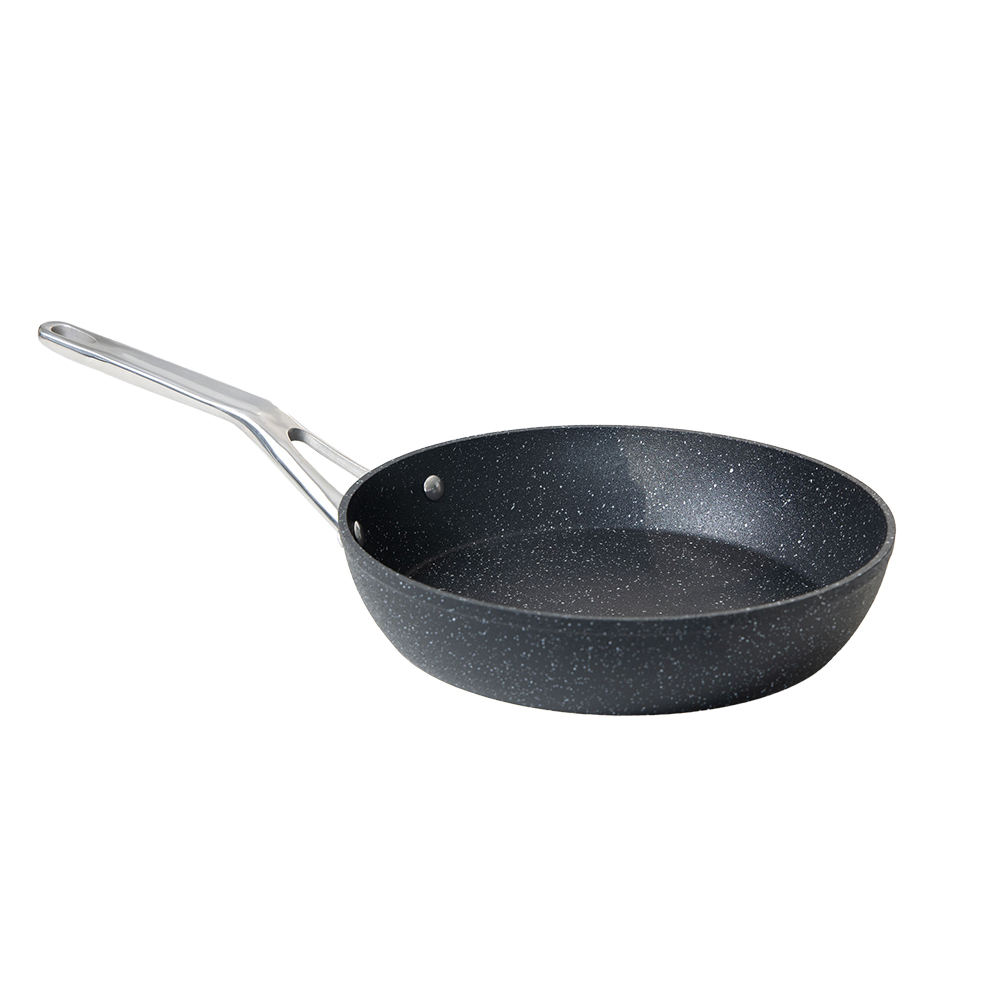
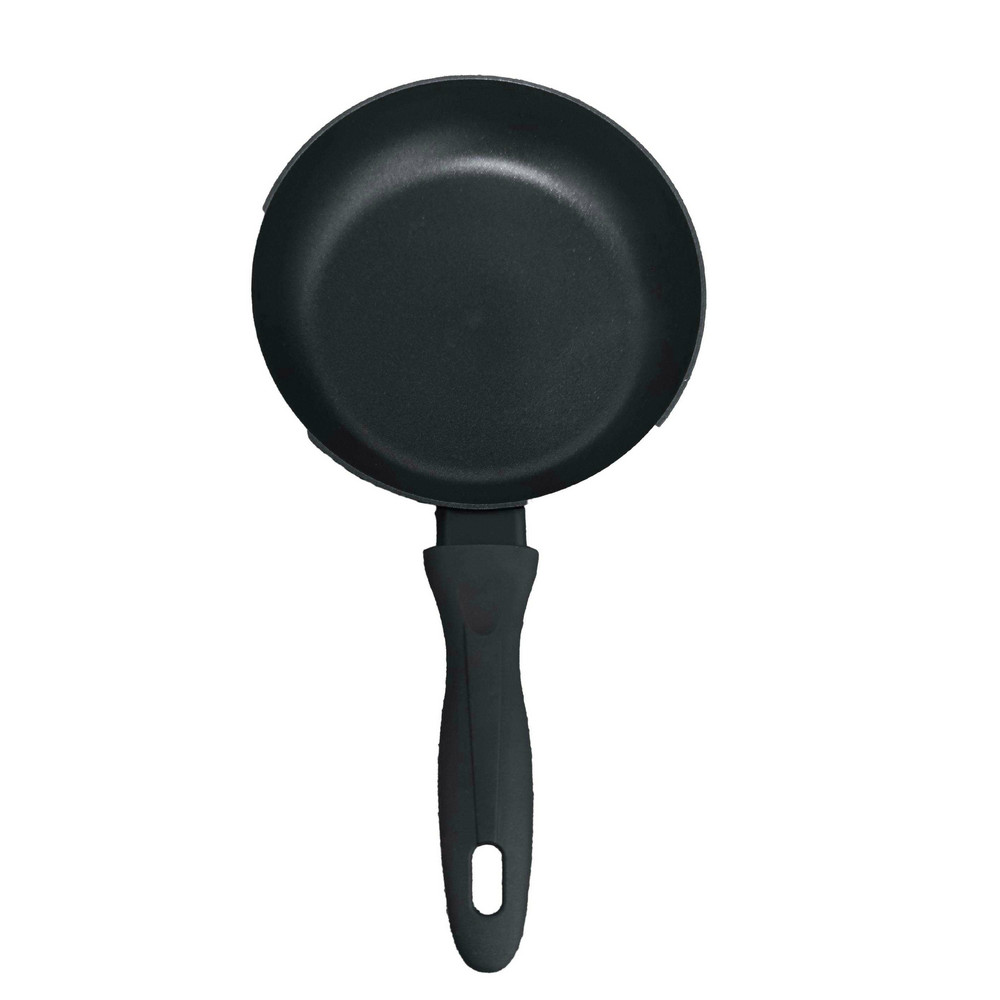
 Marble Nonstick Sauce Pan for Milk and NoodlesA compact saucepan ideal for heating milk, porridge, or sauces. Its non-stick coating supports low-to-medium heat use, and the marble finish adds a durable, easy-to-clean surface for daily cooking.View Product →
Choose the Right Utensils
Silicone is the safest standard; wood and nylon are fine; metal should not touch the coating. The reason is simple: polymer coatings are far softer than steel. A single scrape with a metal fork may not ruin the pan instantly, but it breaks the surface at a microscopic level, and that scratch becomes a starting point for peeling.
- Silicone spatulas and tongs: the best all-around choice, flexible and heat-resistant.
- Wooden spoons and spatulas: safe and widely available, just a bit thicker.
- Nylon tools: safe up to 200 °C, but avoid letting them rest against the hot pan edge.
- Metal forks, whisks, and spatulas: not recommended at all.
- Knives: never cut food directly in the pan.
Check your tools before buying a new pan. If your drawer holds more metal than silicone, add one or two silicone tools first, because a fresh coating will not survive long against steel forks and whisk heads scraping across it.
Clean, Dry, and Store Without Shortening the Coating's Life
Hand washing beats machine washing for every non-stick pan, every time. Dishwasher cycles expose the coating to aggressive detergents and high temperature for over an hour, which accelerates polymer breakdown and can corrode riveted handles. It is simply an unnecessary risk.
- Cool down: let the pan rest for five minutes before it touches water.
- Rinse: use warm water and a soft sponge with mild dish soap.
- Soak: for stubborn residue, soak for 10 to 15 minutes in warm soapy water. Do not boil water in the pan to loosen it.
- Dry and store: dry immediately, then put a paper towel inside the pan if you stack them.
Thermal shock is another silent killer. Plunging a hot pan into cold water can warp the aluminum base, and a warped base means uneven heating that looks like coating failure even when the coating is fine.
Common Mistakes: A Quick-Reference Table
Print this table in your head. Every row below is a habit that shortens the life of a non-stick pan, and the fix is always simpler than the mistake.
| Mistake | What it does to the pan | What to do instead |
|---|---|---|
| Preheating an empty pan | Overheats the coating and permanently reduces release | Add oil first, then switch on the heat |
| Cooking on maximum heat | Degrades the polymer structure and causes flaking | Keep the dial on medium |
| Using metal utensils | Scratches the surface and creates peeling start points | Use silicone, wood, or nylon |
| Washing in the dishwasher | Aggressive chemicals and heat attack the coating | Hand wash within 10 minutes of cooking |
| Plunging a hot pan into cold water | Warps the base and causes uneven heating | Cool for five minutes before washing |
| Stacking pans without protection | Abrasion scratches the inner coating | Put a paper towel between stacked pans |
How Long Does a Non-Stick Pan Last?
Expect 2 to 3 years of comfortable daily use, or 4 to 5 years when the pan is used lightly and cared for carefully. This is normal, not a manufacturing defect. The coating is a consumable layer, like the tread on a tire. It wears down with use and eventually needs replacement.
- Food sticks to the center even after oiling.
- Visible scratches cover more than 20% of the surface.
- Discoloration or brown patches that do not wash off.
- Peeling or flaking around the edges.
- A dull, rough texture compared with day one.
When you notice those signs, replace the pan. A worn non-stick pan loses its purpose and becomes more frustrating to cook with than a low-cost stainless steel pan. If you want to understand how durable the non-stick coating really is, the practical answer is the same across brands: lifetime depends about 30% on coating quality and 70% on user behavior.
Frequently Asked Questions
Q1. Can I use metal utensils on a non-stick pan just once, by accident?
No panic about a single scrape, but do not turn it into a habit. One light contact leaves a shallow mark at most; repeated or hard scraping will soon create a path for food to stick. Switch to silicone or wood from day one and you will never need to find out how deep a scratch can go.
Q2. Why does food stick in the middle of my non-stick pan?
The center is the point of maximum heat. If the pan is pushed past medium heat, the coating and the oil film degrade first in that spot. Reduce the heat, add a little fresh oil, and the release usually improves. If the stickiness remains after a month of moderate-heat cooking, the coating is likely worn and the pan should be replaced.
Q3. Can I put a non-stick pan in the oven?
Only if the manufacturer specifies it. Many non-stick pans are oven-safe up to 180 to 200 °C because the handle is heat-resistant, but others have bakelite or plastic handles that are not. Check the base of the pan for markings or the product spec sheet. When in doubt, use stainless steel or cast iron for oven work.
Q4. Should I re-season a non-stick pan that starts to stick?
No. Seasoning works on cast iron because the seasoning layer becomes the non-stick surface. On a non-stick pan, adding oil layers over a worn coating only creates a sticky, gummy film. Clean it thoroughly, dry it, and if it still sticks, retire it.
Q5. Is the dishwasher really that bad for non-stick pans?
Yes. High temperature plus strong detergents over a long cycle degrades the coating faster than any hand-washing method. It also dulls the exterior finish and can weaken riveted handles. The few minutes of convenience cost months of coating life.
Q6. How can I remove burnt-on residue without damaging the coating?
Cool the pan completely, fill it with warm water and a drop of dish soap, and leave it for 15 minutes. Then wipe with a soft sponge. For stubborn spots, make a paste of baking soda and water, rub gently, and rinse well. Avoid abrasive pads, steel wool, and hard-bristle brushes.
The Final Word
Non-stick pans fail in one of two ways: the coating wears out quickly because the owner treats it like stainless steel, or the pan is damaged by a single dramatic event such as an empty pan on maximum heat. Both are avoidable. Keep the heat moderate, keep the fat in first, keep the tools soft, wash by hand, and you will get the full useful life out of the coating.
Choosing the right pan matters too. Look for an aluminum base at least 2.2 mm thick for even heat distribution, a coating with two or three layers for a longer lifespan, and a shape that matches your daily cooking: a fry pan for eggs, a wok for stir-fries, and a milk pan for small portions.
If you are sourcing non-stick cookware for a brand, retail line, or hospitality project, contact our team to discuss materials, coating layers, sizes, and custom branding. The right pan is a combination of the right base, the right coating, and the right habits in front of the stove.