English
 中文简体
中文简体
 日本語
日本語
 Español
Content
- 1 What Actually Defines Quality: Construction, Alloy, and Base
- 2 How Stainless Steel Cookware Is Built: Single-Ply, Tri-Ply, and Encapsulated Base
- 3 Choosing the Right Alloy: 18/10, 18/8, and 316 Steel
- 4 Bottom Thickness and Heat Distribution: The Numbers That Matter
- 5 Handles, Lids, and Rivets: Long-Term Comfort and Durability
- 6 When Stainless Steel Is Not the Best Choice: Aluminum Nonstick Alternatives
- 7 How to Test a Stainless Steel Pan in Store: A Practical Checklist
- 8 Price Tiers: What You Really Get From $80 to $500
- 9 Frequently Asked Questions About Choosing Stainless Steel Cookware
- 10 Final Recommendation: The Only Buying Rule That Matters
Standing in a kitchenware store, you compare two stainless steel pans. One costs $85, the other $380. Both look similar. The difference is not in the label but in the way the steel is bonded to the core, the thickness of the base, and the quality of the rivets. If you want a set that will serve you for decades, focus on three factors: construction, alloy composition, and bottom thickness. This guide explains what those mean in practice, what to test before buying, and when stainless steel is not the right material at all.
What Actually Defines Quality: Construction, Alloy, and Base
The quick answer is never buy a stainless steel pan based on brand name or looks. Instead, look for three structural cues: the number of bonded layers, the stainless steel grade, and the thickness of the heat-diffusing core. If any one of these is weak, you will experience warped bottoms, scorched food, or handles that loosen after a few months.
- Construction - Tri-ply with an aluminum core of at least 2.5 mm is ideal for frying pans. Saucepans can work with a 1.8 mm core.
- Alloy - 18/10 stainless steel offers the best balance of corrosion resistance and appearance. 18/8 is perfectly fine for most home cooking.
- Base - For induction cooktops, the bottom must contain a magnetic layer such as 430 steel. Check with a magnet before buying.
These three criteria will filter out 80% of the cookware on the market. A pan that satisfies them is a long-term purchase; one that does not is an expensive paperweight.
How Stainless Steel Cookware Is Built: Single-Ply, Tri-Ply, and Encapsulated Base
Stainless steel alone is a poor heat conductor. Its thermal conductivity is roughly 16 W/m·K, while aluminum is about 237 W/m·K. For this reason, every quality stainless steel pan uses an aluminum or copper core to spread heat evenly. There are three common constructions:
| Construction | Typical Thickness | Heat Distribution | Best For |
|---|---|---|---|
| Single-ply | 2.0–3.0 mm steel only | Poor; hot spots | Boiling water, pasta, simmering |
| Tri-ply (steel-aluminum-steel) | 2.0–3.5 mm core | Even across the entire pan | Searing, frying, everyday cooking |
| Encapsulated base | Steel body + 3–5 mm copper/aluminum disc | Hot at the base, cool at the walls | Soups, stews, large pots |
The practical takeaway: if you use the pan for high-heat searing, tri-ply is worth the extra cost. If your cooking is mostly boiling and braising, an encapsulated base saves money without hurting results.
Choosing the Right Alloy: 18/10, 18/8, and 316 Steel
Stainless steel grades are identified by their chromium and nickel percentages. The numbers matter because they affect corrosion resistance, durability, and food interaction.
- 18/8 (304) - 18% chromium and 8% nickel. The standard for most cookware. It resists rust from water and normal acidity.
- 18/10 - 18% chromium and 10% nickel. This grade is slightly shinier and more resistant to pitting from salt and acidic foods. If you cook salty sauces daily, 18/10 is a smart upgrade.
- 316 - Adds 2–3% molybdenum. It is the most corrosion-resistant, often used in marine or outdoor kitchens. It is also pricier and heavier.
- 430 - A magnetic, nickel-free grade used in the bottom layer of induction-compatible pans. It is not a food-contact grade for the interior, so do not judge a pan solely by the 430 layer on the outside.
Do not overpay for a grade that you will not benefit from. For a home kitchen, 18/8 is sufficient; for frequent seafood and salt-heavy cooking, choose 18/10. The visible “18/10” label on the product page is a reliable shortcut.
Bottom Thickness and Heat Distribution: The Numbers That Matter
The bottom of the pan decides how quickly heat reaches your food and how evenly it spreads. A thin base creates something called “hot spot,” which burns food before the rest of the pan comes up to temperature.
Here is a general rule: for a frying pan, the aluminum core should be at least 2.5 mm thick. For a sauce pan, 2.0 mm is usually enough. Any pan with an overall steel thickness below 2.0 mm is likely to warp when you heat it quickly. If the pan uses a hole-type induction bottom, the holes and the magnetic layer change how heat moves. You can read this article on induction bottom design to see how that affects cooking efficiency in real tests.
Weight is a practical indicator. A 10-inch tri-ply skillet with a 3.0 mm core is normally around 2.4–2.8 kg (5.3–6.2 lb). A single-ply pan of the same diameter may weigh 1.6 kg and still feel unsteady when you flip food. The heavier pan is not automatically better, but it is a sign of more material in the base.
Handles, Lids, and Rivets: Long-Term Comfort and Durability
The handle is where you feel the quality every single day. A poor handle or a weak rivet will turn an expensive pan into a hazard.
- Handles - Solid cast stainless steel handles stay cooler than thin stamped handles because they do not absorb heat from the pan body. Check that the handle has a smooth curve with no sharp edges.
- Rivets - Riveted handles are more secure than welded ones. Run your finger along the inside of the pan; the rivet heads should be flush and smooth so food does not collect around them.
- Lids - Tempered glass with a silicone rim seals better and lets you see the cooking progress. Stainless steel lids are more durable but often heavier. For a universal pan, a glass lid with a rim is the best compromise.
Always check the back of the handle where it meets the pan wall. A gap that collects grease will become a cleaning headache. The smaller the gap, the better.
When Stainless Steel Is Not the Best Choice: Aluminum Nonstick Alternatives
Stainless steel is exceptional for browning, deglazing, and high-heat cooking, but it fails at sticky foods. Eggs, fish fillets, pancakes, and crepes are much easier to cook on a nonstick surface. If these foods make up a large part of your meals, a high-quality nonstick pan is not an option—it is a necessity.
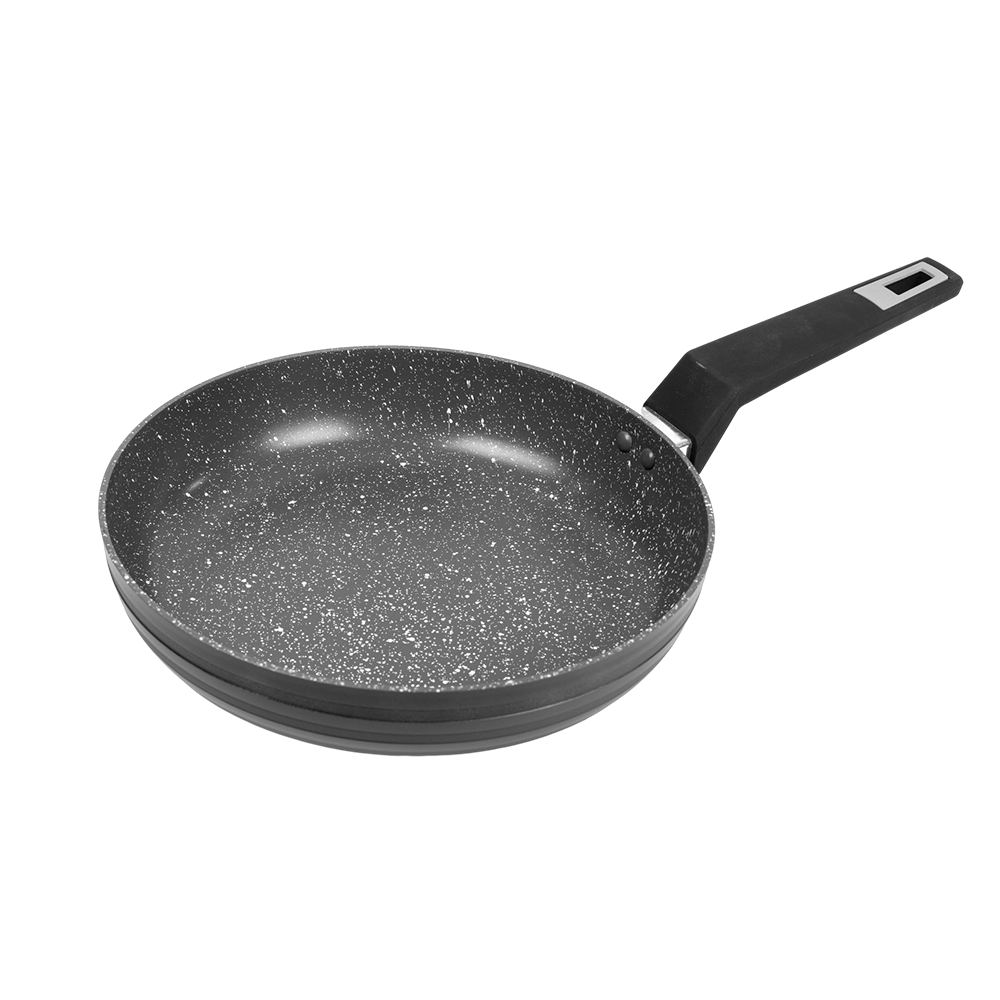
Aluminum pans are the better choice here because aluminum conducts heat quickly and is lightweight. A forged aluminum nonstick skillet heats faster than a tri-ply stainless pan and releases food effortlessly. If you need a pan for breakfast or quick stir-fries, look for one with a thick forged body and a stay-cool handle.
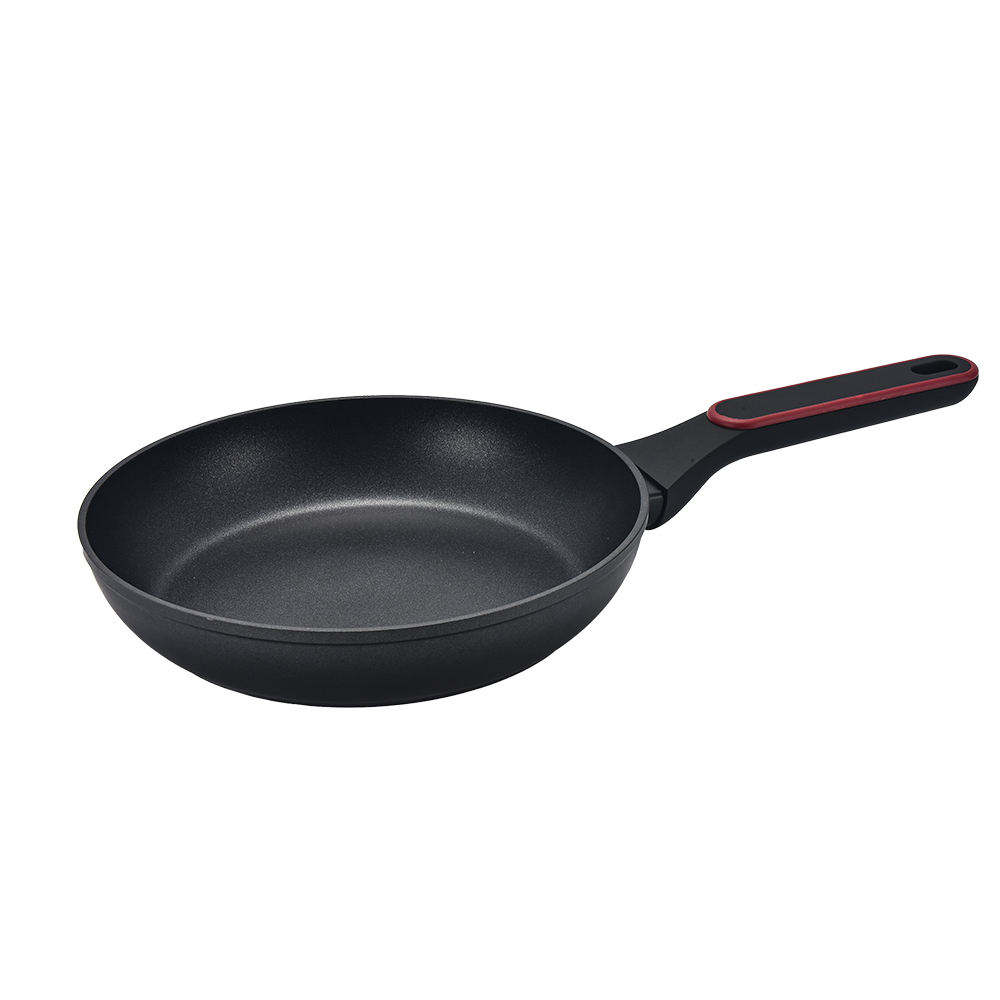
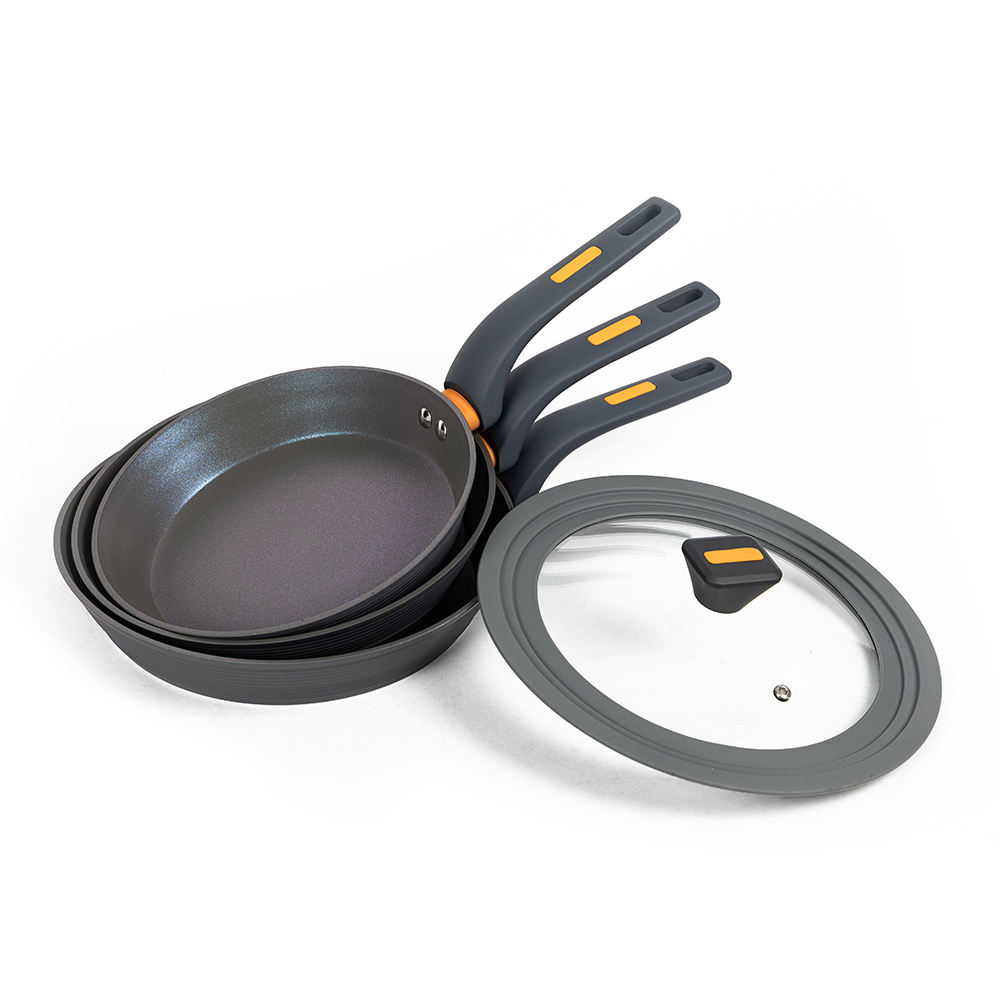
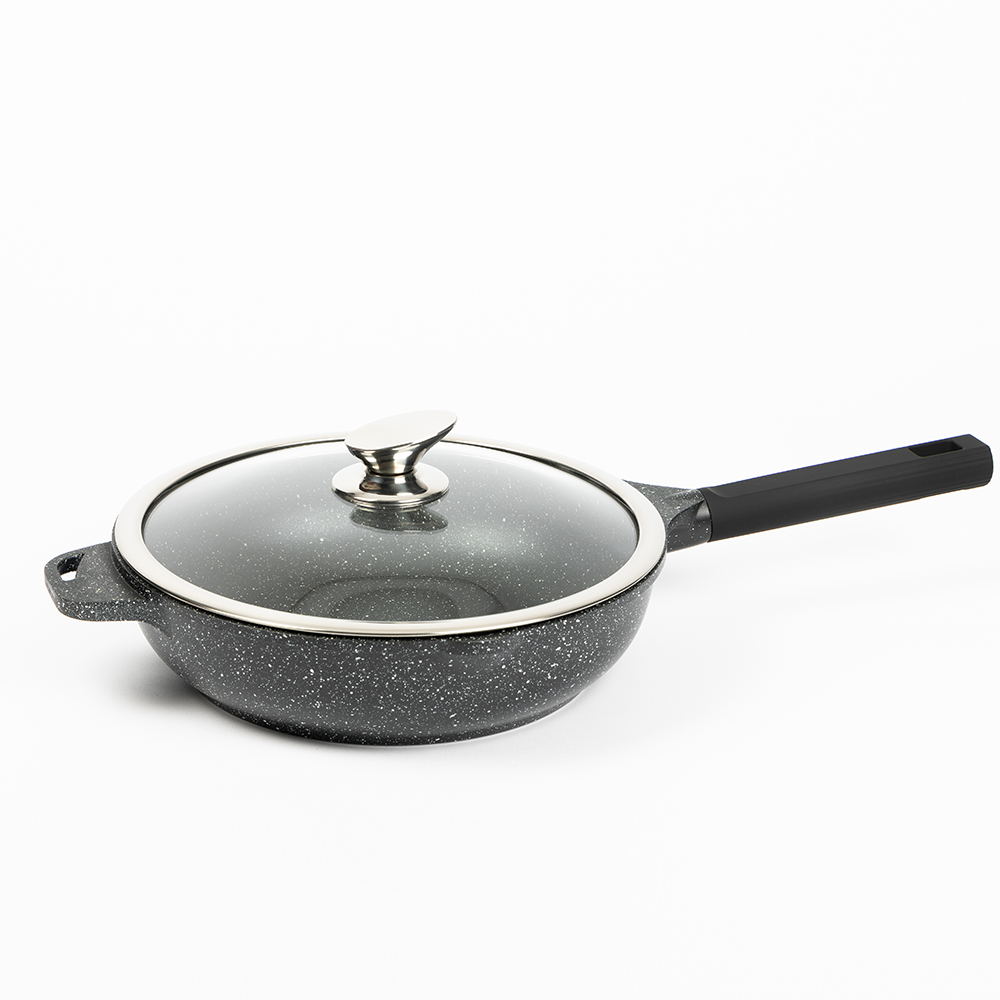
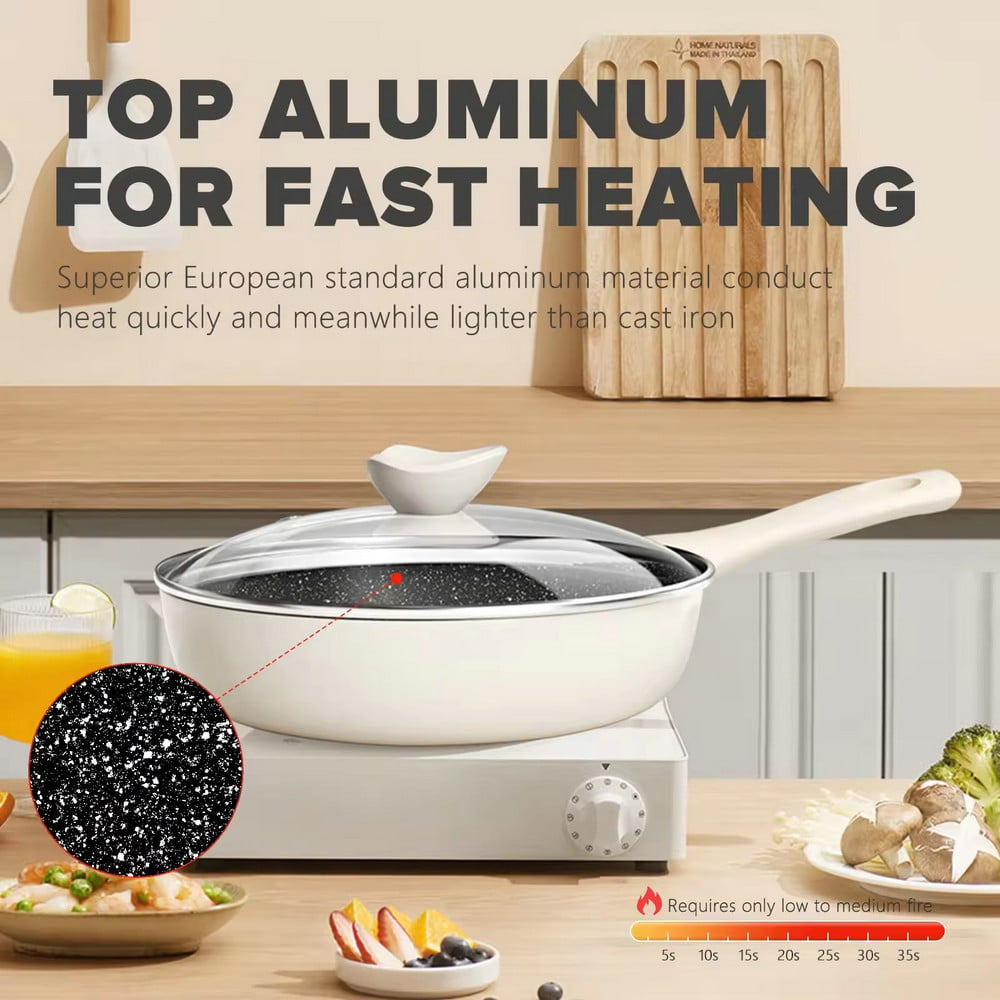 Lightweight Granite Nonstick Skillet with Glass Lid for Quick CookingThis lightweight skillet heats quickly and releases food easily, thanks to its forged aluminum body and granite nonstick coating. The included glass lid helps retain moisture for versatile stovetop cooking.View Product →
For casseroles, stews, and soups, an aluminum nonstick pot with a heavy forged bottom can match the even heating of a stainless steel pot while being much easier to clean. This is especially useful when you cook tomato-based sauces or dairy dishes that tend to scorch.
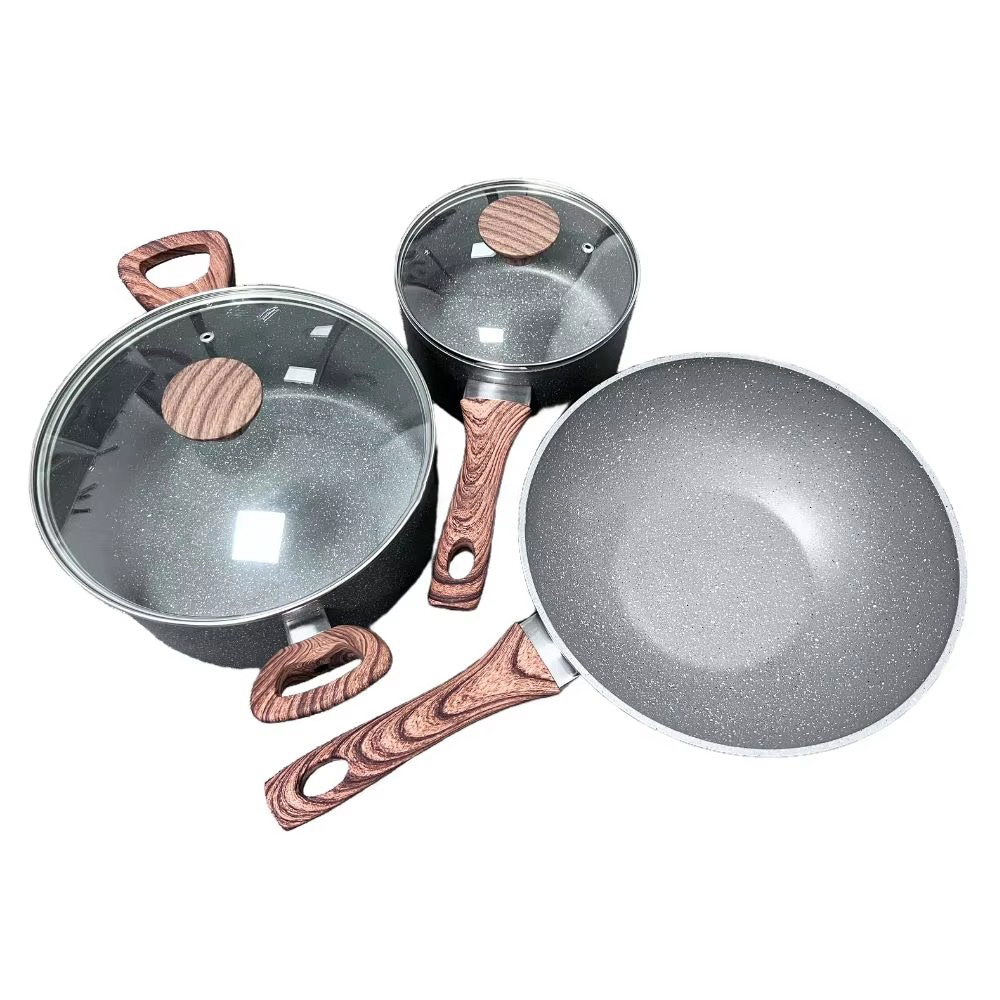 Forged Aluminum Casserole Pot with Nonstick Coating and Induction BottomThis forged aluminum casserole features a heavy 4.5mm base for even heating and a nonstick coating that simplifies cleanup. It works on induction cooktops and comes with a glass lid, making it ideal for stews and soups.View Product →
When you source cookware for your own brand, you do not have to limit yourself to one material. A manufacturer that controls the full production line can supply both stainless steel and aluminum nonstick options with custom sizes, coatings, and handles. This flexibility is what lets a supplier meet the exact needs of home cooks, restaurants, and outdoor kitchens.
How to Test a Stainless Steel Pan in Store: A Practical Checklist
Use this checklist when you are physically holding a pan. It takes less than two minutes and reveals most quality differences.
- Look at the rim. A tri-ply pan shows alternating lines of steel and aluminum at the edge. If you see a single layer, it is single-ply.
- Tap the side of the pan with a wooden spoon. A clear, ringing sound means solid steel. A dull thud may indicate a thin or poorly bonded base.
- Bring a small magnet or a refrigerator magnet. If the bottom attracts the magnet, it is induction compatible.
- Hold the pan by the handle. It should feel balanced with the handle pulling slightly downward, not up. If the pan tips forward too easily, the handle is too light.
- Check the rivets. Smooth rivet heads mean food will not get trapped. Uneven rivets are a sign of weak manufacturing.
- Look for a tight-fitting lid. Tilt the pan and let the lid slide off; it should not wobble or rattle.
If the pan passes all six tests, you are looking at a piece that will maintain its shape and performance for years.
Price Tiers: What You Really Get From $80 to $500
Price is not a reliable indicator of quality, but it does correlate with certain features. Here is a transparent breakdown based on the typical products available today.
| Price Range | Typical Features | Best For |
|---|---|---|
| $80–$150 | Single-ply or thin encapsulated base; 18/8 steel; stamped handles | Boiling, pasta, soups, simmering |
| $150–$300 | Tri-ply with 2.0–2.5 mm core; 18/10 steel; cast handles; tempered glass lids | Searing, frying, all-purpose cooking |
| $300–$500+ | 5-ply or very thick tri-ply; 316 steel; riveted premium handles | Professional use, high-heat searing, long service life |
The most important lesson is that a $500 pan is not five times better than a $150 pan. It is better in specific ways: thicker core, better handle, better lid seal. If you mostly cook in the $150–$300 range, you are getting all the performance a home kitchen needs.
Frequently Asked Questions About Choosing Stainless Steel Cookware
Is stainless steel cookware safe?
Yes. Stainless steel is non-reactive and will not leach into most foods. The only caution is with salt-heavy brines left for long periods; the salt may pit a 18/8 steel surface. Rinsing and drying after use prevents that.
Can I use stainless steel on induction cooktops?
Only if the pan has a magnetic bottom layer. The base must contain ferritic steel, usually 430. A magnet test is the surest way to verify induction compatibility before purchase.
Why does my stainless steel pan stick?
Sticking happens when the pan is not hot enough or when you try to move food before it releases. Preheat the pan on medium for two minutes, then add oil and let it shimmer. For delicate foods like eggs, use a slightly lower heat and wait until the edge lifts.
How do I clean stainless steel cookware?
Most stainless steel pans are dishwasher safe, but hand wash with warm water and a soft sponge to preserve the shine. For burnt residue, add water and a tablespoon of baking soda, boil for five minutes, then scrape off with a wooden spoon.
Should I choose stainless steel or nonstick?
Stainless steel wins for searing, browning, and deglazing. Nonstick wins for eggs, fish, and quick cleaning. The best approach is to have both: a stainless steel skillet for high-heat tasks and a nonstick pan for delicate foods. Aluminum nonstick is a reasonable second pan because it is lighter and heats faster.
Final Recommendation: The Only Buying Rule That Matters
Buy a tri-ply pan with an 18/10 stainless steel interior, a core of at least 2.5 mm, cast rivets, and a tight-fitting lid. Avoid single-ply pans with thin bottoms. For sticky foods, add a nonstick aluminum pan. When you are sourcing cookware for your brand, you should work with a manufacturer that can provide both options in custom sizes, colors, and features. If you need help finding the right supplier, our contact page connects you directly to the engineers who can help select the right specifications.
The secret to a long-lived cookware set is not a magic brand. It is a properly bonded base, the correct alloy, and a solid handle. Focus on those three and you will not regret the purchase after a few years.
You can reach us through our contact page to discuss custom tooling and specifications for your own line.