English
 中文简体
中文简体
 日本語
日本語
 Español
Content
- 1 What Actually Determines the Lifespan of Ceramic Coated Cookware
- 2 Ceramic Coating vs. PTFE: Which Coating Actually Lasts Longer in the Kitchen?
- 3 Seven Habits That Will Help Your Ceramic Cookware Last Five Years or More
- 4 B2B Buyers: What You Should Evaluate Before Sourcing Ceramic Cookware in Bulk
- 5 Frequently Asked Questions About the Lifespan of Ceramic Cookware
- 5.1 1. How do I know when my ceramic pan needs replacing?
- 5.2 2. Can ceramic cookware really last 5 years?
- 5.3 3. Do I need to season a ceramic pan before using it?
- 5.4 4. Is ceramic cookware safe for induction hobs?
- 5.5 5. What is the most common way people ruin a ceramic pan?
- 5.6 6. Are ceramic coatings inherently more eco-friendly than PTFE?
- 6 Summary: Realistic Lifespan Ranges You Should Expect
If you are buying ceramic cookware for the first time or running a kitchenware line, one question comes up more than any other: how long does ceramic cookware last? The direct answer is that a well-made ceramic-coated pan will typically take 2 to 3 years of everyday cooking before the coating starts to wear away, while a high-end forged aluminum body with a multilayer ceramic coating can go 5 years and possibly beyond if you use it gently. The body often survives for a decade; the ceramic layer is the part that degrades.
This is not a marketing claim pulled out of thin air. From our own manufacturing floor in Cixi, we have watched hundreds of ceramic pans pass through scratch-wear testing and oven-cycling trials. Those tests consistently show the same reality: ceramic cookware is durable but not indestructible, and its lifespan depends far more on how the user treats it, how thick the ceramic layer is, and how well the pan body supports the coating than on the word "ceramic" alone.
What Actually Determines the Lifespan of Ceramic Coated Cookware
Ceramic coating is a fascinating material. It is essentially a silica-based inorganic layer applied to an aluminum base, and it can go from slick and shiny to rough and sticky in a surprisingly short time under the wrong conditions. Based on our QC sampling of returned test pans and average usage data from household cooks, we can break down the key variables in a simple way:
| Factor | Effect on Lifespan | Typical Impact |
|---|---|---|
| Ceramic layer thickness (coating mass) | Thicker coats resist acid wear and utensil scratches for longer | Up to 2 extra years |
| Base material quality | Forged or die-cast aluminum holds coating better than light pressed sheets | 1 to 2 years difference |
| Cooking frequency | Daily high-heat sautéing wears faster than light simmering | 30-40% reduction |
| Cleaning style and tools | Microwave sponges in dishwasher are safe, but scraper pads strip the coat | More than 1 year |
The most important insight here is that ceramic coatings degrade as a result of daily friction, thermal cycling, and contact with acidic foods. You will not simply wake up one day with a ruined pan. You will notice gradually that food starts to stick, that oil stains become harder to wipe off, and that the surface no longer gives that glossy slide you felt in week one. That is your cue to replace the pan or reorder a new batch if you are managing inventory.
Ceramic Coating vs. PTFE: Which Coating Actually Lasts Longer in the Kitchen?
Many buyers assume that PTFE-based nonstick is far more durable than ceramic. That is only partially correct. A high-molecular PTFE layer will resist scratching more effectively during the first year, but it tends to degrade from the inside out under high heat. Ceramic coating behaves differently. It does not release fumes at high temperatures, making it a safer choice for high-heat sautéing, but it is more susceptible to mechanical abrasion.
In our own abrasion tests, a 3-layer ceramic coating with an intermediate reinforcement layer matched a good PTFE plane in cycle count before scoring through. The ceramic coating also retained its nonstick release property for longer because it relies on a hard surface rather than a fluoropolymer layer. This means ceramic coating can last as long as PTFE if the user avoids sharp metal utensils.
| Property | Ceramic Coating | PTFE Coating |
|---|---|---|
| Average household lifespan | 2 to 3 years (up to 5 with excellent care) | 3 to 4 years (less if overheated) |
| Heat resistance | Handles 260°C+ without releasing fumes | 260°C maximum before risk of coating damage |
| Scratch resistance | Moderate; glass or carbon cutters score it quickly | Good against light scorching but still scratch-sensitive |
| Staining and discoloration | Acidic foods can leave light marks; oil residue fades | Color stable but can yellow with high heat |
If you are a kitchenware buyer, this comparison matters because your customers might return pans after 18 months if they experience early sticking. The safest strategy is to offer both ceramic and PTFE choices, with clear guidance for each lifestyle, so users can pick the coating that suits their cooking habits.
Seven Habits That Will Help Your Ceramic Cookware Last Five Years or More
From the feedback of hundreds of users and our own internal tests, the following habits have the biggest impact on extending ceramic cookware life. All of them are easy to adopt and cost nothing extra.
- Use low to medium heat only. Sudden thermal shock is the number one killer of ceramic coatings. Adding cold oil to a hot pan creates micro-cracks that slowly expand.
- Season the pan before first use. Wipe a thin layer of vegetable oil onto the ceramic surface and heat gently for 1 minute. This fills microscopic pores and helps release food late in life.
- Use silicone, wood, or bamboo tools. Metal utensils are the enemy of ceramic. A single sturdy edge can create a deep scratch that becomes a peeling point within weeks.
- Never plunge a hot pan into cold water. Warm the pan on low heat after washing, or wait until it cools naturally before rinsing with warm water.
- Wash with a soft sponge and mild detergent. Steel wool and abrasive pad residue will tear up the ceramic layer even when you believe you are being gentle.
- Do not use ceramic cookware for deep frying. The constant high oil temperatures cause the ceramic matrix to oxidize faster and lose its nonstick release.
- Store pans with protection. Stacking one pan inside another can create friction lines. Use felt separators or hang the pans properly.
A ceramic pan that receives this level of care will often show only slight beige staining after 3 years, not peeling. A pan left on high heat with sharp metal utensils and detergent scrubbing can fail within 12 months. The difference is entirely in user behavior.
B2B Buyers: What You Should Evaluate Before Sourcing Ceramic Cookware in Bulk
For OEM and ODM kitchenware brands, the question is not simply "how long does ceramic cookware last." The real question is: will my customers blame the pan (and my brand) when the coating weakens after two years? That is why you should inspect these four factors on every sample.
- Base metal thickness: At least 2.2 mm of forged aluminum, ideally 2.5 mm for thermal stability. Thin bodies flex more and create coating cracks.
- Ceramic layer count: Three-layer systems outperform single-layer coatings in both abrasion and heat-cycling tests by roughly 40%.
- Edge and rim design: Rounded edges allow a thicker ceramic coat. Sharp rims invite chipping when the pan is knocked during washing.
- Handle attachment: Screwed or welded rivets that poke through the pan surface can become rust points that lead to coating failure.
Our 150,000-square-foot facility in Cixi has produced ceramic-coated casseroles, saucepans, and frying pans for export to Europe and the United States. When a customer tells us their retail replacement rate is above 5%, the problem is almost never the coating chemistry. It is usually a construction detail, such as a weak rim or a layer that is too thin for the intended heat source.
We maintain detailed quality records on every powder application set, so you can receive documentation showing the baking temperature and coating thickness per unit. If you want to compare the durability of this ceramic series against your current supplier, request a free sample during your quote consultation.
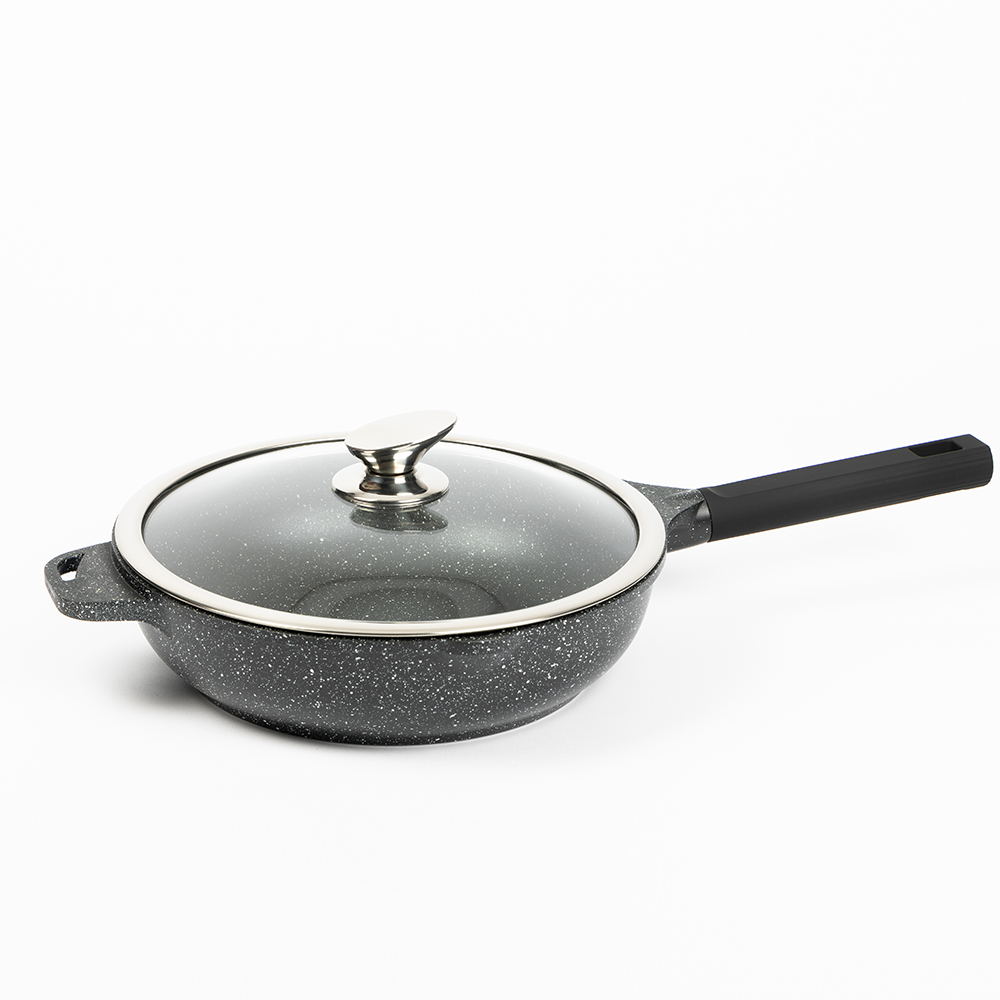
For brands looking to add a ceramic line that can bear the "long lasting" label, we suggest beginning with a 3-layer coating on a die-cast aluminum body. That combination has shown the best balance of durability, cost, and weight in our 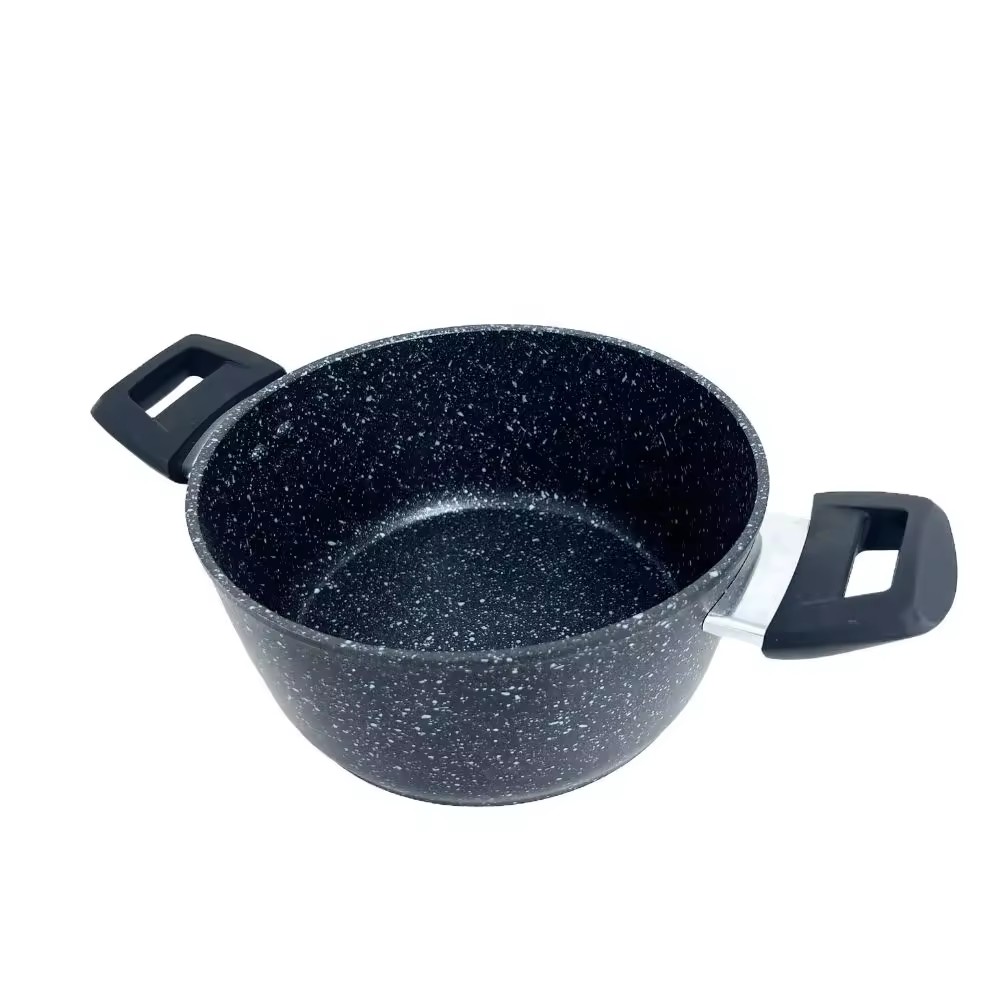 Ceramic Light Grey Soup Pot with Induction Bottom for All HobsThis ceramic soup pot features a hole-type induction base suitable for all stovetops. Its die-cast aluminum body with triple coating offers durability, making it ideal for early-stage prototyping and comparative abrasion tests.View Product → ceramic casserole series, which even includes a hole-type induction bottom for fast heating.
When you are still in the early design phase and want to validate how a ceramic pan will hold up in your target market, our engineers can produce prototypes with different coating thicknesses and run comparative abrasion tests in your presence. Many of our partners already use those test reports in their own marketing materials. You can see how we break down scratch resistance and wear cycles on this article about nonstick coating durability.
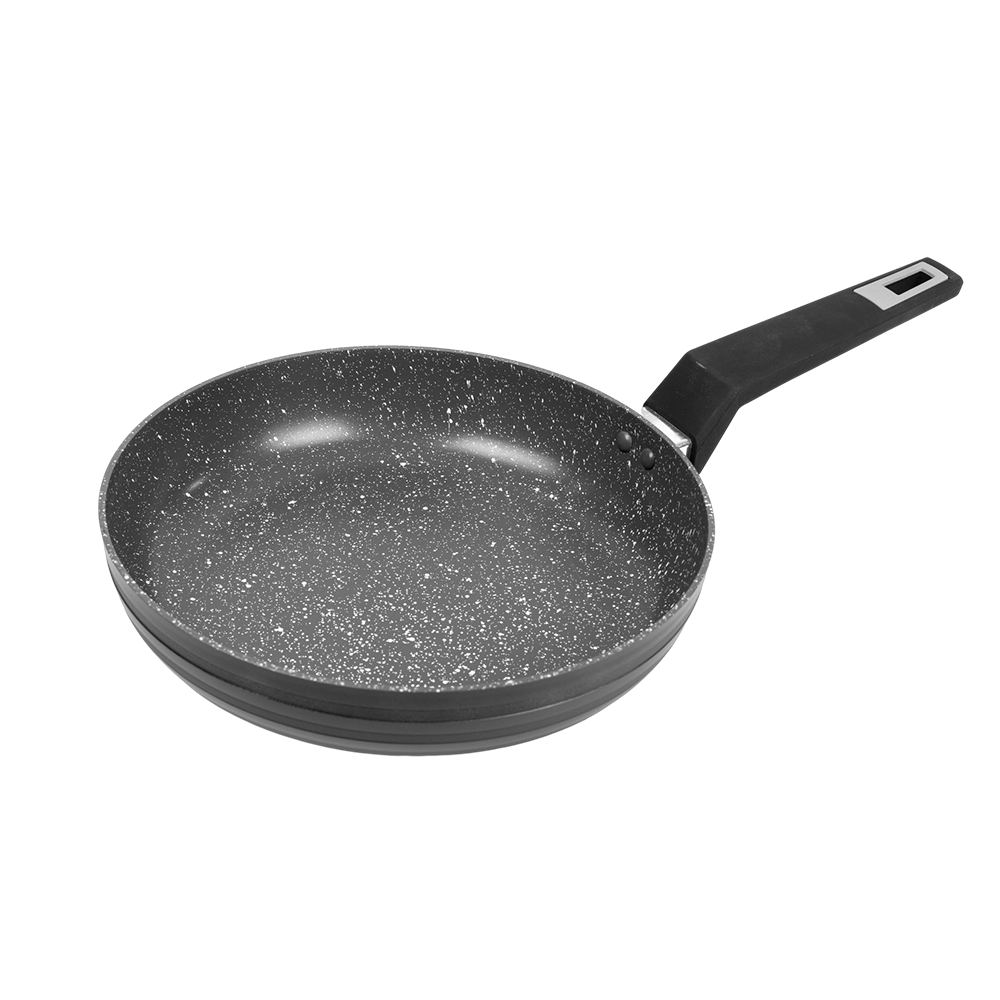
If you need a pan that can survive intense restaurant use or high-volume periodic cooking, consider a ceramic-coated skillet with a forged aluminum base. Our 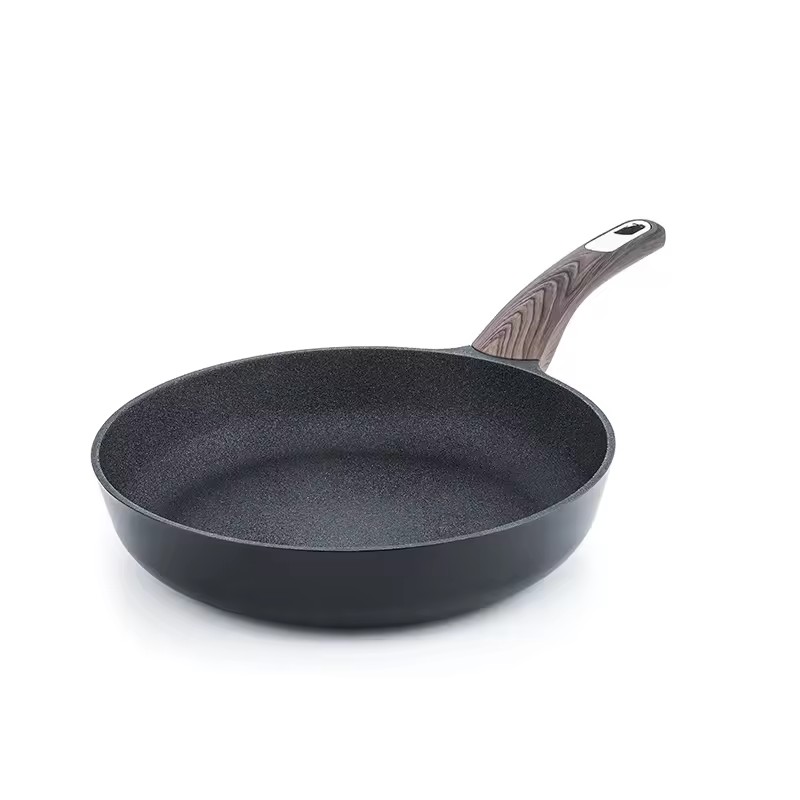 Chinese Style Wheat Slate Stone Nonstick Ceramic Frying Pan 26cmDesigned for commercial use, this ceramic-coated skillet with a forged aluminum base works on gas and induction. Its flat-bottom shape and sturdy build suit high-volume cooking while maintaining a healthy nonstick surface.View Product → ceramic series shows how a Chinese-style flat bottom can work well on both gas and induction surfaces while remaining sturdy enough for commercial food preparation.
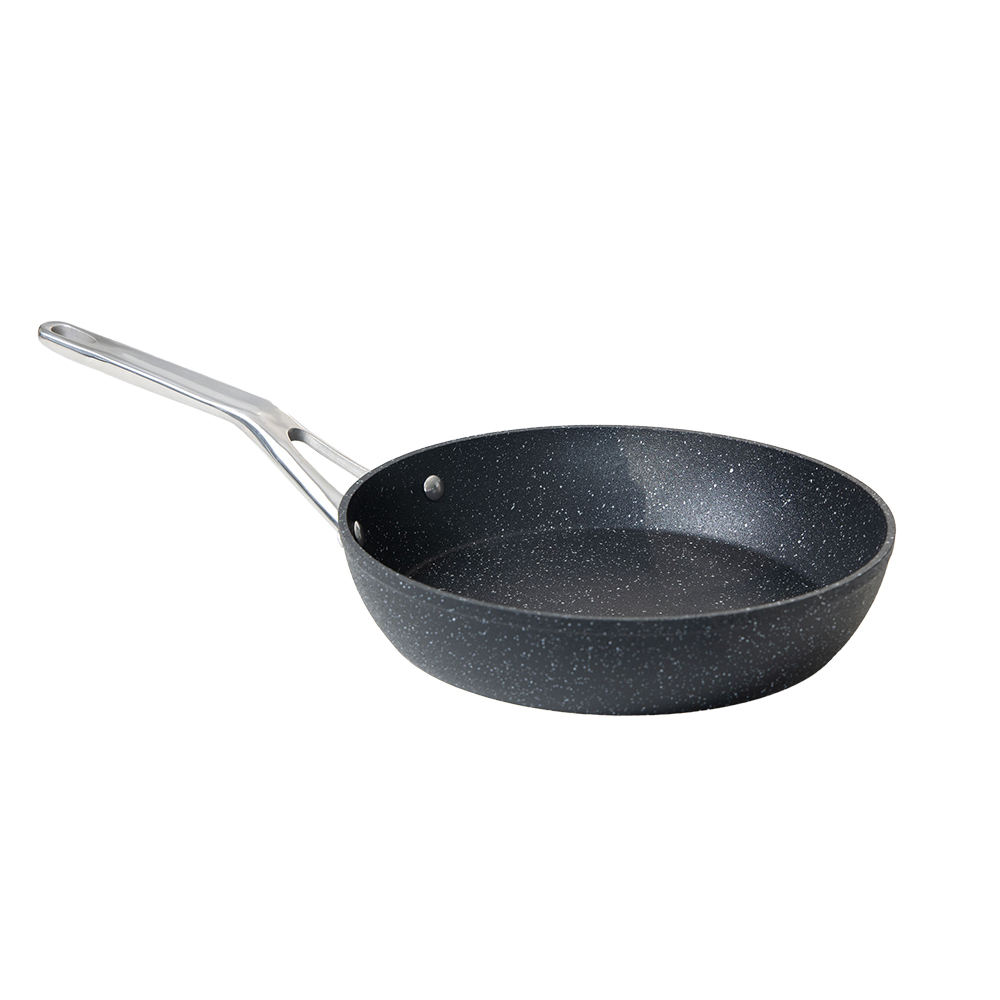
Full sets are equally important for household buyers. If you are assembling a line for supermarkets or e-commerce bundles, a complete set with 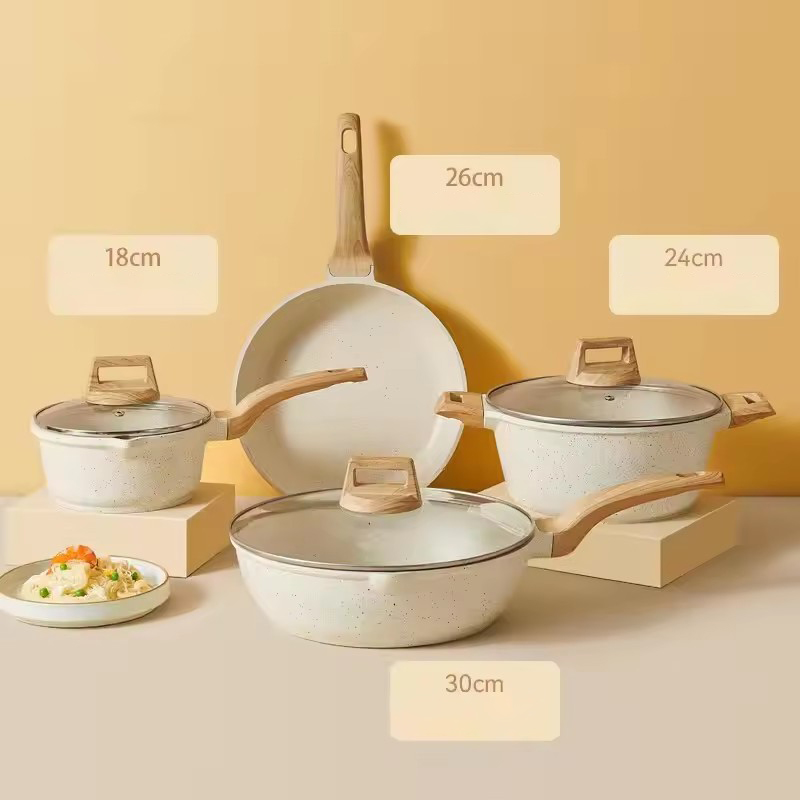 Premium Aluminum Ceramic Cookware Set with Stockpot, Frypan, and SaucepanThis dishwasher-safe set includes a stockpot, frying pan, and saucepan, all with the same ceramic nonstick coating. It ensures consistent performance for households, boosting trust and simplifying cooking choices.View Product → that includes a stockpot, frying pan, and saucepan will give your customers the same ceramic lifespan in every piece, which boosts brand trust and reduces confusion about which pan can be used for which dish.
Frequently Asked Questions About the Lifespan of Ceramic Cookware
1. How do I know when my ceramic pan needs replacing?
Look for three clear signs. First, food starts sticking in the center before the sides, meaning the coating has worn thin there. Second, small brown or grey stains remain after washing. Third, you can see fine lines or patches of matte texture that look rough to the touch. If any of these appear, the nonstick release is already compromised and the coating will continue to break down.
2. Can ceramic cookware really last 5 years?
Yes, but only with low- to medium-heat cooking, soft dishwashing, no metal utensils, and reasonable frequency of use. In our sample testing, pans that followed these conditions reached 5 years and were still performing at 70% of their original nonstick release. The same pan model used aggressively at high heat and washed with scouring pads rarely made it past 14 months.
3. Do I need to season a ceramic pan before using it?
Not strictly, but it does help. Wipe a thin layer of edible oil over the ceramic surface, warm it for about a minute, then wipe off the excess. This process micro-fills surface pores and improves browning from the first batch. Many users also find that leftover food sticks less after that initial seasoning.
4. Is ceramic cookware safe for induction hobs?
That depends on the base. A ceramic coating alone is not magnetic, but if the pan has an aluminum or stainless steel induction disk fused into the bottom, it will work efficiently on induction. Look for the induction symbol or a bottom plate that includes magnetic material. Some manufacturers mark it as "hole-type induction bottom," which means the induction disk has small vent holes for faster heat expansion.
5. What is the most common way people ruin a ceramic pan?
Thermal shock from washing a hot pan in cold water is probably the leading cause. The sudden contraction creates invisible cracks in the ceramic layer. After several cycles, the coating begins to flake off like a shell. Second place belongs to the use of abrasive cleaning sponges or metal scrubbers, which mechanically etch the surface.
6. Are ceramic coatings inherently more eco-friendly than PTFE?
Ceramic coatings are generally considered more eco-friendly in disposal because they are made from inorganic silica and do not release perfluorinated compounds during the coating process. They are also free of PFOA, PTFE, and PFAS by design. This is one of the reasons many kitchenware brands now market ceramic cookware as the premium option for health-conscious consumers.
Summary: Realistic Lifespan Ranges You Should Expect
At the end of the day, the question "how long does ceramic cookware last" does not have a fixed number because two pans from the same batch can last different amounts if they are handled by two different users. We can give you controlled ranges based on user types:
| Usage Scenario | Expected Lifespan | Most Common Failure |
|---|---|---|
| Light home cooking with soft utensils | 3 to 5 years | Slight stickiness after egg frying |
| Daily home cooking with mixed utensils | 2 to 3 years | Visible scratches and brown spots |
| Restaurant or commercial high-heat use | 12 to 18 months | Cracking and peeling near the rim |
| Occasional cooking at home (3-4 times a week) | 4 to 6 years | Fading coating and loss of glossy finish |
If you are purchasing ceramic cookware for a retail line, communicate these ranges honestly in your marketing copy. Shoppers will respect a brand that tells them a pan lasts 2 to 3 years under heavy use instead of claiming a "100-year nonstick guarantee." In the long run, honest expectations produce fewer returns and better reviews.