English
 中文简体
 日本語
 Español
Content
- 1 How Many Quarts Is a Medium Saucepan? The Short Answer
- 2 What Counts as Medium Depends on the Market You Buy In
- 3 Medium Saucepan Size Chart: Quarts, Liters, Diameter, and Depth
- 4 Brim Capacity vs Working Capacity: Why a 2.5-Quart Pan Is Not 2.5 Quarts of Soup
- 5 What a Medium Saucepan Actually Cooks Well
- 6 Diameter and Depth Matter as Much as Quart Count
- 7 How to Measure the Capacity of a Pan You Already Own
- 8 Buying at Wholesale: What to Specify Beyond the Quart Number
- 9 Common Mistakes When Choosing a Medium Saucepan
- 10 Frequently Asked Questions About Medium Saucepan Sizes
- 10.1 How many quarts is a medium saucepan?
- 10.2 Is a 2-quart saucepan small or medium?
- 10.3 How many cups does a 2.5-quart saucepan hold?
- 10.4 How many liters is a medium saucepan in metric markets?
- 10.5 What is the difference between a medium saucepan and a sauce pot?
- 10.6 What size saucepan should I use for rice, ramen, or oatmeal?
- 10.7 Does a medium saucepan work on an induction hob?
- 10.8 Why does my 2-quart pan boil over so easily?
- 10.9 Is a 2.5-quart nonstick saucepan a good choice for a wholesale program?
A recipe says to grab a medium saucepan. You reach for the pan that has lived beside the stove for a decade, it turns out to be a 1.5-quart milk pan, and twenty minutes later the sauce has cooked down to paste while the noodles sit half-exposed above the water. Nothing went wrong with the cooking. The pan was simply the wrong class of pan. A medium saucepan is not a mood or a suggestion in a recipe, it is a measurable object, and the measurement the cookware trade uses is the quart.
A medium saucepan holds 2 to 3 quarts, which is 1.9 to 2.8 liters. The most common single size sold worldwide is 2.5 quarts (2.4 liters). In practical terms that is a pan with a top diameter of roughly 7 to 8.5 inches (18 to 22 cm), straight or slightly tapered walls about 3.5 to 4 inches (9 to 10 cm) tall, one long handle, a fitted lid, and a flat base that sits on gas, electric ceramic, and induction hobs alike.
If you remember one number from this article, remember 2.5 quarts. Everything else, including why two pans with the same quart count behave completely differently on the stove, comes down to depth, diameter, and how much headspace the cook leaves above the food.
How Many Quarts Is a Medium Saucepan? The Short Answer
Culinary teaching kitchens, cookbook style guides, and retail buying sheets all describe saucepan classes in the same loose way. Small pans handle single portions, medium pans handle two to four portions, and large pans handle family quantities or batch cooking. Translated into the numbers printed on the bottom of real pans, that produces a fairly stable ladder.
- Small saucepan or milk pan: 1 to 1.5 quarts (0.9 to 1.4 liters)
- Medium saucepan: 2 to 3 quarts (1.9 to 2.8 liters), with 2.5 quarts as the anchor size
- Large saucepan: 4 quarts (3.8 liters) and up, at which point many catalogs switch the label to sauce pot or stock pot
The overlap is real and it causes most of the confusion. A 2-quart pan is a small medium pan in one brand's line and the only medium pan in another brand's line. A 3-quart pan is a generous medium in the United States and often labeled simply as a 3-liter pan in Europe. When a recipe says medium and your pan sits anywhere inside that 2 to 3 quart window, the recipe will work.
What Counts as Medium Depends on the Market You Buy In
Quart sizing is not universal. The number stamped on a pan is a marketing decision as much as an engineering one, and it reflects which measurement system the target market reads fluently. Knowing that saves a lot of mis-ordered inventory and a lot of disappointed home cooks.
Quarts and inches: the US retail habit
In the United States, one quart equals 4 cups, 32 fluid ounces, or 946 milliliters under the US customary system. Pan bodies are ordered around whole and half quarts: 1, 1.5, 2, 2.5, 3, and 4. Diameters tend to follow inch steps: 6, 7, 8, 9, and 10 inches. A shopper scanning a shelf is really reading two numbers at once, capacity and footprint, and both need to match the hob and the cupboard.
Liters and centimeters: European and Asian packaging
Metric markets label the same family of pans as 1 L, 1.5 L, 2 L, 2.5 L, and 3 L, with diameters in centimeters at 14, 16, 18, 20, 22, and 24 cm. An 18 cm pan with 10 cm walls and a slight taper lands around 2.2 to 2.5 liters at the brim, which is exactly the everyday medium saucepan in a German, Japanese, or Korean kitchen catalog.
Why the same pan is sold as 2.5 QT and 2.4 L
The conversion is the culprit. One US quart is 946 ml, so 2.5 quarts equals 2.37 liters, and a supplier who rounds that to 2.4 L is telling the truth. A supplier who rounds a genuine 2.5 L pan to 2.5 QT is overstating it by about 5 percent, because 2.5 L is actually 2.64 quarts. The gap is small on paper and very noticeable when a pan boils over, which is why serious buyers ask whether a stated capacity is brim-full or working volume.
Medium Saucepan Size Chart: Quarts, Liters, Diameter, and Depth
Use the chart below the way a buyer would use a spec sheet. Find the job you cook most often, then read across to the capacity and the physical dimensions that support it. Diameters and depths are commercial averages drawn from typical nonstick and stainless saucepan ranges, not universal constants, so a specific model may drift by a centimeter or half a quart in either direction.
| Class | Quarts | Liters | Top diameter | Wall depth | Everyday jobs |
|---|---|---|---|---|---|
| Milk pan | 0.5 to 1 | 0.5 to 0.9 | 12 to 14 cm | 6 to 7 cm | Heating milk, baby food, melting butter, one egg |
| Small saucepan | 1 to 1.5 | 0.9 to 1.4 | 14 to 16 cm | 7 to 8 cm | Single-serving sauces, one bowl of oatmeal, one instant noodle block |
| Medium saucepan | 2 to 2.5 | 1.9 to 2.4 | 18 to 20 cm | 9 to 10 cm | Rice for two, soup for two, three or four eggs, blanching a handful of greens |
| Medium-large | 3 | 2.8 | 20 to 22 cm | 10 to 11 cm | Pasta for two, jam in small batches, gravy for a holiday table |
| Large saucepan | 4 and up | 3.8 and up | 22 to 24 cm | 11 to 12 cm | Family soup, batch sauce, small-batch shallow frying |
This is also the size band that fills most private label programs. The 18 cm, 20 cm, 22 cm, and 24 cm molds cover the entire medium-to-large range from a single tooling set, which is why so many nonstick saucepan families are built around those four diameters.
Brim Capacity vs Working Capacity: Why a 2.5-Quart Pan Is Not 2.5 Quarts of Soup
A pan marked 2.5 quarts holds 2.5 quarts only when filled to the very lip with the lid off and the pan perfectly level. Nobody cooks that way. Standard kitchen practice is to leave about 1.5 to 2 inches (4 to 5 cm) of headspace in any pan that will simmer or boil, because starch, protein, and dairy all foam and rise.
Apply that rule and the numbers shift fast. In a round 8-inch pan with 4 inches of wall, two inches of headspace removes a quarter of the total volume. A wide 8.5-inch pan loses even more because every centimeter of diameter multiplies the volume lost per centimeter of height. That is why a 2.5-quart pan realistically cooks about 1.6 to 1.9 quarts of food at a rolling boil, and about 2.2 quarts of a thick sauce that barely moves.
Two more measurement traps are worth knowing. First, US customary quarts and imperial quarts are different units: one US quart is 946 ml, while an imperial quart is about 1,136 ml, roughly 20 percent larger. Second, tapered pans hold less than their cylindrical outline suggests. A wall that slopes inward from 20 cm at the rim to 17 cm at the base can lose 10 to 15 percent of the calculated volume, which is exactly why the same nominal size can measure differently between a straight-wall saucier and a flared saucepan.
What a Medium Saucepan Actually Cooks Well
Capacity only matters because of what fits. Here is what a 2 to 3 quart pan handles without strain, expressed in ingredients rather than liters, because that is how recipes are written.
- Rice: 1.5 cups of dry long-grain rice plus 2.5 cups of water in a 2-quart pan, or 2 to 2.5 cups of dry rice in a 3-quart pan, with enough room for the grains to swell and steam
- Soup and stew for two: 4 to 5 cups of finished soup in a 2.5-quart pan, which is roughly two generous bowls with leftovers
- Eggs: three or four large eggs covered by an inch of water, boiled or steamed without crowding
- Pasta: two servings, around 6 ounces of dry pasta, in a 3-quart pan with water held to two-thirds of the walls
- Sauces: 2 cups of b echamel, tomato sauce, or gravy reducing in a 2-quart pan with a whisk that can still move freely
- Oatmeal and porridge: 1 cup of rolled oats plus 2 cups of liquid in a 2-quart pan, which leaves room for the simmer without a cleanup job on the hob
- Reheating and gentle work: yesterday's stew, melting chocolate over a low flame, blooming spices in oil, warming milk for a family breakfast
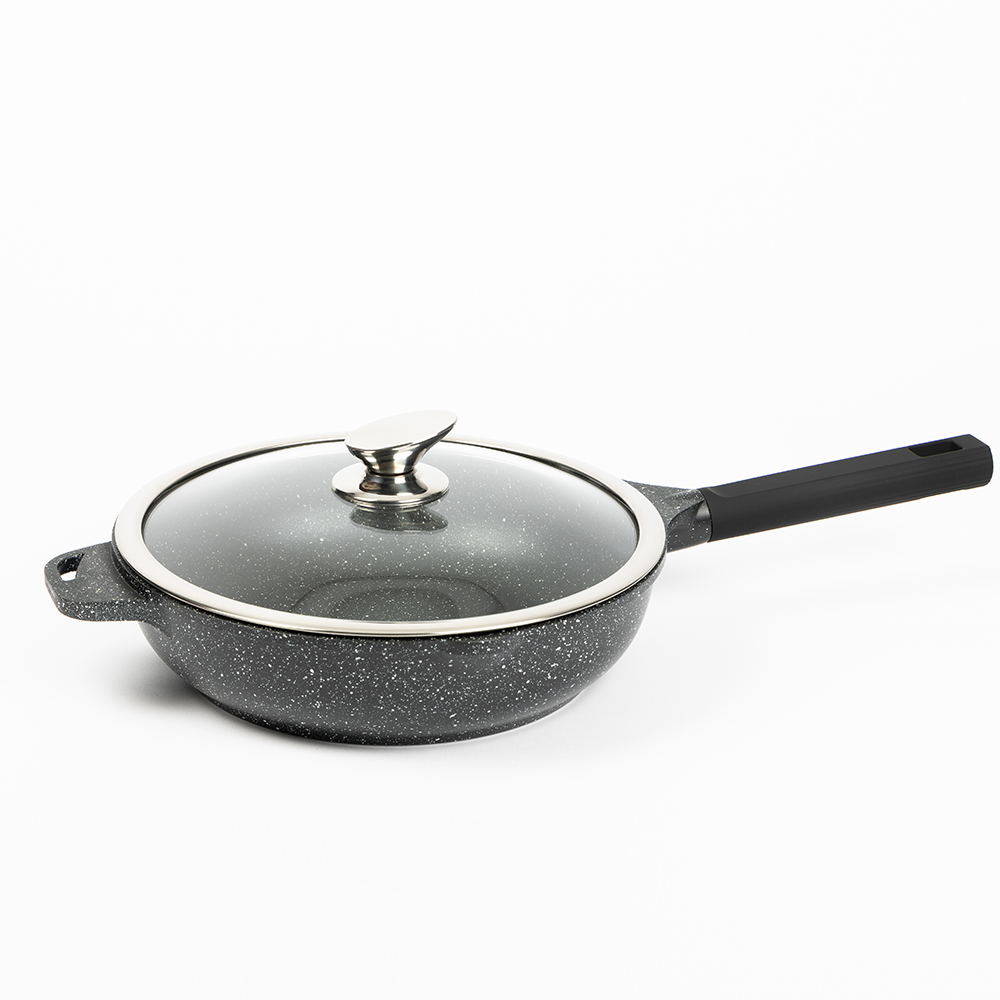
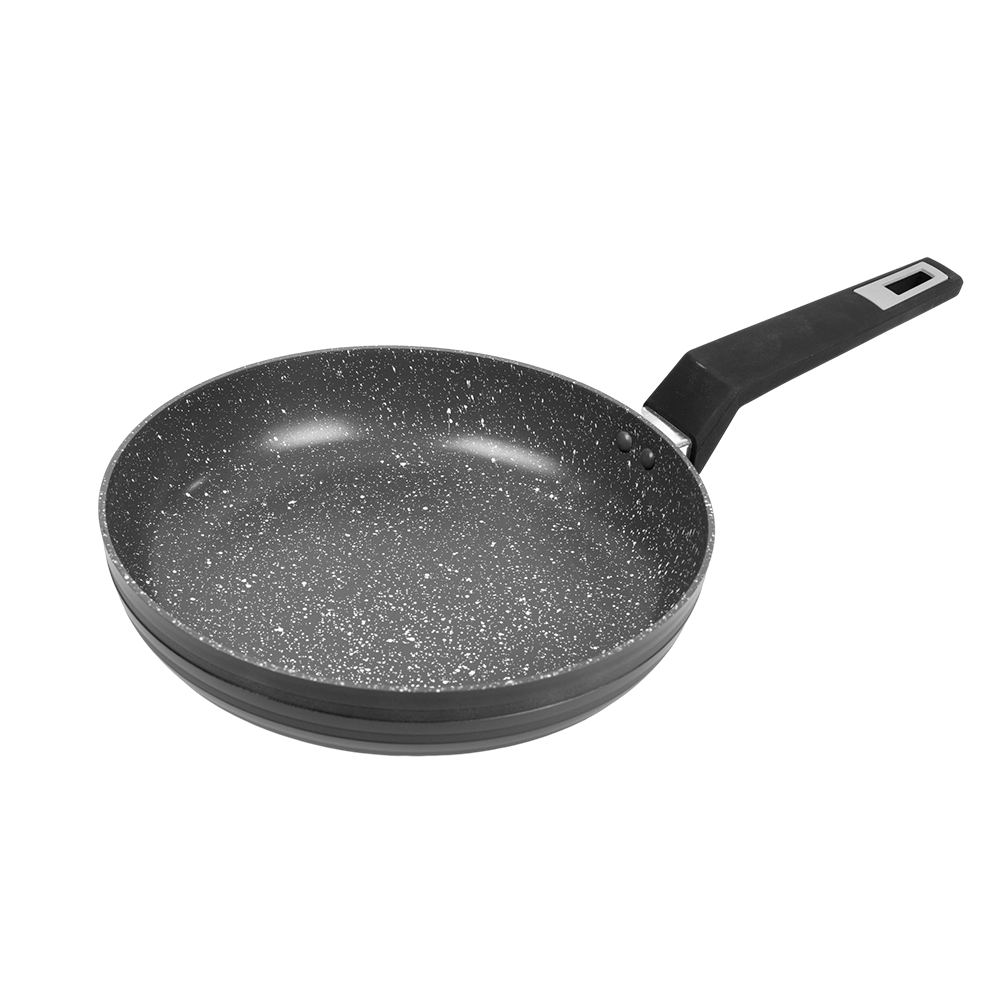
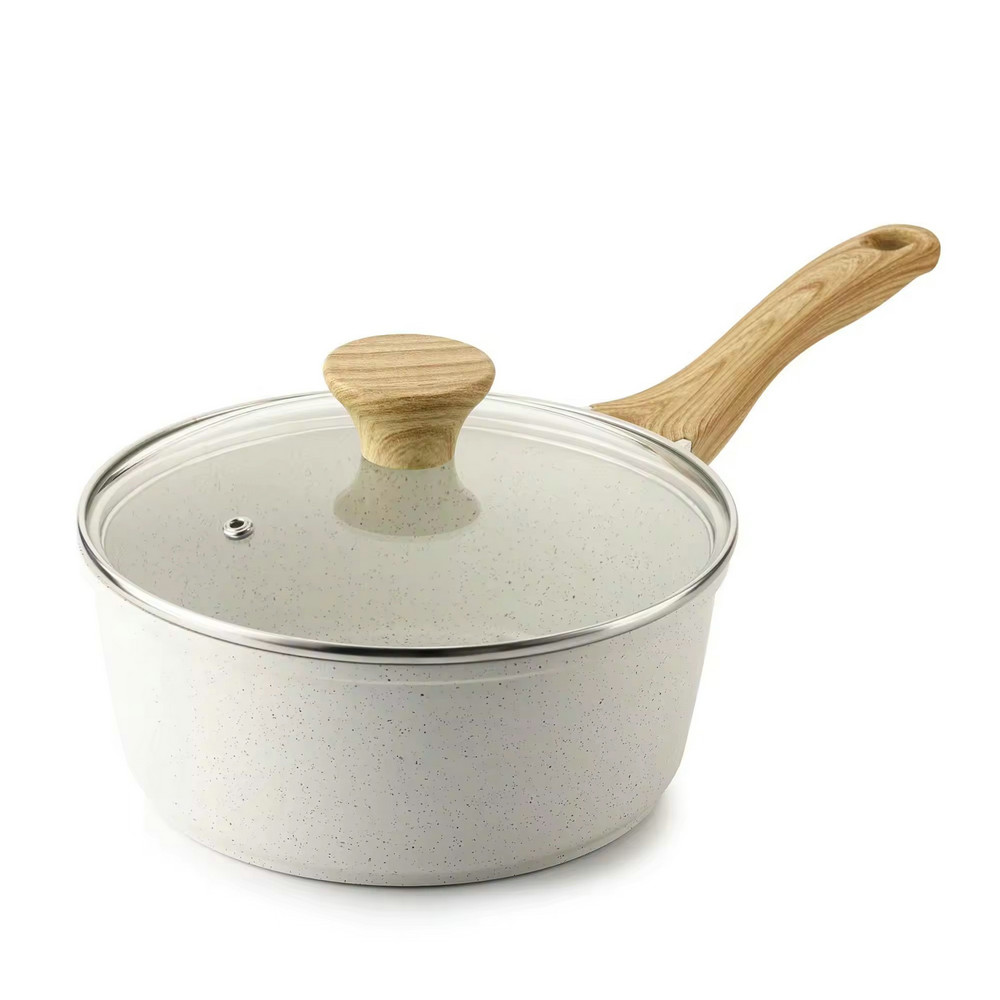 1.5QT 2QT 3QT Custom Food Warmer Hot Pot Small Saucepan with LidIndustry-specific attributesView Product →
That spread, from a 1.5-quart single-portion pan up to a 3-quart batch pan, is the range that most households settle on, and it is why multi-size saucepan families with shared lids and handles outsell single pans in most retail programs.
Diameter and Depth Matter as Much as Quart Count
Two pans can both be stamped 2.5 quarts and behave like different tools. A wide, shallow pan exposes a large surface to air and drives evaporation, which is exactly what you want for reducing a pan sauce and exactly what you do not want when simmering rice. A narrow, deep pan traps steam and heat, holds a rolling boil with less splatter, and keeps a whisk working against deeper walls.
| Characteristic | Wide and shallow, 24 cm x 7 cm | Narrow and deep, 18 cm x 11 cm |
|---|---|---|
| Surface area at the rim | Large, fastest evaporation | Small, slow evaporation |
| Reducing a sauce | Quick and controllable | Slow, safer for delicate mixtures |
| Boiling rice or grains | Water disappears before the grain is done | Even, covered simmer |
| Whisk and spoon room | Comfortable, wide sweep | Tighter, deeper reach |
| Base contact with the hob | Wide, spreads heat across more surface | Narrow, concentrates heat in the middle |
| Best for | Reducing, shallow frying, sauteing | Rice, porridge, boiling, deep sauces |
For most home kitchens the deep profile wins, because boiling, simmering, and grains are the tasks a medium saucepan is bought for. Professional kitchens often keep one of each and treat them as separate tools rather than as substitutes.
How to Measure the Capacity of a Pan You Already Own
Most saucepans lose their capacity stamp long before they lose their coating. You can settle the question in three minutes with a measuring jug and a ruler.
- Fill the pan to the brim with water, one quart jug at a time, counting carefully. This gives you brim capacity, the number the manufacturer printed.
- Pour out water until the level sits roughly 1.5 to 2 inches below the rim and measure again. This is working capacity, the number that actually matters when you cook.
- Alternatively, measure the top diameter and the wall height, then calculate: radius squared multiplied by 3.1416 multiplied by height gives cubic inches, and 57.75 cubic inches equals one US quart.
- Subtract 5 to 15 percent from the arithmetic result for a tapered pan, since the walls narrow toward the base and the real body holds less than the cylinder you just measured.
Two worked examples make the arithmetic concrete. A straight-sided pan with a 7-inch top and 3-inch walls comes to 115.5 cubic inches, which is almost exactly 2 quarts. A pan with an 8-inch top and 3.5-inch walls comes to 175.9 cubic inches, or about 3 quarts. Halve or double those walls and the capacity moves proportionally, which is why a 3 cm difference in height is worth more than a 1 cm difference in diameter.
If you would rather test with food, make rice. One cup of dry rice in a pan that looks half full after the water goes in and stays comfortably below the rim through the simmer is a genuine medium saucepan, somewhere in the 2 to 2.5 quart range.
Buying at Wholesale: What to Specify Beyond the Quart Number
If you are building a saucepan line rather than choosing one pan for a kitchen, the quart count is only the first line of the specification. Everything that follows determines whether the product performs like the sample sheet or like a reputation risk.
- Body construction: pressed aluminum keeps weight and cost down, while die-cast aluminum produces thicker, flatter bases and stiffer walls that resist distortion on high heat
- Wall thickness: 2.2 mm to 2.5 mm is common for pressed pans, 3.5 mm to 4.5 mm for forged and die-cast bodies
- Coating system: marble, granite, ceramic, medical stone, titanium crystal, and honeycomb textures are the coatings most frequently requested, each with a different feel and a different wear pattern
- Base design: flat induction bottoms, hole-type induction bottoms, or plain gas-only bases, which change both hob compatibility and heat spread
- Handle and lid: bakelite, wood, silicone, soft-touch plastic, or removable handles, paired with glass lids, glass lids with silicone rims, or aluminum lids
- Packing format: single pans, 3-piece and 5-piece sets, gift-boxed sets, or full 10-piece and 13-piece programs for retail shelves
Body construction is the specification most often underestimated. Pressed pans are lighter and cheaper, but the base can dish under repeated high heat, and a dished base on an induction hob shows up immediately as a hot ring and a cold edge. Die-cast and forged bodies cost more and hold tolerance much longer, which is a real argument in premium and commercial channels. There is a detailed comparison of why die-cast aluminum saucepans hold their shape better than pressed ones if you want the engineering side in more depth.
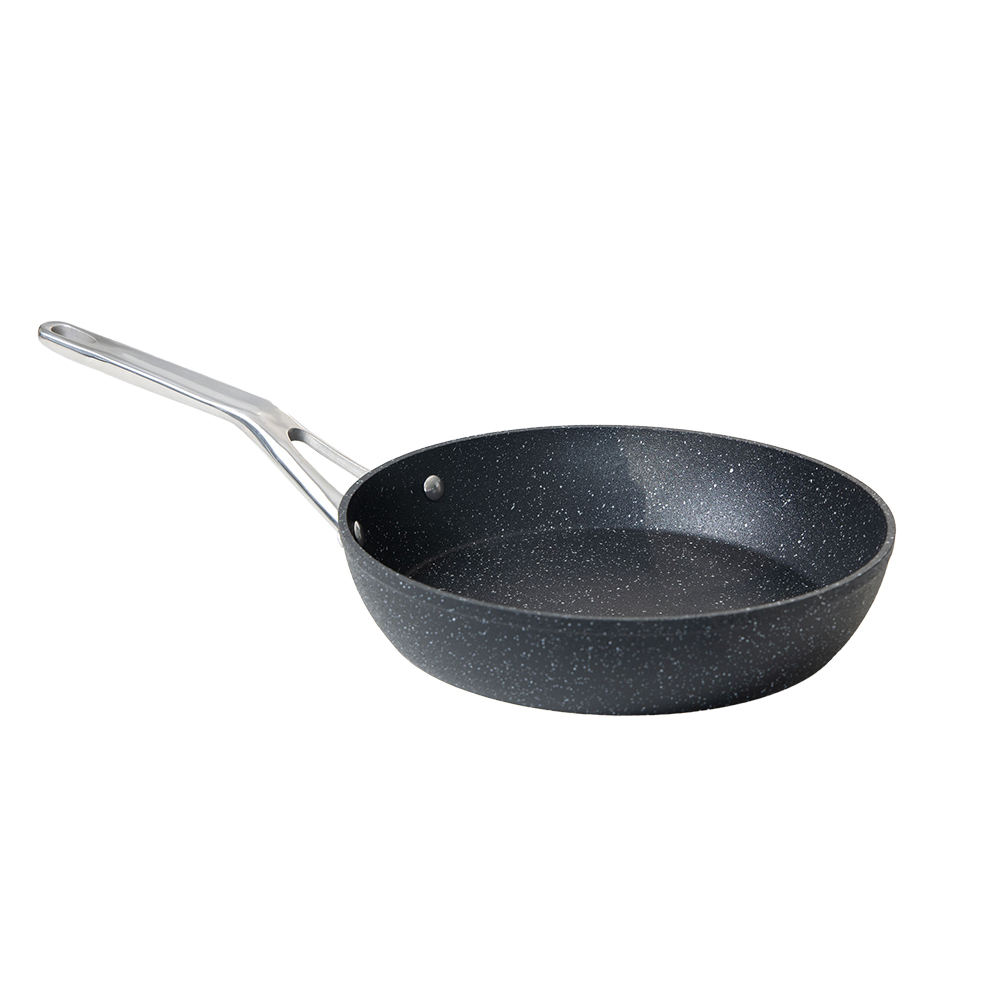
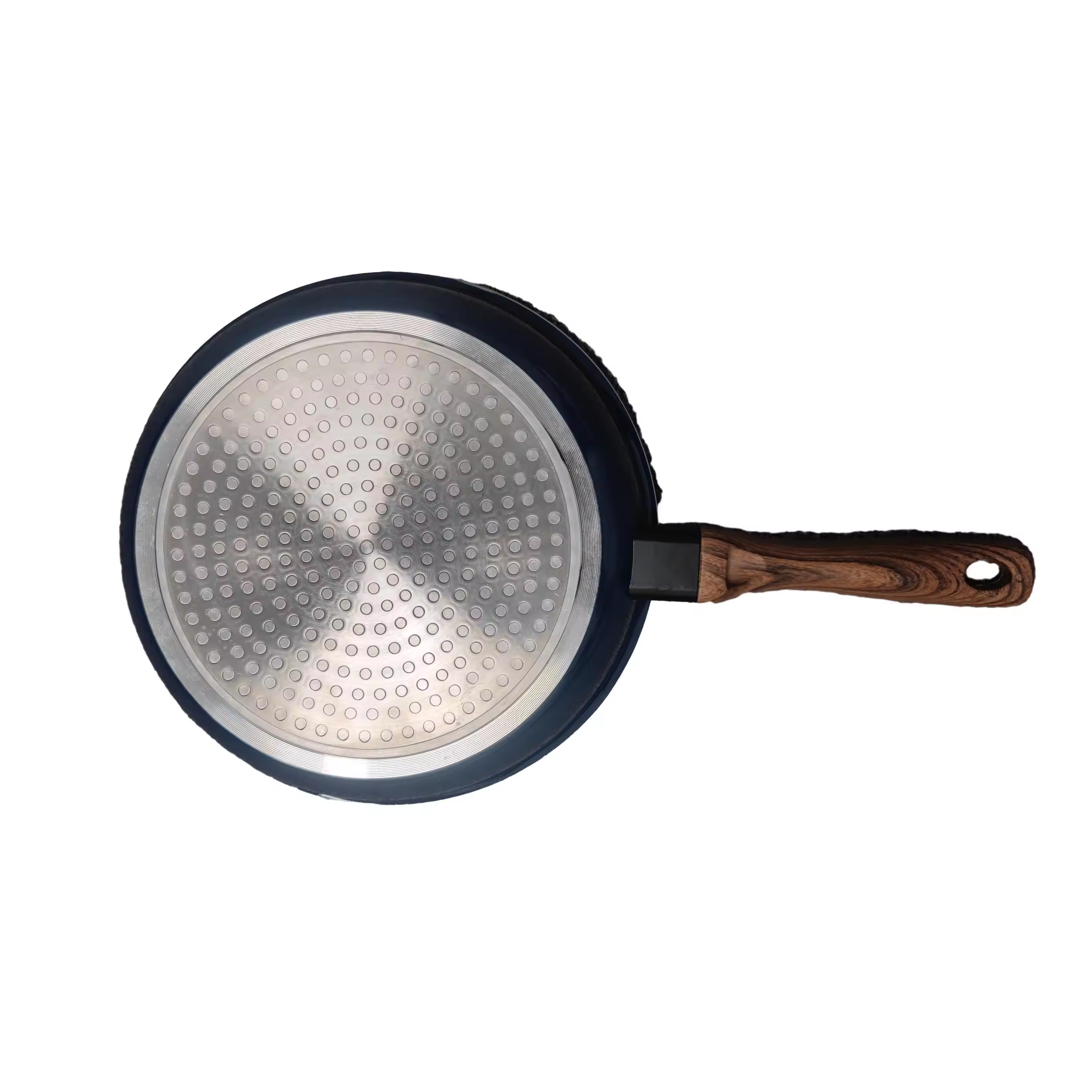 Custom logo 1.5quart 2 quart 3quart die casting nonstick deep aluminium sauce panIndustry-specific attributesView Product →
Ningbo Leer Kitchenware operates as a cookware manufacturer in Chongshou Town, Cixi City, Zhejiang, with a 15,000 square meter factory, six production lines, more than 40 staff, and a technical team of over ten engineers. The company works on OEM and ODM terms, which means a quart size, a diameter, a coating type, a handle material, and a logo can all be specified from scratch rather than chosen from a fixed catalog. If you are sourcing a 1.5-quart, 2-quart, and 3-quart family for a house brand, that flexibility is usually the difference between a generic line and one that fits your market's shelf.
One practical note on specs: always state whether your capacity figure is brim or working volume, and state the diameter alongside it. Suppliers who quote capacity alone leave the door open for a pan that technically meets the number and still fails in the customer's kitchen. When the details matter, send us your saucepan specification and the size, coating, and handle combination can be worked out against your target price.
Common Mistakes When Choosing a Medium Saucepan
Most saucepan regrets trace back to one of six decisions, and all of them are avoidable with a tape measure and a quick look at what actually gets cooked at home.
- Buying by diameter and ignoring depth, which produces a 20 cm pan that is barely deep enough for a bowl of soup
- Assuming every 2-quart pan is the same, when a shallow saute profile and a deep saucepan profile behave nothing alike
- Skipping the base check, then discovering the pan is not induction compatible on a hob that needs it
- Choosing a lightweight body for daily high-heat use, where the base eventually dishes and heat distribution becomes uneven
- Overlooking lid fit, which decides whether a simmer stays a simmer or turns into a boil-over every time
- Buying a set full of pans of the same size, when the practical kitchen needs one small, one medium, and one large
Frequently Asked Questions About Medium Saucepan Sizes
How many quarts is a medium saucepan?
A medium saucepan is 2 to 3 quarts, which is 1.9 to 2.8 liters. The single most common size is 2.5 quarts, or 2.4 liters, typically built with an 18 to 20 cm top diameter and walls around 9 to 10 cm deep.
Is a 2-quart saucepan small or medium?
A 2-quart saucepan sits at the small end of medium. It is large enough for rice for two, soup for two, or three boiled eggs, and small enough that a recipe writer who asks for a small saucepan will not object to it. It becomes cramped only when you cook pasta or grains for more than three people.
How many cups does a 2.5-quart saucepan hold?
Ten cups, because one quart equals four cups. In fluid ounces that is 80 oz, and in milliliters it is about 2,365 ml. Practically, once you leave 1.5 to 2 inches of headspace for a rolling boil, the working volume drops to roughly 6 to 8 cups.
How many liters is a medium saucepan in metric markets?
Between 1.9 and 2.8 liters, with 2.4 liters the closest metric equivalent of a 2.5-quart pan. If a European catalog lists a 2.5 L pan, that pan is actually about 2.64 quarts, slightly larger than the US standard medium.
What is the difference between a medium saucepan and a sauce pot?
Handles and size. A saucepan has one long handle and usually runs from 1 to 3 quarts. A sauce pot has two short loop handles, sits from about 4 quarts upward, and is built for batch cooking and stocks. The two overlap at 4 quarts, where the naming depends entirely on the brand.
What size saucepan should I use for rice, ramen, or oatmeal?
Rice for two people fits a 2-quart pan at 1.5 cups of dry rice. A single instant noodle block plus 500 ml of water is comfortable in a 1.5 to 2-quart pan. Oatmeal for two is safest in a 2-quart pan, because rolled oats foam and climb the walls during the first minute of simmering.
Does a medium saucepan work on an induction hob?
Only if the base is induction ready. Most aluminum saucepans need an induction disc or a hole-type induction base. For a 2 to 3 quart pan, the base diameter matters as much as the material, because an induction zone smaller than the pan base leaves a cool ring around the edge and can trigger the hob's pan-detection limit.
Why does my 2-quart pan boil over so easily?
Because you are filling it past its working volume. Starchy water and milk both foam, and foam needs three to four times the height of the liquid itself. Keep the fill line under two-thirds of the wall and the boil-over problem usually disappears without changing the pan.
Is a 2.5-quart nonstick saucepan a good choice for a wholesale program?
It is the most requested size in the medium band, which makes it a safe core item. Pair it with a 1.5-quart pan for singles and a 3-quart pan for families, and the three sizes cover nearly every retail listing without adding a fourth mold to the tooling set.
Pull the tape measure out of the drawer and settle the question in your own kitchen. If the pan measures 18 to 20 cm across and 9 to 10 cm deep, it is a medium saucepan, and it holds somewhere between 2 and 3 quarts. If it is smaller than that, it is a milk pan or a small saucepan, and reducing a sauce or simmering rice for three people in it will keep disappointing you.
For anyone specifying pans rather than cooking in them, the same logic applies one level up. Quote the capacity, quote whether it is brim or working volume, quote the diameter, and quote the base type. Those four numbers decide whether a 2.5-quart saucepan ends up as the most-used pan on a shelf or as the reason a customer never buys from that line again.