English
 中文简体
 日本語
 Español
Content
- 1 What "Frying Pan Size" Actually Refers To
- 2 Tools and a Five-Step Measuring Method
- 3 Diameter, Depth, Base Width and Capacity: Measuring Each One
- 4 Inches and Centimeters: Why a 10-Inch Pan Is Not Always 25.4 cm
- 5 Why Pan Sizes Vary Between Brands and Coating Types
- 6 How Size Changes Cooking Performance
- 7 Matching Pan Size to Stove, Lid and Storage
- 8 Measuring a Pan for a Replacement Lid or Cookware Set
- 9 Five Measuring Mistakes That Lead to Returns
- 10 What Size Data Matters in an OEM or Wholesale Order
- 11 Frequently Asked Questions About Frying Pan Size
- 11.1 Is a frying pan measured by inside or outside diameter?
- 11.2 Do you measure a frying pan with the handle?
- 11.3 How do I know what size frying pan I already have?
- 11.4 Is a 10-inch frying pan the same as 25 cm?
- 11.5 How deep should a frying pan be?
- 11.6 How do I measure a frying pan for a lid?
- 11.7 What size frying pan fits an average induction hob?
- 11.8 Why does my 28 cm pan measure 30 cm across the top?
A frying pan's stated size is its inner rim diameter, measured wall to wall across the top opening, with the handle left out of the tape. If you lay a tape across a pan marketed as 28 cm, the inside of the rim should read roughly 28 cm. The outer edge of a flared rim often adds 1 to 2 cm, and the flat base usually runs 3 to 6 cm smaller than the rim. That is why the same pan can appear to measure 30 cm on the outside and 23 cm at the base while the label still says 28 cm. None of those numbers is wrong; they describe different parts of the pan.
Knowing which part to measure matters when you replace a worn pan, order a lid, compare a cookware set, or send a specification to a factory. A buyer who measures the outside rim and orders a 30 cm pan often ends up with a pan one size larger than the one being replaced. A cook who measures only the base and buys a lid will find the lid 4 cm too small. This guide walks through the measurements that matter, the tolerances you should expect, and the numbers that wholesalers and OEM buyers usually put on a specification sheet.
What "Frying Pan Size" Actually Refers To
Manufacturers describe a frying pan by its nominal top diameter. That number is the distance across the inside of the rim, taken at the widest point of the cooking surface, parallel to the base. Handles, helper handles, and lid knobs are not part of the measurement. The nominal figure is usually rounded to a common trade size: 20 cm, 22 cm, 24 cm, 26 cm, 28 cm, 30 cm, or 32 cm in metric markets, and 8 inch, 9.5 inch, 10 inch, 11 inch, or 12 inch in markets that use inches.
Three other dimensions sit behind that single number and are just as useful in practice:
- The inner rim diameter, which is the advertised size and the one that determines how much food fits in a single layer.
- The outer rim diameter, which includes the flared or rolled edge and decides whether the pan fits inside a cabinet or a lid rack.
- The base diameter, sometimes called the contact diameter, which must sit on a hob ring, an induction coil, or a gas burner grate without rocking.
Depth and capacity are separate figures. A 28 cm frying pan can be 5 cm deep or 8 cm deep, and the deeper version holds noticeably more. When a recipe says "use a large frying pan," it usually assumes roughly 28 cm across the top and at least 5 cm of depth. When a supplier quote lists only a diameter, ask for depth, base diameter, and capacity before you compare prices.
Tools and a Five-Step Measuring Method
You do not need special equipment. A retractable steel tape, a rigid ruler, and a flat surface are enough. Cloth tapes can stretch and give a reading that is 2 to 3 mm off, which matters when you are matching a lid. Work on a countertop or table so the pan sits flat and does not wobble while you read the tape.
- Set the pan flat and empty. Remove the lid and any removable handle. A pan resting on its base gives a truer reading than one held in the air.
- Measure the inner rim in two directions. Hook the tape on the inside wall at one side and read the inside wall directly opposite, passing through the centre. Repeat at 90 degrees. Forged aluminium pans can be slightly oval, and the two readings may differ by 1 to 2 mm.
- Average the two readings. If you get 27.8 cm and 28.1 cm, record 28 cm. If the difference is larger than 3 mm, the pan has been distorted by heat or impact and is probably not worth replacing with an identical model.
- Measure depth from the rim to the inside base. Place the ruler vertically against the inner wall and read the distance from the top edge down to the cooking surface. Do not measure from the outer bottom, which includes the base thickness.
- Turn the pan over and measure the flat base. Measure the diameter of the flat contact area, not the full width of the curved sidewall. This is the number that tells you whether the pan will sit correctly on an induction zone or a gas grate.
Write the four figures down in one line: inner rim, outer rim, depth, base. A note such as "28 / 30 / 5.5 / 23 cm" is far more useful than "28 cm" when you are shopping or specifying.
Diameter, Depth, Base Width and Capacity: Measuring Each One
Each measurement answers a different question. Diameter tells you how much surface area you have for searing, frying, or reducing. Depth tells you how much liquid or bulk the pan can hold without spilling. Base width tells you how the pan will behave on a specific heat source. Capacity, usually expressed in litres or quarts, combines diameter and depth into a single figure that is useful for soups, braises, and batch cooking.
| Measurement | How to take it | Common tolerance | Why it matters |
|---|---|---|---|
| Inner rim diameter | Inside wall to inside wall across the centre | Plus or minus 2 to 3 mm | Defines the advertised size and the usable cooking area |
| Outer rim diameter | Outside edge to outside edge, including the flare | Plus or minus 3 to 5 mm | Determines cabinet, lid rack, and dishwasher fit |
| Depth | Rim to inside base, measured vertically | Plus or minus 2 mm | Sets liquid capacity and splash risk |
| Base diameter | Flat contact area on the underside | Plus or minus 3 to 5 mm | Controls hob contact and heat transfer |
| Capacity | Fill to a safe level and measure water | Plus or minus 5 percent | Useful for batch cooking and recipe scaling |
A 28 cm pan with a 5 cm depth typically holds about 2.5 to 3 litres to a safe fill line. The same pan at 7 cm deep can hold 4 litres or more. If you are replacing a pan and the old one felt too shallow, measure the depth before you buy, not just the diameter.
Inches and Centimeters: Why a 10-Inch Pan Is Not Always 25.4 cm
One inch equals 25.4 mm, so a nominal 10-inch pan should measure 25.4 cm across the inside rim. In practice, many pans sold as 10 inch are made to a metric trade size of 26 cm, or to a 25 cm mould. The difference is small, but it becomes visible when you stack pans, fit a lid, or compare a set. The same rounding happens in reverse: a pan sold as 24 cm may be labelled 9.5 inch in an export catalogue, even though 24 cm is closer to 9.45 inch.
Use this quick reference when you are converting between the two systems:
- 8 inch is about 20.3 cm, commonly sold as 20 cm.
- 9.5 inch is about 24.1 cm, commonly sold as 24 cm.
- 10 inch is about 25.4 cm, often sold as 25 cm or 26 cm.
- 11 inch is about 27.9 cm, commonly sold as 28 cm.
- 12 inch is about 30.5 cm, commonly sold as 30 cm.
The practical rule is simple: trust the centimetre figure on the pan or the specification sheet, and treat the inch figure as a round-number label. If you are ordering from a factory, give both the metric size and the acceptable tolerance so there is no confusion at the production stage.
Why Pan Sizes Vary Between Brands and Coating Types
Two pans can both be sold as 28 cm and still feel different in the hand. The difference comes from wall thickness, rim design, and the way the body is formed. A die-cast pan usually has a thicker wall and a more rigid rim, while a forged or pressed pan can be lighter with a thinner wall. A rolled rim adds a few millimetres to the outer diameter without changing the inner cooking surface. A pan with a wide flare may measure 30 cm across the outside while the inside still reads 28 cm.
Coating type has a smaller effect on size than most people expect. A non-stick coating is typically 20 to 40 microns thick, which is far less than the 2 to 3 mm tolerance already present in the metal body. Ceramic and mineral coatings can be slightly thicker, but the difference is still measured in tens of microns, not millimetres. The bigger variables are the base design and the handle position. An induction base with a stainless steel plate can add 1 to 2 mm to the base thickness, and a long handle can change the balance of the pan even when the diameter is identical.
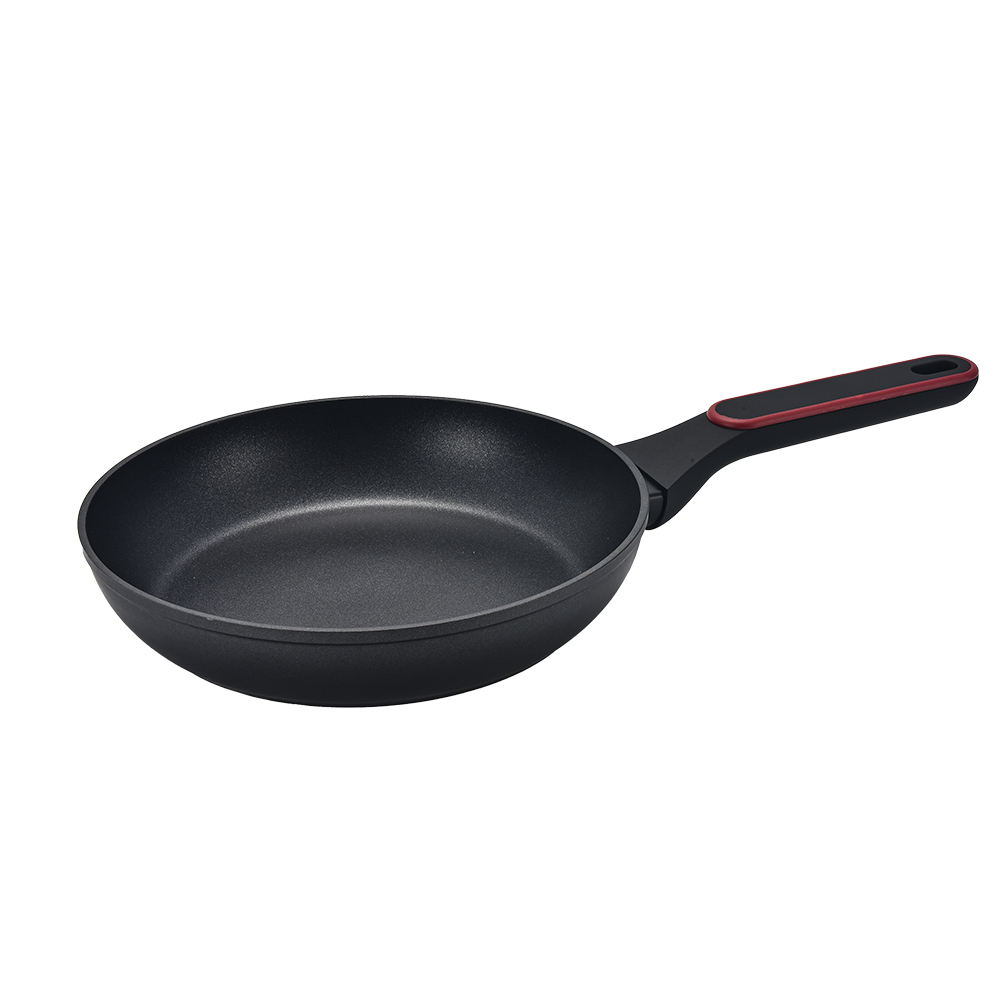
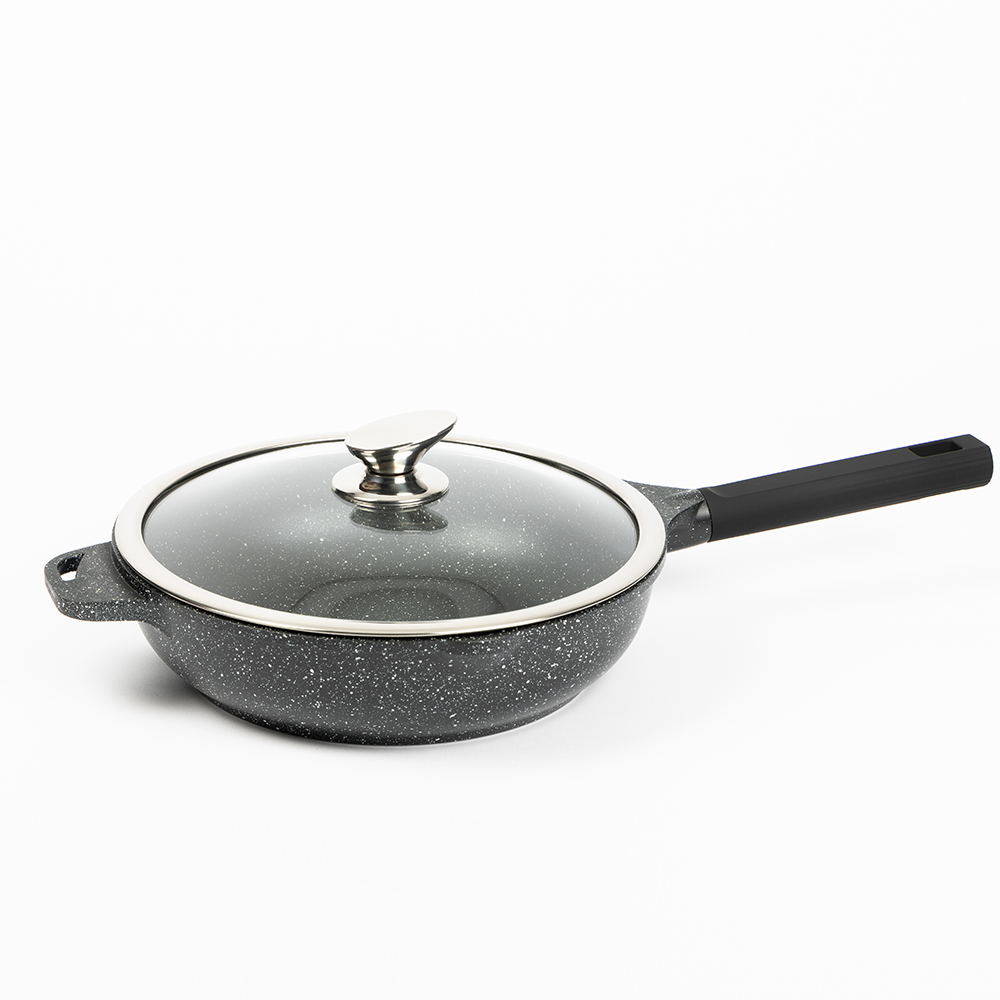
 Leerpan Full Induction Non Stick Frying Pan Cookware without Cover 20cm 24cm 28cmIndustry-specific attributesView Product →
When you compare pans from different suppliers, measure the inner rim, the outer rim, and the base. A pan that matches on all three is a true replacement. A pan that matches only on the nominal size may still feel larger, smaller, or heavier in use.
How Size Changes Cooking Performance
Pan size is not just a storage question. It changes how food browns, how much oil you need, and how evenly heat spreads. A small pan crowded with food steams instead of sears because moisture cannot escape. A large pan with a thin base can develop hot spots and burn the centre of a sauce. The table below shows how common sizes behave in everyday cooking.
| Nominal size | Typical base width | Best for | Watch out for |
|---|---|---|---|
| 20 cm | 15 to 16 cm | One or two eggs, a single pancake, a small sauce | Crowding if used for family portions |
| 24 cm | 18 to 19 cm | Two to three eggs, a single steak, light sauteing | Oil splatter on a high heat |
| 26 cm | 20 to 21 cm | Breakfast for two, small stir-fries, fish fillets | Heavier than a 24 cm pan on a small hob |
| 28 cm | 22 to 24 cm | Family portions, searing two steaks, batch vegetables | Needs a wide burner or induction zone |
| 30 to 32 cm | 24 to 27 cm | Large family meals, meal prep, restaurant-style batches | Storage space and wrist strain when full |
A 28 cm pan is the most common all-round size in many households, but it is not automatically the best choice. If you usually cook for one, a 24 cm pan heats faster, uses less oil, and is easier to clean. If you regularly cook for four or more, a 30 cm pan reduces crowding and gives a better sear. Match the pan to the job rather than buying the largest size available.
Matching Pan Size to Stove, Lid and Storage
The base diameter is the number that decides whether a pan sits well on your stove. On an induction hob, the magnetic coil has a fixed diameter, often 18 to 22 cm on a domestic model. A pan with a base smaller than the coil will not heat efficiently, and a pan with a base much larger than the coil can leave the outer ring cooler. On a gas hob, the grate arms support the pan, so a base that is too small can let the pan tip when you stir. A base that is too large can trap heat and discolour the grate.
Lids follow the inner rim, not the outer rim. A glass lid sold as 28 cm is designed to sit inside a 28 cm pan rim or just over it, depending on the rim profile. If you are buying a replacement lid, measure the inner rim and the rim shape: a flat rim, a rolled rim, and a flared rim all accept different lid styles. A lid that is 2 mm too small will slide around; a lid that is 2 mm too large will not seat at all.
Storage is the final constraint. A 28 cm pan with a long handle can occupy 35 cm of shelf depth, and a stack of three pans can be 15 cm tall. Measure your cabinet or drawer before you buy a set. If space is tight, a 24 cm and a 28 cm pair often covers more cooking than a single 32 cm pan.
Measuring a Pan for a Replacement Lid or Cookware Set
Replacement lids are one of the most common reasons people measure a frying pan after purchase. The process is straightforward if you separate the two diameters. First, measure the inner rim to confirm the pan size. Second, measure the outer rim and note the rim profile. A lid that fits a 28 cm pan with a flat rim may not fit a 28 cm pan with a rolled rim, even though both pans are sold as the same size.
Cookware sets add another layer. A set may include a 20 cm frying pan, a 24 cm frying pan, and a 28 cm frying pan, along with saucepans and a stockpot. The diameters are usually listed in the product description, but the depth and base width are often missing. If you are comparing two sets, measure the pans you already own and use those figures as a baseline. A set that matches your current 24 cm pan on inner rim, depth, and base will feel familiar from the first use.
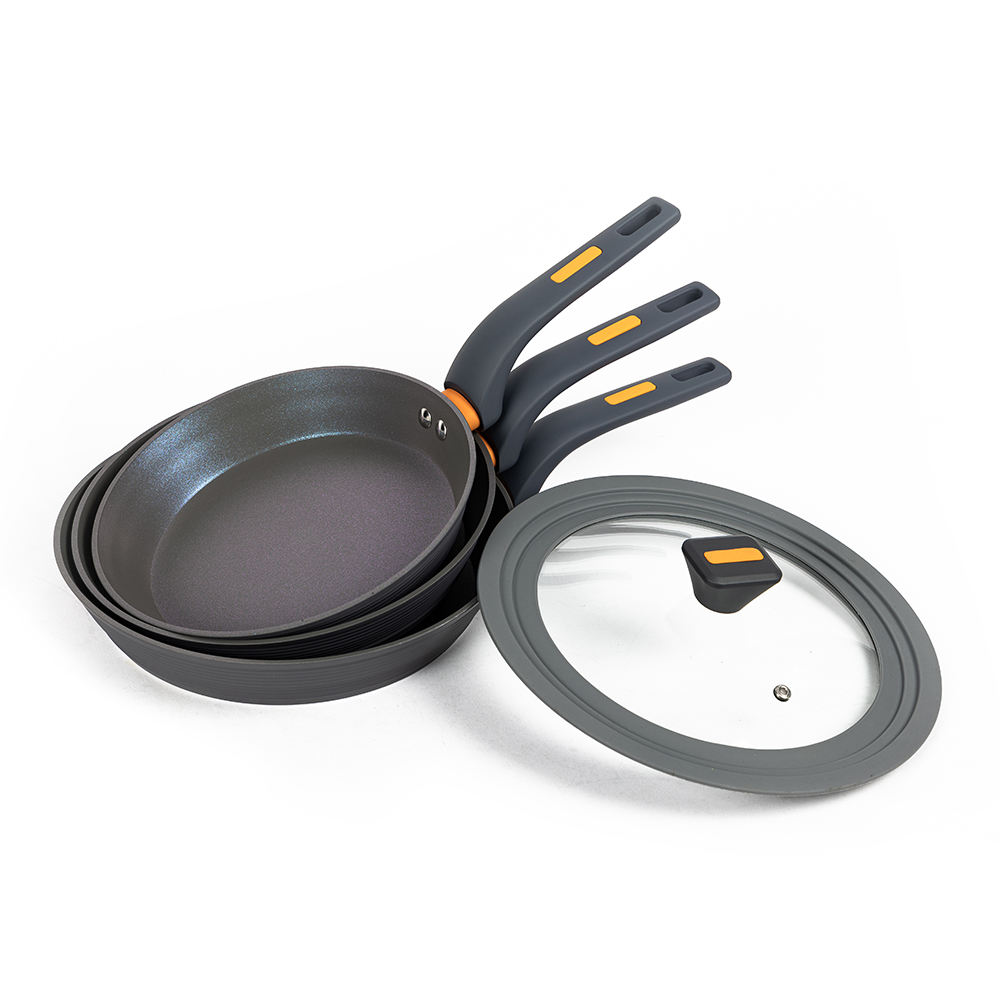
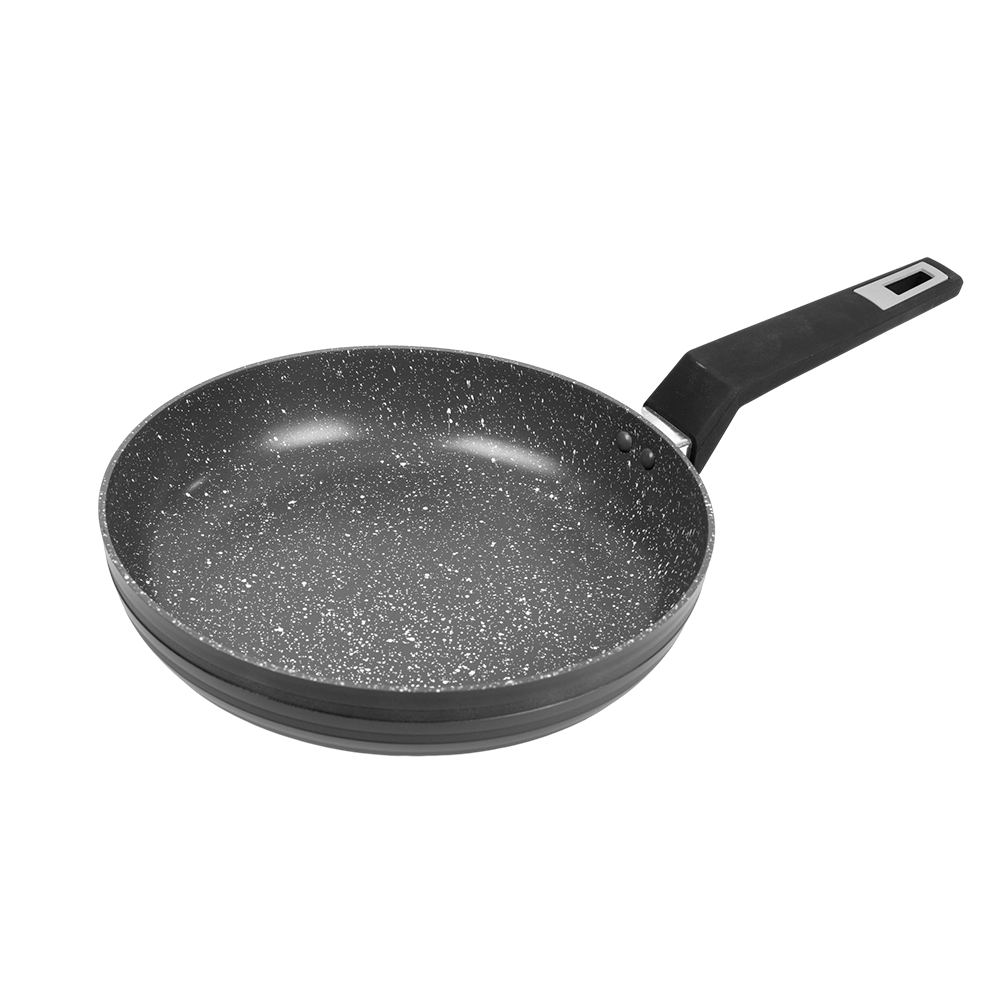
 Leerpan 3 Piece Nonstick Kitchen Cooking 20cm 24cm 28cm Frying Pan With Glass LidIndustry-specific attributesView Product →
For a set, check whether the lids are interchangeable. A shared lid size across a 24 cm and a 28 cm pan is convenient, but it usually means the lid sits on the rim rather than inside it. If you prefer a snug fit, look for a set where each pan has its own dedicated lid.
Five Measuring Mistakes That Lead to Returns
Most pan-size returns come from one of five errors. Each one is easy to avoid once you know what to look for.
- Measuring the outside rim. This adds 1 to 2 cm and makes a 28 cm pan look like a 30 cm pan. Always start with the inside wall.
- Including the handle. A long handle can add 15 to 20 cm to the overall length. It has nothing to do with the pan's cooking size.
- Taking only one reading. A single pass across the rim can miss an oval shape or a dent. Measure at 90 degrees and average the two numbers.
- Mixing up inches and centimetres. A 10-inch pan is not a 30 cm pan, and a 28 cm pan is not an 11-inch pan. Convert carefully or use the metric figure.
- Ignoring depth and base width. A pan can match on diameter and still be too shallow for a recipe or too small for an induction coil. Measure all three.
If you are buying online, ask the seller for the inner rim, outer rim, depth, and base diameter before you order. A supplier who can provide those four figures quickly is usually working from a real specification sheet rather than a generic listing.
What Size Data Matters in an OEM or Wholesale Order
For importers, distributors, and brand owners, pan size is a specification, not a guess. A production order should state the nominal diameter, the acceptable tolerance, the base diameter, the depth, the rim profile, and the coating type. Without those details, two factories can produce pans that are both called 28 cm but differ enough that they cannot share lids, packaging, or display stands.
Common tolerances in cookware production are plus or minus 2 to 3 mm on the inner rim and plus or minus 3 to 5 mm on the base. Depth is usually held to plus or minus 2 mm. If your retail packaging states a capacity in litres, the factory needs the fill line and the measurement method, because capacity changes with depth and rim shape. A 28 cm pan with a 5.5 cm depth and a 28 cm pan with a 6.5 cm depth can differ by nearly a litre.
Coating choice also affects the final feel. A marble, granite, or ceramic non-stick coating can be applied at different thicknesses, and the surface texture changes how food releases. If you are developing a private-label pan, test the prototype against the measurements on your specification sheet before you approve mass production. For custom sizes, logo placement, and coating selection, a factory that works in OEM and ODM models can build the pan around your target dimensions rather than forcing you to choose from a fixed catalogue.
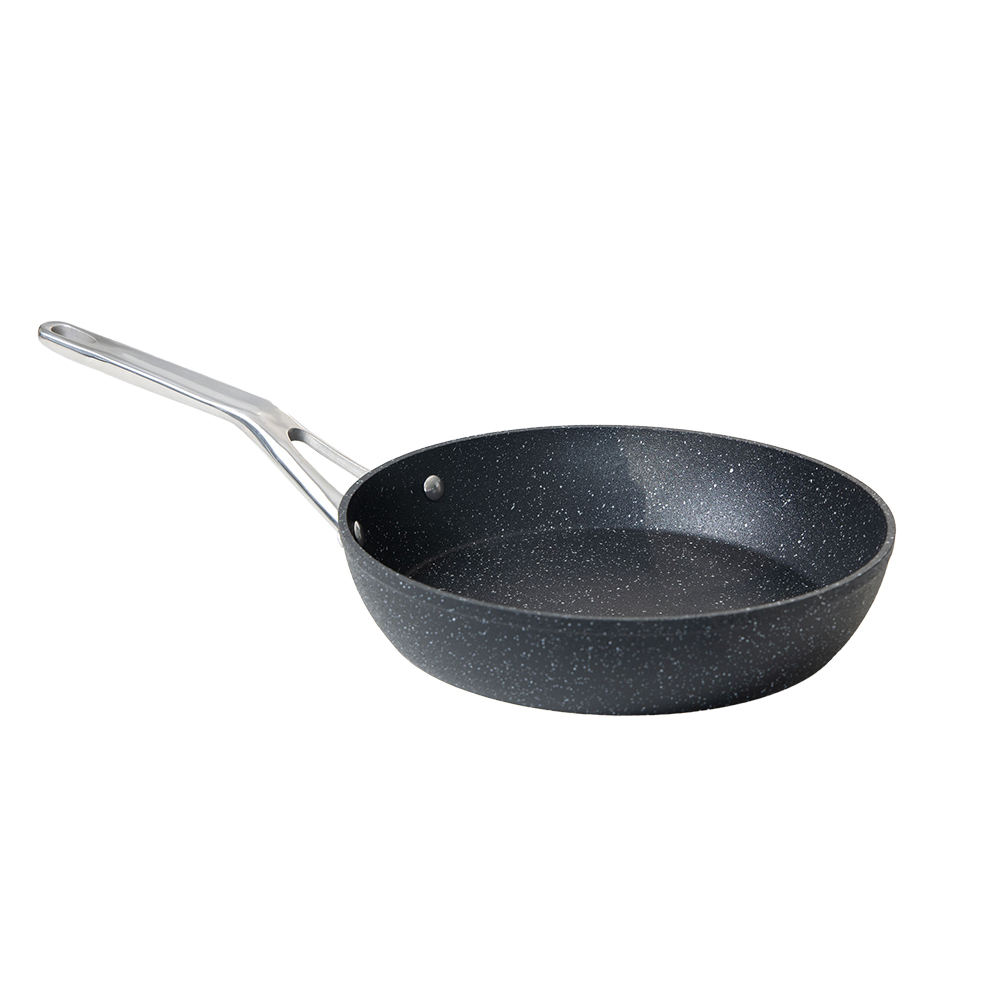
 Kitchenware cookware 20/22/24/26/28cm aluminum forged fry panGeneral Use for Gas and Induction CookerView Product →
If you need a custom diameter, depth, or base configuration, share the measurements and the target market with the supplier early. A short conversation about tolerances at the sampling stage prevents a container of pans that measure correctly on paper but do not fit the lids, boxes, or hob coils they were designed for.
You can review the current product range and send your size requirements through the contact page. For background on how coating durability is tested in practice, the article on non-stick coating durability explains what to check before you approve a sample.
Frequently Asked Questions About Frying Pan Size
Is a frying pan measured by inside or outside diameter?
A frying pan is measured by its inside rim diameter. That is the distance from the inner wall on one side to the inner wall on the opposite side, taken across the centre. The outside diameter is larger because it includes the flared or rolled rim. If a pan is sold as 28 cm, the inside rim should read approximately 28 cm, while the outside may read 29 to 30 cm.
Do you measure a frying pan with the handle?
No. The handle is not part of the pan size. A 24 cm frying pan can be 40 cm or more from the tip of the handle to the opposite rim, but the cooking size is still 24 cm. When you measure for storage, measure the overall length separately from the pan diameter.
How do I know what size frying pan I already have?
Place the pan on a flat surface, remove the lid, and measure the inside rim in two directions. Average the two readings and round to the nearest common size. If the average is 23.8 cm, you have a 24 cm pan. Then measure the depth and the base diameter and write all three figures down for future reference.
Is a 10-inch frying pan the same as 25 cm?
A nominal 10-inch pan is about 25.4 cm, so it is close to a 25 cm or 26 cm metric pan. In practice, many pans sold as 10 inch are produced to a 26 cm mould, and some are produced to a 25 cm mould. The difference is small but can affect lid fit and stacking. Always check the metric figure on the specification or the pan itself.
How deep should a frying pan be?
A standard frying pan is usually 4 to 6 cm deep. A deep frying pan or saute pan is often 6 to 9 cm deep. Shallow pans are better for searing and flipping, while deeper pans are better for saucy dishes, stir-fries, and batch cooking. If a recipe calls for a large pan and you are using a shallow one, reduce the batch size to avoid crowding.
How do I measure a frying pan for a lid?
Measure the inner rim diameter first, then look at the rim profile. A flat rim, a rolled rim, and a flared rim accept different lid types. If possible, take the pan to the store and test the lid, or ask the seller for the lid's inner and outer dimensions. A lid that is 2 mm too small will slide; a lid that is 2 mm too large will not seat.
What size frying pan fits an average induction hob?
Most domestic induction hobs have a coil diameter of 18 to 22 cm. A 24 cm or 26 cm frying pan usually has a base that covers the coil well. A 28 cm pan can work if its base is at least 22 cm, but a pan with a small base and a wide rim may heat unevenly. Check the base diameter, not just the nominal size.
Why does my 28 cm pan measure 30 cm across the top?
You are measuring the outer rim, which includes the flared edge. The advertised 28 cm refers to the inside cooking surface. A 1 to 2 cm difference between the inner and outer rim is normal. If the inner rim also measures 30 cm, the pan may be mislabelled or produced to a different specification than expected.
Measuring a frying pan comes down to four numbers: inner rim, outer rim, depth, and base. The inner rim is the size on the label, the outer rim decides storage and lid fit, the depth sets capacity, and the base determines how the pan behaves on your stove. Once you have those figures, you can replace a worn pan accurately, choose a lid that fits, compare a cookware set without guessing, or write a specification that a factory can follow. Take two minutes with a steel tape before your next purchase, and you will avoid the most common source of cookware returns.