English
 中文简体
 日本語
 Español
Content
- 1 The Short Answer: The Pan Becomes the Heating Element
- 2 What Is Actually Happening Inside the Coil
- 3 Why a Magnet Tells You Almost Everything About Compatibility
- 4 Inside the Cooktop: The Parts That Convert Current Into Cooking Heat
- 5 From Base to Food: How the Heat Actually Travels
- 6 Power Settings, Cycling, and Why Low Heat Feels Different
- 7 Matching Cookware to Induction: A Practical Comparison
- 8 What Buyers and Private-Label Brands Should Verify on an Induction Base
- 9 Everyday Notes: Noise, Residual Heat and Cleaning
- 10 Frequently Asked Questions About Induction Cooking
- 10.1 Does an induction cooktop work without a pan on it?
- 10.2 Can I use aluminium pans on an induction hob?
- 10.3 Why does my induction hob make noise?
- 10.4 Is induction faster than gas for everyday cooking?
- 10.5 Is there a minimum or maximum pan size?
- 10.6 Does the glass surface itself get hot?
- 10.7 Can a magnetic base be added to a pan I already own?
- 10.8 Why does my pan brown in a ring instead of evenly?
- 10.9 Does an induction hob use less electricity than a traditional electric coil?
- 11 Choosing a Pan That Makes the Technology Worthwhile
Put a dry carbon-steel skillet on an induction hob, set it to high, and wait about sixty seconds. Touch the ceramic glass a few centimetres away from the base and it still feels close to room temperature, while the pan bottom is already past 200 degrees Celsius and a drop of water skitters across it. That single experiment answers the question "how does an induction cooktop work" better than any product brochure: the heat is being manufactured inside the pan, not delivered through the surface.
From there, the rest is mechanical detail that has real consequences in a kitchen. Coil geometry decides where the hot zone sits. Switching frequency decides how the base responds. Base thickness, flatness and alloy choice decide whether your omelette browns evenly or burns in a ring. This article walks the full chain, from the copper coil under the glass to the food in the pan, and then translates it into the practical checks that matter when you are choosing cookware or sourcing it for a private label.
The Short Answer: The Pan Becomes the Heating Element
An induction cooktop heats cookware by electromagnetic induction, and the cookware itself is the heating element. A coil of copper wire sits a few millimetres beneath a sheet of ceramic glass. When alternating current flows through that coil, it generates a magnetic field that flips direction thousands of times per second. The field passes through the glass as though it were not there. When it reaches a base made of magnetic metal, it induces circulating electrical currents called eddy currents inside the metal itself. The metal resists those currents, the resistance converts electrical energy into thermal energy, and the base warms from the inside out.
Several consequences follow directly from that mechanism, and they explain most of what users notice day to day:
- Nothing heats until a magnetic base is present. Most hobs cut power within a couple of seconds and flash a pan-detection error.
- The glass stays comparatively cool because the heat comes up from the pan by contact, not down from the coil.
- Energy transfer into the pan runs roughly 84 to 90 percent on a typical induction hob, against roughly 32 to 40 percent for an open gas burner, according to figures published by the U.S. Department of Energy's Federal Energy Management Program.
- Power changes register almost instantly because there is no flame, no glowing coil and no heavy metal mass to charge up before the pan responds.
- Only the zone directly over the coil is driven. The printed circle on the glass is a positioning guide, not a heated area.
What Is Actually Happening Inside the Coil
Eddy currents in plain language
Think of the pan base as a stack of thin metal rings. When the magnetic field expands and collapses around those rings, it pushes electrons in a circular direction. Those circulating currents are the eddy currents. Because the steel or iron in the base has electrical resistance, the moving electrons collide with the crystal structure and shed energy as heat. Over a million small collisions per second add up to a base that reaches searing temperature in under two minutes.
There is a second, smaller contributor: hysteresis. Magnetic domains inside the base flip back and forth to follow the reversing field, and the friction of that flipping adds a little more heat. In practice, eddy currents do most of the work; hysteresis is a supporting act that matters more in cheap, thin bases than in thick forged ones.
Why the current is switched so fast
Induction hobs typically switch their coil current in the range of 20 to 40 kilohertz, a figure quoted consistently across cooktop engineering literature. The reason is not speed for its own sake. Higher frequency raises the induced voltage in the pan base, so a thinner base can absorb meaningful power. It also moves the switching noise above the range where most people hear it as a distinct tone, though a faint hum from the coil and the pan base is normal.
The four-step chain
- Mains current is rectified and then chopped into high-frequency alternating current by a power module.
- That current drives a flat spiral coil sitting under the glass panel, producing an oscillating magnetic field.
- The field induces eddy currents in a magnetic pan base, and resistance turns them into heat directly inside the metal.
- Heat spreads through the pan wall by conduction and then into food by contact, convection in liquids, and radiation inside an oven-safe body.
Why a Magnet Tells You Almost Everything About Compatibility
Take a fridge magnet to the shop with you. If it sticks firmly to the underside of the pan, the pan will work on induction. If it slides off, it will not, no matter what the packaging claims. The test works because the field needs a ferromagnetic material to couple with. Cast iron, carbon steel, enamel-coated steel and the ferritic grades of stainless steel respond. Aluminium, copper, glass, ceramic and the common austenitic stainless grades do not.
That last point causes most of the confusion in the market, because aluminium is the dominant material in modern non-stick cookware and it is completely non-magnetic. The solution does not change the pan; it changes the base. Manufacturers add a magnetic layer to the bottom of an aluminium body in one of several ways, and the choice affects both heating behaviour and production cost.
- A bonded stainless or steel disc pressed or welded onto the bottom face.
- A clad sandwich base in which a steel outer skin encapsulates an aluminium core.
- A hole-type induction base, where the bottom carries a defined pattern of holes or recesses that affects how the field couples and how heat spreads across the contact face. This design is common on forged and die-cast aluminium bodies and behaves differently from a solid disc, a topic covered in more depth in our engineering note on hole-type induction bottom heat distribution.
- A sprayed magnetic coating, used on some budget lines; it works, but the coupling is weaker and the hot zone is narrower.
For a buyer, the practical difference is measurable. Two pans with the same 24 cm diameter can differ by several hundred watts of absorbed power depending on whether the magnetic layer is a full disc, a partial ring, or a sprayed layer. A pan that draws only 900 watts on a 2,000 watt zone will boil water noticeably slower, and the customer will blame the hob rather than the pan.
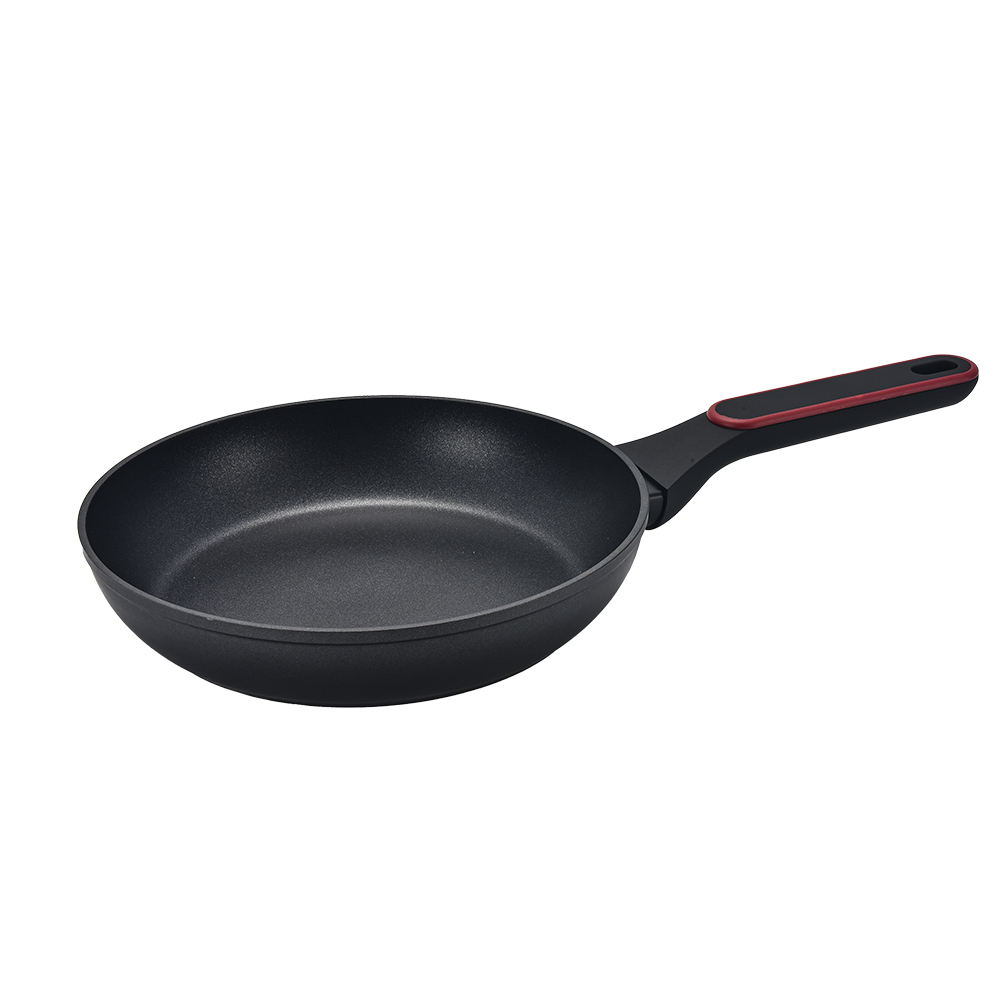
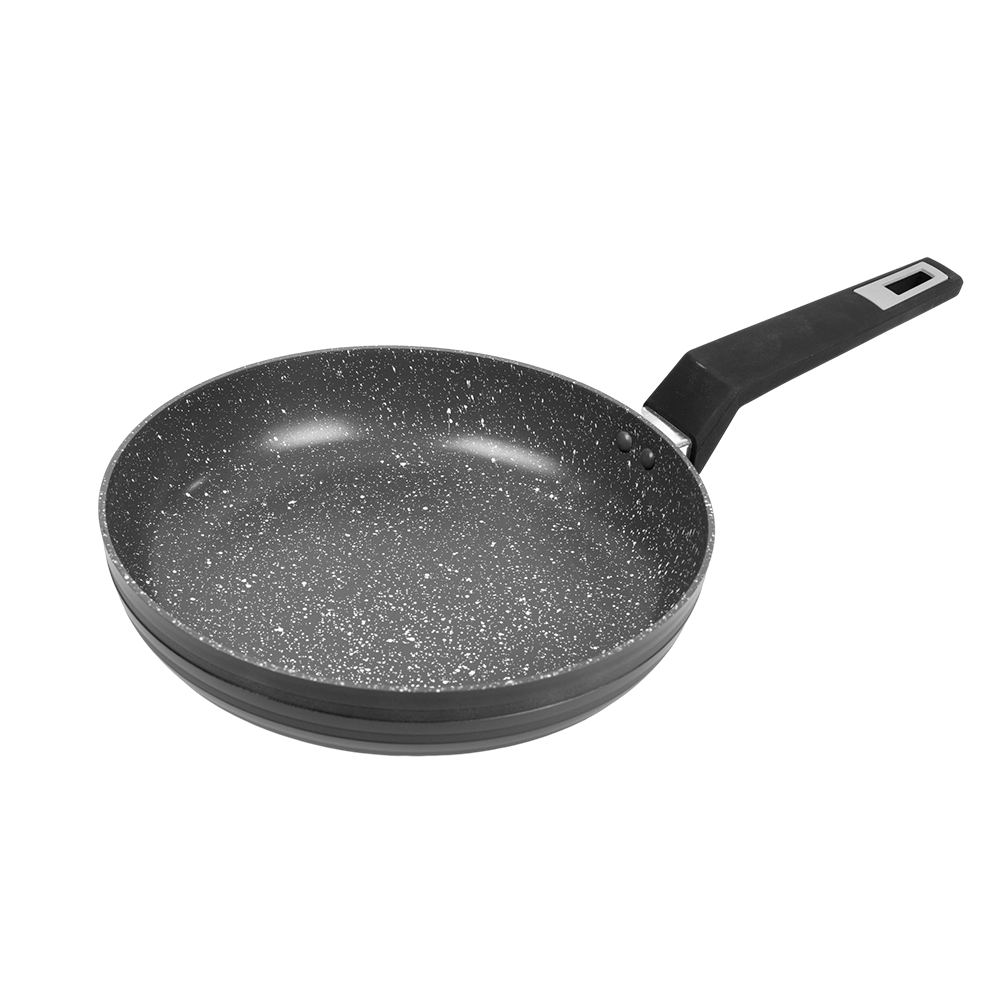
 Leerpan Full Induction Non Stick Frying Pan Cookware without Cover 20cm 24cm 28cmIndustry-specific attributesView Product →
Inside the Cooktop: The Parts That Convert Current Into Cooking Heat
A residential induction hob is a surprisingly short list of components, and knowing them helps when something misbehaves. The chain runs from the wall socket to the pan base in a handful of steps.
- Ceramic glass panel. Heat resistant to around 700 degrees Celsius, electrically insulating, and thin enough that the field passes through with minimal loss.
- Induction coil. A flat spiral of insulated copper wire, often Litz wire to reduce losses, sized to match the marked cooking zone.
- Power module. Insulated-gate bipolar transistors switch the coil current on and off tens of thousands of times per second. This is the component that sets the maximum wattage of each zone.
- Resonant capacitors. They form a tuned circuit with the coil so the switching happens efficiently instead of generating excess heat in the electronics.
- Control board and sensors. A thermistor or infrared sensor under the glass measures the base temperature and adjusts power. This is also what detects an unsuitable pan.
- Cooling fan. Electronics lose efficiency as they heat, so most hobs run a small fan that you often hear more than the cooking itself.
Because power output is governed by the electronics rather than by a fixed flame, the same hob can deliver a gentle 200 watt simmer or a 3,000 watt boost on the same zone. That range comes from how long the coil stays energised within each cycle, a detail that matters more than most users expect.
From Base to Food: How the Heat Actually Travels
Once the base is hot, the rest is ordinary thermodynamics. Heat moves sideways through the pan wall by conduction, upward through the food by contact and convection, and into the air by radiation. The limiting factor in almost every disappointing induction experience is not the hob, it is how well the base touches the food zone above it.
Flatness and contact area
Induction heats the whole magnetic base at once, so the base itself becomes the distribution layer. If the base is flat, heat spreads evenly and the pan behaves like a thick aluminium pan on gas, minus the hot spot. If the base has warped, the contact patch in the middle becomes the only efficient path upward, and you get a fast-browning centre with pale edges.
In factory practice, induction-ready aluminium bodies are inspected for flatness across the contact face before the coating goes on. A common acceptance target is a deviation of about 0.3 mm or less measured across the bottom. Once a base lifts enough to open a gap of roughly half a millimetre at the centre, the usable contact area collapses dramatically, and that is when customers start describing a pan as "uneven on induction".
Base thickness and the 4.5 mm question
Thin aluminium responds quickly but stores almost no heat, so a chop thrown into the pan drops the surface temperature and the food steams instead of searing. Thick forged bodies, typically 2.5 mm to 4.5 mm, buffer that drop. On induction this matters more than on gas, because the energy is injected into the base itself rather than into a hot air stream that keeps pushing heat regardless of what is in the pan.
A 4.5 mm forged body with a full induction bottom is the configuration most often specified for braising and stewing on induction, because it holds temperature long enough for slow cooking without constant power surges. For searing and breakfast cooking, a lighter forged pan with a bonded disc is usually the better compromise between responsiveness and heat retention.
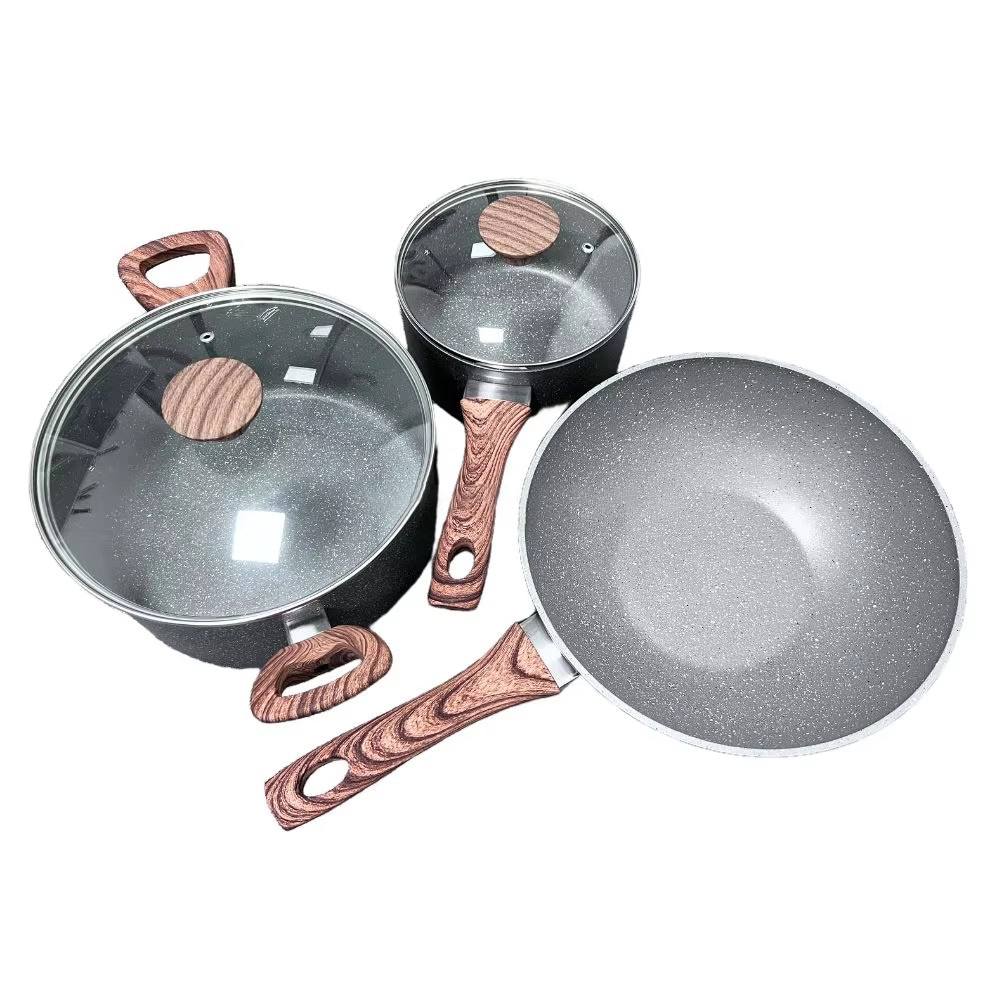 4.5mm Forged Aluminum Casserole Nonstick Coating Cookware Pot Induction Bottom With Glass Industry-specific attributesView Product →
Power Settings, Cycling, and Why Low Heat Feels Different
Induction hobs do not dim. They switch the coil fully on and fully off, then vary the ratio of on-time to off-time to average out at the power you asked for. At maximum setting the coil runs continuously. At a low simmer it may run for one or two seconds and then rest for several more. That is why a gentle setting on induction behaves in a slightly pulsing way compared with the steady output of a gas flame turned down low.
- Residential zones commonly deliver 1,400 to 2,200 watts, with boost modes reaching 3,000 to 3,700 watts on premium models.
- A typical hob brings one litre of water to a rolling boil in roughly three and a half to five minutes, depending on starting water temperature and base coupling.
- Keep-warm settings usually hold a pan base between 60 and 80 degrees Celsius, which is enough to hold a sauce without reducing it.
- Because the kitchen air is not being heated, an induction hob puts far less waste heat into the room. Users in warm climates notice this within a single cooking session.
One behaviour catches people out: melting butter or chocolate at the lowest setting. Thin bases can overshoot during the first pulse because the thermistor reads the glass temperature, which lags slightly behind the metal. A heavier base with good thermal mass smooths that overshoot, which is one more argument for specifying thicker aluminium in lower-powered cooking pans.
Matching Cookware to Induction: A Practical Comparison
The table below compares the base constructions that show up most often in retail and private-label ranges. The compatibility column answers the magnet question; the remaining columns describe how each option feels in use.
| Base construction | Magnetic coupling | Heat-up behaviour | Best suited cooking |
|---|---|---|---|
| Cast iron, carbon steel | Strong | Slower start, very high stored heat | Searing, grilling, bread |
| Ferritic stainless (single layer) | Strong | Fast but prone to ring-shaped hot spots | Boiling, sauces, light frying |
| Aluminium with bonded induction disc | Strong within the disc area | Quick response, moderate retention | Everyday frying, eggs, stir-fry |
| Forged aluminium, 4 to 4.5 mm, induction bottom | Strong, wide coupling zone | Steady, even, little overshoot | Stews, braising, slow sauces |
| Aluminium or copper without induction base | None | Hob will not detect the pan | Gas and radiant electric only |
| Enamelled steel | Strong | Moderate, even over a wide zone | Roasting, long simmers, casseroles |
| Glass, ceramic, earthenware | None | No coupling at all | Oven use only |
What Buyers and Private-Label Brands Should Verify on an Induction Base
For anyone sourcing induction-ready cookware rather than simply cooking with it, the technical conversation has to move past "is it induction compatible" and into measurable specifications. Three pans can all pass a magnet test and still behave nothing alike on a 2,000 watt zone.
Coupling strength across the whole base
Measure absorbed power at the centre and at the outer third of the base. A consistent reading across both points means the magnetic layer covers the full contact face. A drop of more than about 20 percent toward the edge usually signals a ring-shaped or partial magnetic layer, which customers will report as "the outside of the pan never browns".
Flatness after the coating cure
Coating ovens run hot, and an aluminium body that was flat before curing can move afterwards. Flatness should be checked on the finished pan, not on the raw pressing, because the customer only ever sees the finished pan.
Coating behaviour at the induction hot spot
Induction concentrates energy in the base rather than spreading it through a flame, so the coating directly above the coil sees a sharper thermal cycle. A non-stick layer that survives gas perfectly well can show early gloss loss if the base under it is too thin.
A practical pre-shipment checklist
- Magnet test on every cavity of every sample.
- Power draw test on the intended hob wattage, recorded per size.
- Flatness measurement on the finished base.
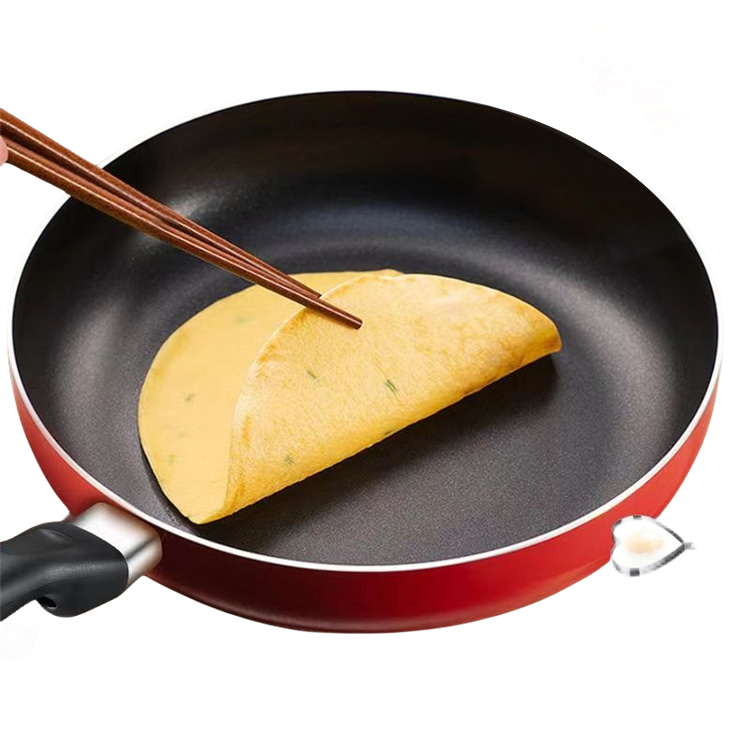
- Pancake or dosa test to show the browning footprint in a photograph.
- Handle temperature check after ten minutes at medium power on induction, not on gas.
- Minimum and maximum base diameter against the hob ring printed in your packaging instructions.
Most of these checks are cheap to run and take under a day on a sample set, but they separate a range that generates returns from one that generates repeat orders. If you need a base design built around a specific hob or a specific market, you can send the specification to our engineering team and work through dimensions, coating and handle options before tooling begins.
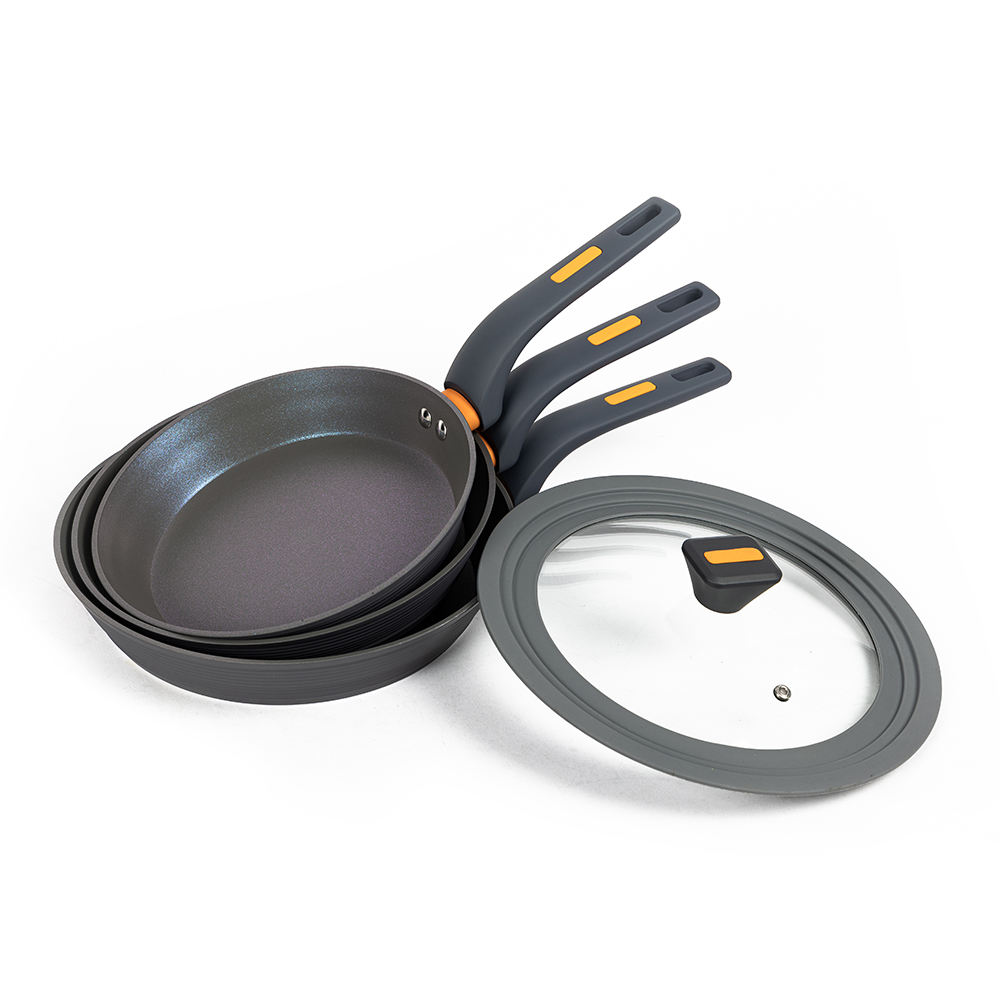
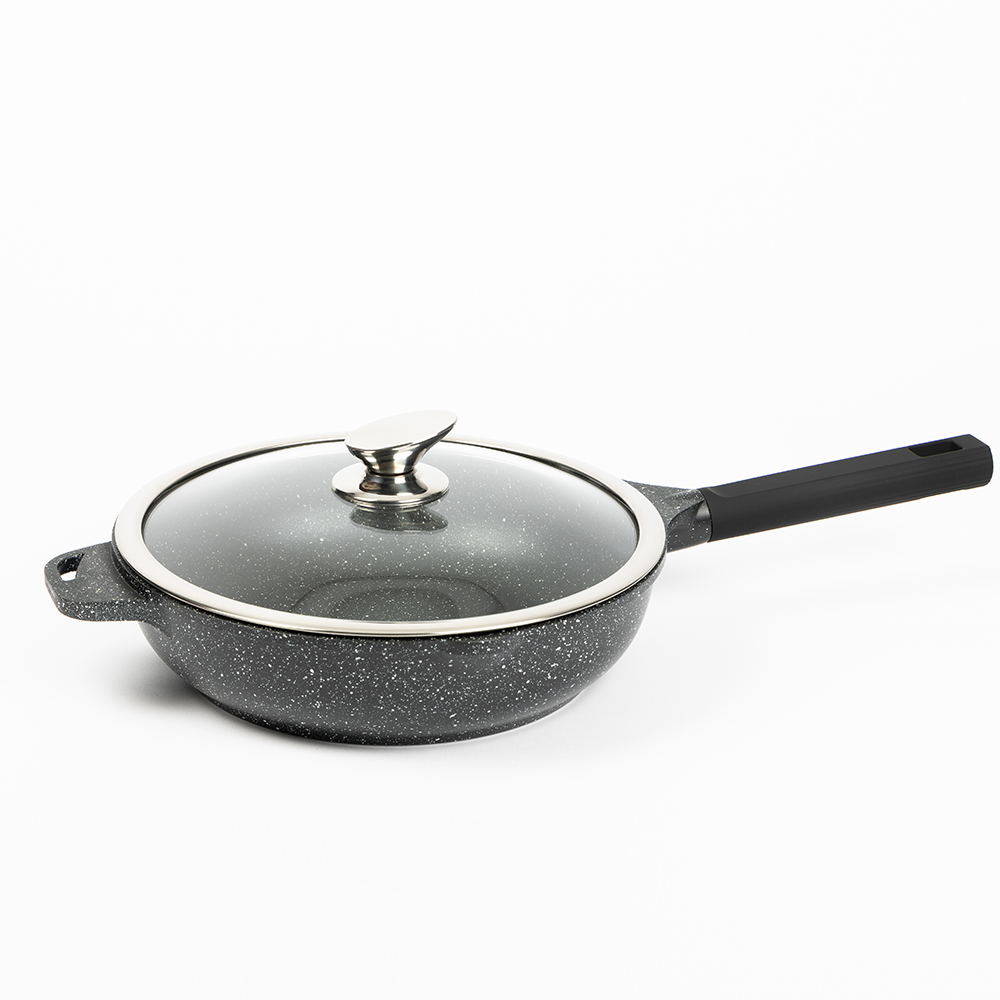
 Kitchen induction cooking pots and pans set nonstick kitchen ware casserole setIndustry-specific attributesView Product →
Everyday Notes: Noise, Residual Heat and Cleaning
A few small behaviours puzzle new induction owners, and all of them trace back to the mechanism described above.
- Humming and clicking. The coil, the pan base and the cooling fan all vibrate slightly at switching frequency. Thin bases hum louder. A light buzz at low power is usually the pulse cycling, not a fault.
- A warm glass surface. The glass does not generate heat, but it absorbs it from the pan base sitting on it. It can still be warm enough to sting for several minutes after cooking.
- Spill cleanup. Because the surface stays cooler than on a radiant hob, spills often do not bake on immediately, which makes wiping easier once the zone has cooled.
- Never run a pan dry. With no liquid to absorb energy, a thin base can climb past the coating's comfort range within a minute.
Frequently Asked Questions About Induction Cooking
Does an induction cooktop work without a pan on it?
No. With no magnetic base to couple with, the field has nothing to induce currents into. Most hobs sense the missing load within a second or two, stop delivering power and show a pan or error indicator. Leaving the zone switched on with an empty surface does not cook anything and does not damage the glass.
Can I use aluminium pans on an induction hob?
Only if the base contains a magnetic layer. Plain aluminium is non-magnetic, so the hob simply will not detect it. Induction-ready aluminium cookware carries a bonded disc, a clad sandwich bottom or, in some designs, a hole-type induction base that couples with the coil in a controlled pattern.
Why does my induction hob make noise?
Three sources contribute: the cooling fan, the coil vibrating at switching frequency, and the pan base itself flexing slightly in the alternating field. Thicker, well-made bases usually run quieter. A high-pitched whine that appears only at low power is often the pulse cycling rather than a defect.
Is induction faster than gas for everyday cooking?
For heating the pan and boiling water, yes in most comparisons, because the energy goes into the metal instead of into the air around the burner. Where gas still competes is total thermal mass: a heavy cast-iron pan on gas keeps a steady heat that some cooks prefer for wok work and charring.
Is there a minimum or maximum pan size?
Most residential hobs need a magnetic base of roughly 10 to 12 centimetres in diameter at minimum to detect the pan and deliver full power. Oversized pans still work, but the outer rim sits beyond the coil and receives heat only by conduction from the centre, so the edge cooks slower.
Does the glass surface itself get hot?
It gets warm, not hot from its own energy. The heat travels down through the contact points between the base and the glass, plus a little radiant transfer from the pan sides. After a long braise, the glass can reach temperatures that are uncomfortable to touch for several minutes.
Can a magnetic base be added to a pan I already own?
In practice, no. Bonded discs, clad bottoms and hole-type induction bases are all built into the pan during manufacturing, when the body is pressed, forged or die-cast. Aftermarket stick-on plates exist but perform poorly because the thermal contact between the plate and the pan base is inconsistent.
Why does my pan brown in a ring instead of evenly?
Two causes are common. The first is a partial magnetic layer that only covers part of the base, so only that area absorbs power. The second is a warped base: when the centre lifts even slightly, the contact area shrinks and heat concentrates where the metal still touches. Checking flatness and coupling strength on the finished pan solves most of these complaints.
Does an induction hob use less electricity than a traditional electric coil?
For the same cooking task, generally yes. Less energy escapes into the room because the pan is heated directly, and the hob reaches temperature faster, so the total running time is shorter. Actual consumption still depends on the pan's coupling efficiency and how well the base matches the coil diameter.
Choosing a Pan That Makes the Technology Worthwhile
The engineering behind an induction cooktop is elegant, but the experience in the kitchen is decided by the pan. A base that couples strongly across its whole surface, stays flat after the coating cure and holds enough thermal mass turns an induction zone into a genuinely precise cooking tool. A base that couples weakly, warps or covers only part of the bottom makes the same hob feel slow and uneven, and no amount of electronics will fix it.
That is the reason a cookware factory is judged by its bottom construction rather than by its colour range. At Ningbo Leer Kitchenware, induction compatibility is designed into the base from the first drawing: forged, die-cast or pressed aluminium bodies in sizes from 18 cm to 32 cm, paired with full induction bottoms or hole-type induction bases, then finished with marble, granite, medical-stone, ceramic or titanium-crystal non-stick coatings and a handle set chosen for the target market. The plant covers 15,000 square metres with six production lines and a design and engineering team that works from a customer's sketch or a competitor sample, including custom logos, custom sizes and gift-boxed sets.
For a cook, the takeaway is simple enough to test in a minute: bring a magnet, check the base, and look at how the pan browns a pancake. For a buyer, the same two checks, run on finished samples with a power meter attached, tell you more about a supplier's induction capability than any catalogue photograph ever will.